

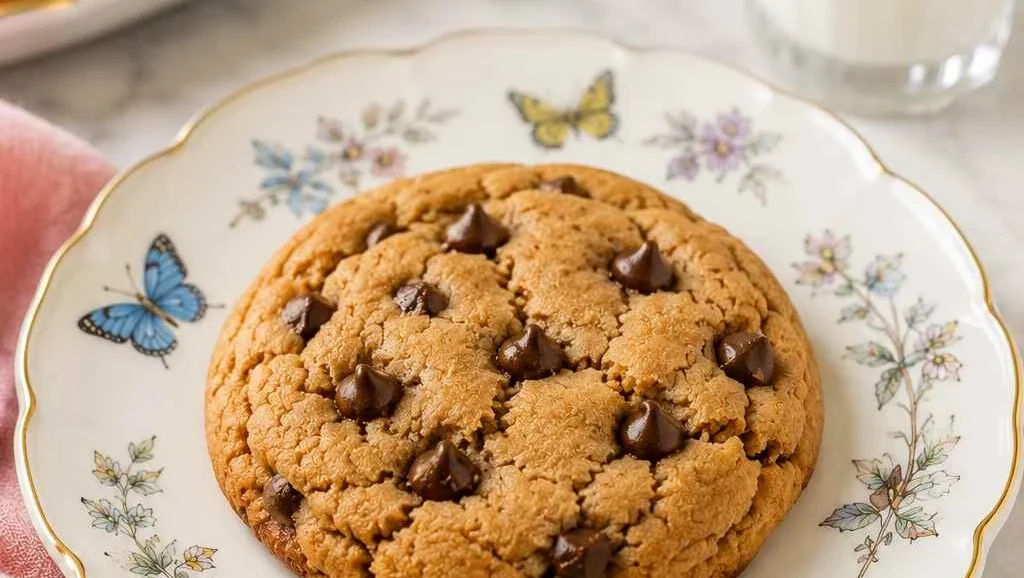
Peanut butter chocolate chip cookies stay soft when you use no-stir peanut butter, weigh your flour at 270 g (2¼ cups), and pull the tray at 9 to 10 minutes while the centers still look glossy. Bake at 350°F (175°C). Makes 24 cookies in about 35 minutes.
You already know the first cookie. It comes off the sheet too hot to hold, chocolate still molten, and you eat it standing at the counter with one hand cupped underneath. That one is always perfect.
Then Wednesday happens. You reach into the same container, pull out one of the same peanut butter chocolate chip cookies, and it snaps. Dry in the middle. Sandy on the tongue.
That gap isn’t a skill problem. It’s a ratio problem, and it lives in three decisions you make before the oven preheats: which peanut butter you buy, how you measure flour, and when you pull the tray. Get those right and the batch stays soft for four or five days.
Key Takeaways
- Use no-stir peanut butter (Jif, Skippy, Peter Pan). Natural peanut butter has no emulsifier and is the top cause of crumbly cookies.
- Weigh your flour at 270 g. A scooped cup can hold 160 g instead of 120 g, roughly 33% more (King Arthur Baking).
- More brown sugar than white keeps the centers chewy for days.
- Pull them at 9 to 10 minutes, while the centers still look underdone.
- Total time: 35 minutes. Yield: 24 cookies.
What Makes These Cookies Different From Regular Cookie Dough?
Peanut butter is about 50% fat and 22% protein by weight (USDA FoodData Central, smooth peanut butter). That combination does two opposite jobs at once, which is why your standard chocolate chip recipe falls apart when you stir peanut butter into it.
The fat coats flour proteins and blocks gluten from forming. That’s the tenderizing half. Meanwhile the peanut protein and fiber pull water out of the dough, competing with the flour for what little moisture is there. That’s the drying half. Your dough looks fine in the bowl and bakes into something chalky.
There’s a second consequence people miss. Butter melts and flows in the oven; stabilized peanut butter mostly holds its shape. Roll a ball, bake it untouched, and you’ll get a dome with a raw middle.
The Fat and Flour Balance
Compare the popular versions of this recipe and you’ll notice they’re all patching the same leak from different sides. One cuts the brown sugar. Another adds an egg yolk. A third leans on chilling. Same problem, three bandages.
This recipe takes the yolk route: fat and lecithin fix dryness without the extra water a whole egg brings. For the opposite end of the spectrum, see our shortbread cookies recipe.
What Ingredients Do You Need for Peanut Butter Chocolate Chip Cookies?
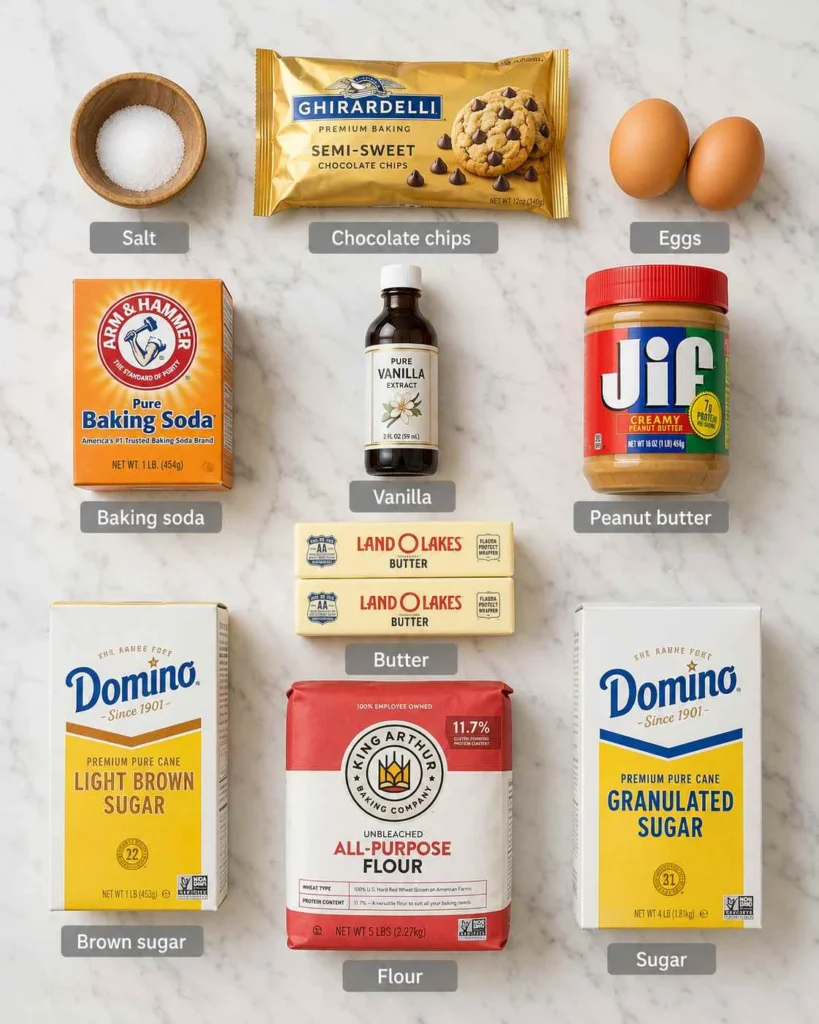
Eleven pantry ingredients, 35 minutes, no stand mixer needed if your butter is properly soft. Weights come first on purpose: volume measuring is where most batches go wrong before anything reaches the oven.
| Ingredient | Volume | Weight | Why it’s here |
|---|---|---|---|
| All-purpose flour | 2¼ cups | 270 g | Structure. Spoon and level, or weigh it. |
| Baking soda | ¾ tsp | 4 g | Browning and lift; reacts with the brown sugar. |
| Baking powder | ½ tsp | 2 g | Extra rise so centers stay thick. |
| Fine sea salt | ½ tsp | 3 g | Sharpens the peanut flavor. |
| Unsalted butter, softened | 1 cup | 226 g | Flavor and spread. Target 65 to 67°F. |
| Creamy no-stir peanut butter | 1½ cups | 396 g | The whole point. See the next section. |
| Light brown sugar, packed | 1 cup | 220 g | Holds moisture. This is your chew. |
| Granulated sugar | ½ cup | 100 g | Crisp edges and spread. |
| Large eggs, plus 1 extra yolk | 2 + 1 | ~120 g | Binding, richness, insurance against dryness. |
| Pure vanilla extract | 2 tsp | 8 g | Rounds out the peanut. |
| Semisweet chocolate chips | 1½ cups | 270 g | Chips, or better, a chopped bar. |
Substitutions That Work, and Two That Don’t
Safe swaps:
- Dark brown sugar for light. Deeper molasses flavor, slightly softer cookie.
- Bittersweet or milk chocolate. Adjust the salt to match.
- Salted butter. Cut the added salt to ¼ teaspoon.
- Gluten-free 1:1 blend. Works well, but chill the dough two hours.
Two swaps genuinely don’t work. Natural, stir-in peanut butter separates and leaves greasy edges around a crumbling center. Reduced-fat peanut butter trades that fat for starch and sugar, so the cookies bake up cakey and taste faintly of nothing. Neither is preference. Both change the chemistry.
How to Measure Flour Without a Scale
Fluff the flour in the bag with a fork, spoon it into the cup, then level the top with a knife. Never dip the cup into the bag. That one habit is the difference between chewy and chalky.
Which Peanut Butter Should You Use for Cookies?
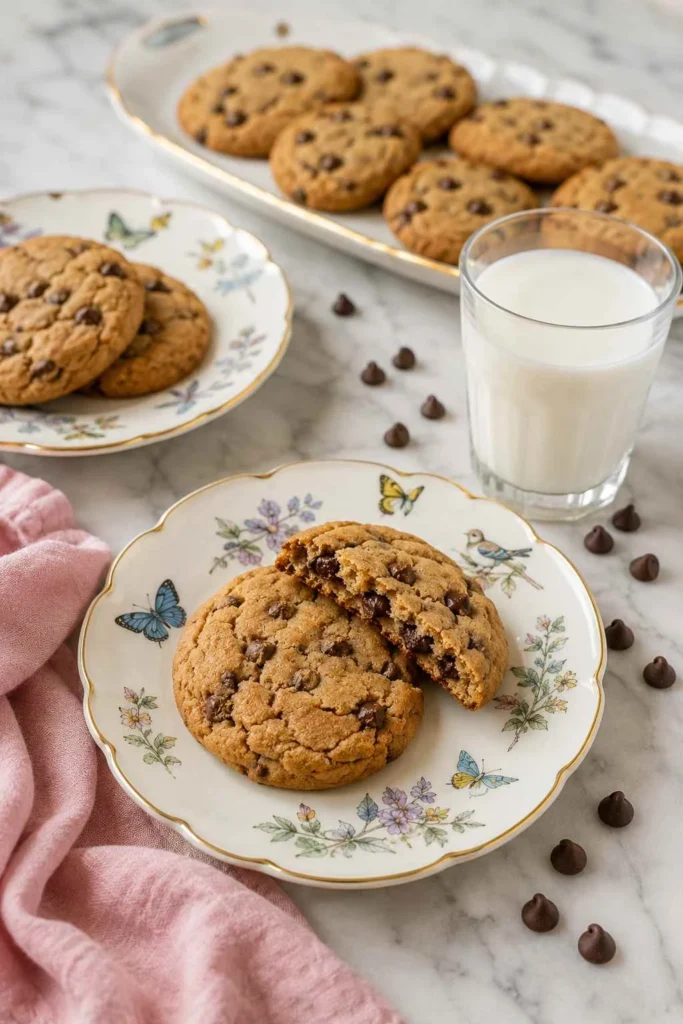
Use commercial no-stir peanut butter: Jif, Skippy, Peter Pan, or a store brand with the same label. Check the ingredients and you’ll find palm oil or fully hydrogenated vegetable oil. That’s an emulsifier, and it’s the most important variable in this recipe.
So what does the emulsifier actually do? It keeps peanut oil suspended in the solids under heat. Natural peanut butter has none, so in a hot oven the oil escapes into the dough while the solids dry out and turn to grit. The result is greasy and sandy at once, which shouldn’t be possible and somehow is.
| Peanut butter type | Emulsified? | In the bowl | Out of the oven | Verdict |
|---|---|---|---|---|
| Creamy no-stir | Yes | Smooth, holds shape | Soft, chewy, even | Best choice |
| Crunchy no-stir | Yes | Slightly stiffer | Chewy, less spread | Good; cut flour 2 tbsp |
| Natural, stir-in | No | Oily, separates | Crumbly, greasy edges | Avoid, or add 1 yolk |
| Reduced-fat | Yes, plus starch | Stiff and pasty | Cakey, muted flavor | Skip |
| Powdered, rehydrated | No | Grainy | Dry and sandy | Skip |
Stuck with natural peanut butter? Stir it until uniform, refrigerate it 30 minutes before measuring, add one extra yolk, and chill the dough two hours minimum. It improves a lot. It won’t match.
How Do You Make Peanut Butter Chocolate Chip Cookies Step by Step?
Cream the fats and sugars, add the eggs, fold in the dry ingredients, chill briefly, flatten, then bake 9 to 10 minutes at 350°F (175°C). That’s the whole arc. The details below are where texture actually gets decided.
- Heat the oven to 350°F (175°C) and line two sheets with parchment. Greased pans increase spread and thin your centers.
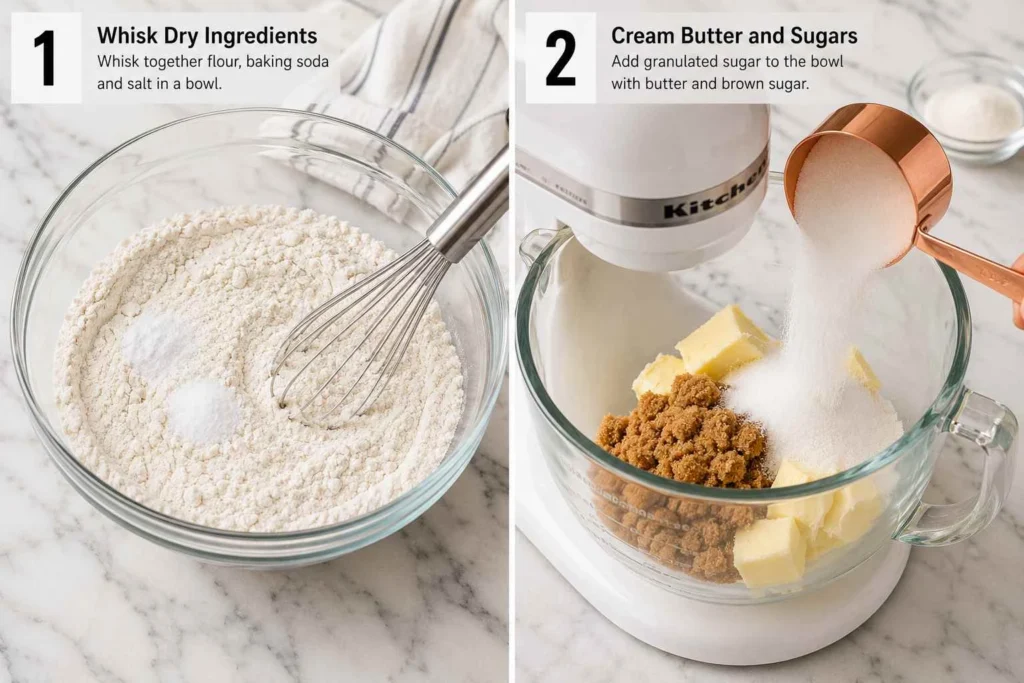
- Whisk the flour, baking soda, baking powder, and salt in a separate bowl, or you’ll get bitter pockets of soda in the finished cookies.
- Cream the butter, peanut butter, and both sugars for 2 to 3 minutes. Stop when the mixture lightens and looks fluffy.
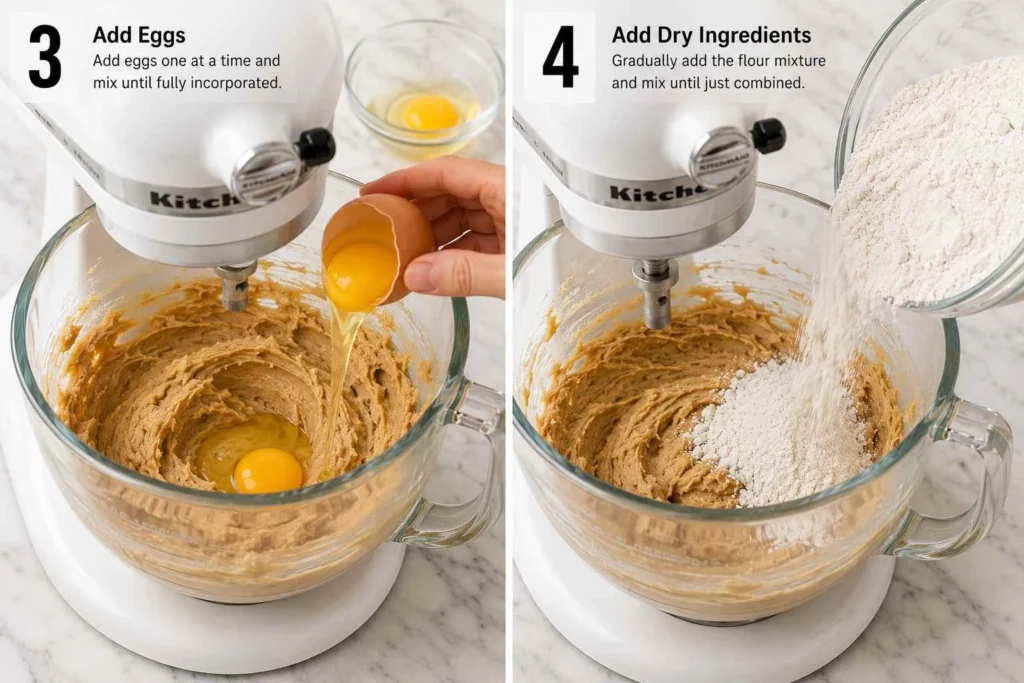
- Add the eggs, extra yolk, and vanilla one at a time, beating briefly after each so the emulsion holds.
- Fold in the dry ingredients on low until just combined. Streaks of flour are fine. Overmixing is the top cause of tough cookies, and it only takes ten seconds too long.
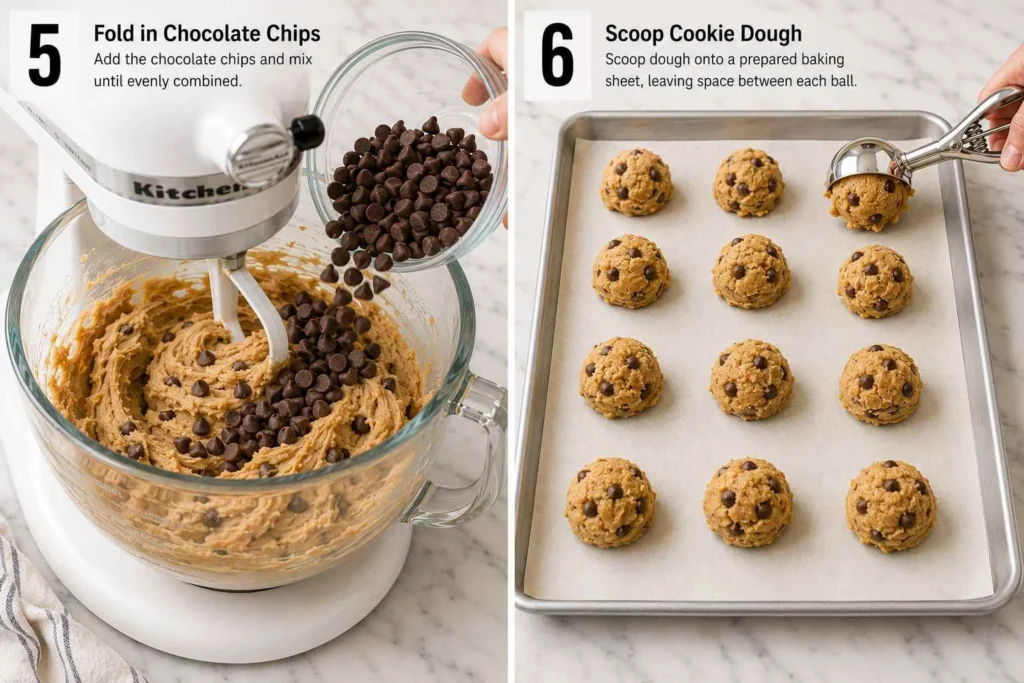
- Fold in the chocolate, holding back roughly ¼ cup.
- Portion into 3-tablespoon balls, about 55 g each. A cookie scoop keeps them even.
- Chill 30 minutes on the tray. Optional, but worth it.
- Flatten each ball to about ¾ inch with your palm or the base of a glass. Don’t skip this. The dough won’t spread on its own.
- Bake 9 to 10 minutes. Edges set and matte, centers still glossy and slightly puffed.
- Press the reserved chips into the hot tops, then rest the cookies on the sheet 5 minutes before moving them.
The Two Doneness Cues That Matter
Forget the clock and read the tray. You want matte edges and a center that still looks wet. Pressed lightly, the top should spring back slowly rather than hold a dent.
Then there’s the rule that fixes more cookies than anything else here: if they look done in the oven, they’re overdone on the plate. Carryover heat on a hot sheet is part of the recipe.
Do You Have to Chill the Dough?
No. This dough is stiff enough to bake straight away, which is why so many versions are labeled “no chill.” But 30 minutes tightens the edges noticeably, and two hours gives you visibly thicker cookies. Chilling is an upgrade, not a requirement.
Three things happen while dough rests. Fat firms up, so the cookies spread less. Flour finishes absorbing liquid, which improves texture. And enzymes break starches into simpler sugars, deepening both flavor and browning. That last effect is why The New York Times recommended a 36-hour rest for chocolate chip dough back in 2008.
Pick your window:
- 0 minutes: good cookies, a little thinner, mildest flavor
- 30 minutes: the weeknight sweet spot, clearly better edges
- 2 hours: thickest centers, closest to a bakery cookie
- 24 hours: deepest caramelized flavor, diminishing returns past here
Two cautions: let chilled balls sit out 10 minutes before baking so they bake evenly, and don’t push past 72 hours, since the baking soda loses potency.
Why Are My Peanut Butter Chocolate Chip Cookies Dry or Crumbly?
Four causes explain nearly every failed batch: too much flour, natural peanut butter, overbaking, and overmixing. Flour is the most common by a wide margin. A properly measured cup weighs 120 g, but a cup scooped from the bag can hold up to 160 g, about 33% more (King Arthur Baking, 2023).
Find your symptom:
| Symptom | Most likely cause | The fix |
|---|---|---|
| Dry, sandy, crumbles when bent | Too much flour | Weigh 270 g, or fluff, spoon, and level |
| Crumbly with greasy edges | Natural peanut butter | Switch to no-stir, or add 1 yolk and chill 2 h |
| Tough and dense | Overmixed after adding flour | Fold on low, stop while streaks remain |
| Flat and thin | Butter too warm, or greased pan | Butter at 65 to 67°F; use parchment |
| Domes that never spread | Balls not flattened | Press to ¾ inch before baking |
| Pale, barely browned | Oven runs cool | Check it with a thermometer |
| Rock hard by day two | Overbaked or stored uncovered | Pull at 9 to 10 min; airtight container |
| Faint bitter aftertaste | Leaveners not whisked in | Whisk dry ingredients separately |
Already made dry dough? It’s rescuable. Add milk one tablespoon at a time, up to three, and knead until a squeezed handful holds together. One extra yolk does the same job with better flavor.
The Oven Problem Nobody Checks
Most home ovens run 25 to 50°F off their set point, and America’s Test Kitchen has found two ovens set to the same temperature can differ by as much as 90°F (ThermoWorks). At a 350°F setting, actual cycling can peak near 400°F and dip toward 300°F.
Think about what that means for a nine-minute cookie. A $7 oven thermometer fixes more baking complaints than any recipe tweak, and it keeps paying off on every bake after, including our chewy oatmeal raisin cookies.
How Do You Get Soft, Chewy Centers Every Time?
Chew comes from three levers pulled together: a brown-sugar-heavy ratio, an extra egg yolk, and pulling the tray about two minutes before the cookies look ready. Miss one and you get a decent cookie. Pull all three and you get one that’s still bending on day four.
Brown sugar does the heavy lifting because molasses is hygroscopic. It attracts water and holds onto it, which is why a brown-sugar-forward cookie stays pliable while a white-sugar cookie turns crisp. Flip the ratio and you flip the texture.
The extra yolk adds fat and lecithin without the water a whole egg brings. Want to push further? One tablespoon of honey or corn syrup adds invert sugar, which holds moisture even more aggressively. Slightly sweeter, noticeably chewier.
Prefer a crisp cookie? Invert the plan: more granulated sugar than brown, no extra yolk, flatten thinner, bake 12 to 13 minutes.
What Mix-Ins and Variations Work Best?
The base dough handles roughly 2 cups of total additions before it loses structure. Go over that and it crumbles no matter how carefully you weighed the flour.
- Chopped peanut butter cups or Reese’s Pieces. Drop the chips to 1 cup so it isn’t cloying.
- Flaky salt on top. Sprinkle the second they leave the oven so it sticks.
- Rolled oats, ½ cup, with the flour reduced by ¼ cup. Heartier and chewier.
- Espresso powder, 1 teaspoon. Deepens the chocolate without tasting like coffee.
- Broken pretzels, ½ cup, folded in last so they stay in pieces.
Craving something denser and more chocolate-forward? Our brownie cookies with crackly tops scratch that itch.
How Do You Store and Freeze Peanut Butter Cookies?
Four to five days airtight at room temperature, or three months frozen, baked or as raw dough balls. Storage is where the day-two disappointment gets solved for good.
| Method | How | How long | Notes |
|---|---|---|---|
| Room temperature | Airtight container with a slice of white bread | 4 to 5 days | Swap the bread when it hardens |
| Refrigerated | Airtight container | Up to 1 week | Warm 10 seconds before eating |
| Frozen, baked | Layered with parchment between | 3 months | Thaw 30 minutes at room temp |
| Frozen, raw dough balls | Freeze on a tray, then bag | 3 months | Bake from frozen, add 2 minutes |
The bread trick isn’t folklore. Moisture moves from wetter to drier, so the bread gives up water and the cookies take it in. The slice goes stale; the cookies stay soft.
One habit beats all the others: freeze the dough in balls. Twelve minutes then stands between you and a warm cookie.
Frequently Asked Questions
What is the secret to good peanut butter chocolate chip cookies?
Three choices, in order of impact: use no-stir peanut butter like Jif or Skippy, use more brown sugar than white, and pull the tray at 9 to 10 minutes while the centers still look glossy. Those account for most of the distance between a great batch and a dry one.
Why are my peanut butter cookies dry and crumbly?
Almost always too much flour or the wrong peanut butter. A scooped cup can hold 160 g instead of 120 g, roughly 33% more than the recipe wants. Weigh 270 g total, and use an emulsified no-stir peanut butter rather than a natural, stir-in one.
Do you have to chill peanut butter chocolate chip cookie dough?
No. This dough is stiff enough to bake immediately. Chilling 30 minutes improves the edges and flavor, and two hours produces noticeably thicker cookies. If you do chill, let the balls sit out about 10 minutes first so they bake evenly.
Can I use natural peanut butter in cookies?
You can, but expect a crumblier, greasier result, since natural peanut butter has no emulsifier to hold the oil in suspension. Stir it fully, chill it before measuring, add one extra egg yolk, and refrigerate the dough two hours.
How long do you bake peanut butter chocolate chip cookies?
Nine to ten minutes at 350°F (175°C) for 3-tablespoon cookies. Edges set, centers still glossy. Since most ovens run 25 to 50°F off their setting, check yours with a thermometer before blaming the timing.
How do you keep peanut butter chocolate chip cookies soft?
Don’t overbake them, and store them airtight with a slice of white bread. The bread releases moisture into the container, which the cookies absorb, keeping them pliable for four to five days instead of going hard overnight.
Conclusion
Peanut butter chocolate chip cookies aren’t difficult. They’re just unforgiving about three specific things, and none of them involve technique. Buy emulsified peanut butter. Weigh your flour instead of scooping it. Take the tray out while your instincts are still telling you to wait.
Do that, and Wednesday’s cookie tastes like Monday’s.
Now it’s your turn. Bake a batch this week, then tell me in the comments which peanut butter you used and how the centers turned out. Brand comparisons are genuinely useful to the next person reading this, and I read every one.
Ready for the opposite kind of cookie? Three ingredients, no eggs, pure butter: start with our classic shortbread cookies, or browse the full recipe collection for your next bake.
Soft Peanut Butter Chocolate Chip Cookies Recipe Card
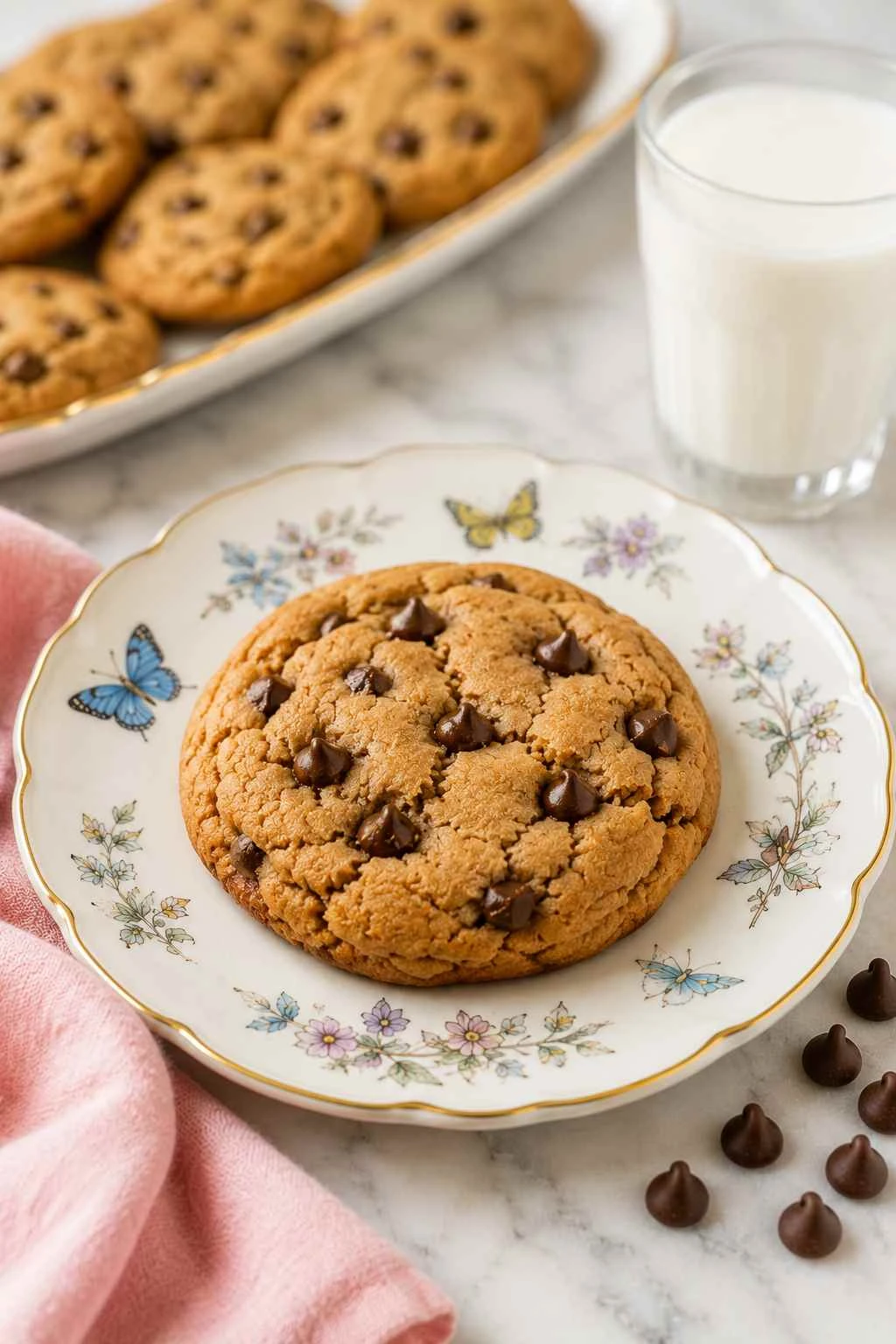
Soft Peanut Butter Chocolate Chip Cookies
Description
Soft, chewy peanut butter chocolate chip cookies that stay bendable for four to five days. The keys are no-stir peanut butter, a brown-sugar-heavy ratio, weighed flour, and pulling the tray while the centers still look underdone.
Ingredients
Instructions
- Heat the oven to 350F (175C) and line two baking sheets with parchment. Do not grease the pans; greased pans increase spread and thin the centers.
- Whisk the flour, baking soda, baking powder, and salt together in a separate bowl so the leaveners distribute evenly.
- Cream the butter, peanut butter, and both sugars for 2 to 3 minutes, until the mixture lightens in color and looks fluffy.
- Add the eggs, the extra yolk, and the vanilla one at a time, beating briefly after each so the emulsion holds.
- Fold in the dry ingredients on low speed until just combined. A few streaks of flour are fine. Overmixing here is the top cause of tough cookies.
- Fold in the chocolate, holding back roughly 1/4 cup for the tops.
- Portion into 3-tablespoon balls, about 55g each. A cookie scoop keeps them even.
- Chill the portioned balls 30 minutes on the tray. Optional, but it tightens the edges and deepens the flavor.
- Flatten each ball to about 3/4 inch thick with your palm or the base of a glass. Do not skip this. The dough will not spread on its own.
- Bake 9 to 10 minutes. The edges should look set and matte while the centers still look glossy and slightly puffed.
- Press the reserved chocolate chips into the hot tops, then let the cookies rest on the sheet 5 minutes before moving them to a rack.
Sources, retrieved 2026-07-30:
- King Arthur Baking, How to measure flour the right way, October 2023, https://www.kingarthurbaking.com/blog/2023/10/13/how-to-measure-flour
- USDA FoodData Central, Peanut butter (smooth) nutrient profile, https://fdc.nal.usda.gov/
- ThermoWorks, For Better Roasting, Test Your Oven’s Accuracy, https://blog.thermoworks.com/thermal-secrets-oven-calibration/
- The New York Times, Perfection? Hint: It’s Warm and Has a Secret, 2008, https://www.nytimes.com/2008/07/09/dining/09chip.html