

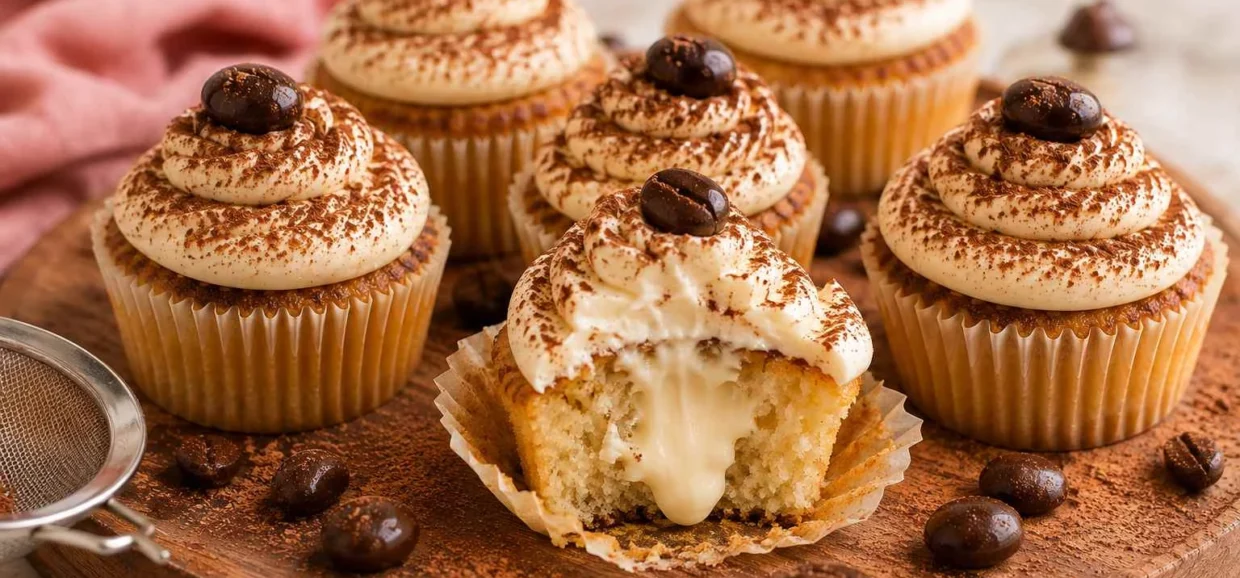
Tiramisu cupcakes come together when you brush a measured amount of espresso soak onto warm cupcakes, about a tablespoon each, rather than dunking or oversoaking them, and whip the mascarpone frosting only until it holds soft peaks. Keep whipping mascarpone frosting past that point and it breaks: the fat separates out and the texture turns grainy instead of smooth.
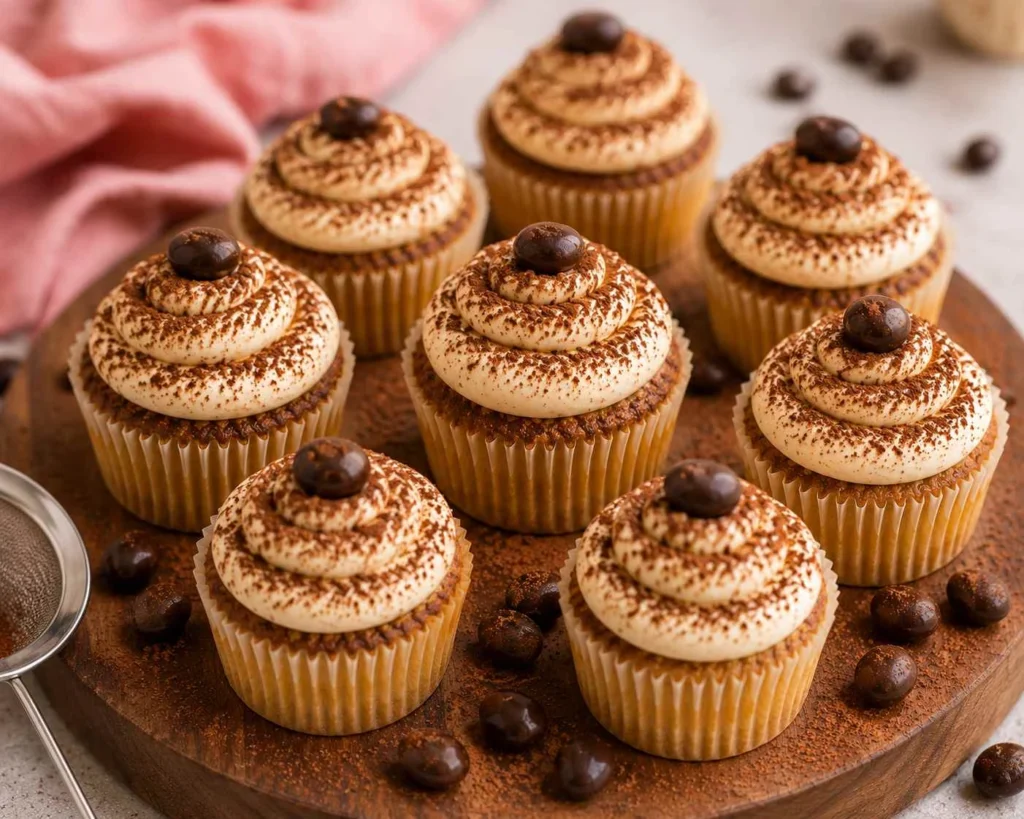
Tiramisu translates well into cupcake form, coffee-soaked cake and mascarpone cream are the whole appeal, but both of those signature elements are also where the recipe is easiest to get wrong. Too much soak and the cupcake falls apart in your hand. Too much whipping and the frosting looks curdled instead of silky.
This guide covers the full cupcake, soak, and mascarpone frosting recipe, plus the two techniques that keep both elements working the way they’re supposed to.
Key Takeaways
- Brush the espresso soak onto warm cupcakes with a pastry brush, about a tablespoon per cupcake, rather than dunking them or pouring the soak on.
- Stop whipping mascarpone frosting as soon as it holds soft peaks. Overwhipping breaks the fat structure and turns it grainy or watery.
- Use room-temperature mascarpone and cold heavy cream together; mixing two ingredients at very different temperatures is a common cause of the frosting splitting.
- Dust with cocoa powder right before serving, not ahead of time, since it can absorb moisture from the frosting and lose its texture if it sits too long.
What Are Tiramisu Cupcakes?
Tiramisu cupcakes translate the classic Italian dessert, ladyfingers soaked in espresso, layered with mascarpone cream and dusted with cocoa, into cupcake form: a vanilla or sponge cupcake brushed with espresso soak and topped with whipped mascarpone frosting.
The soak and the frosting are what make it read as tiramisu rather than just a coffee-flavored cupcake, so both need to actually work, not just be present. A soggy cupcake or a broken frosting undercuts the whole point of the dessert.
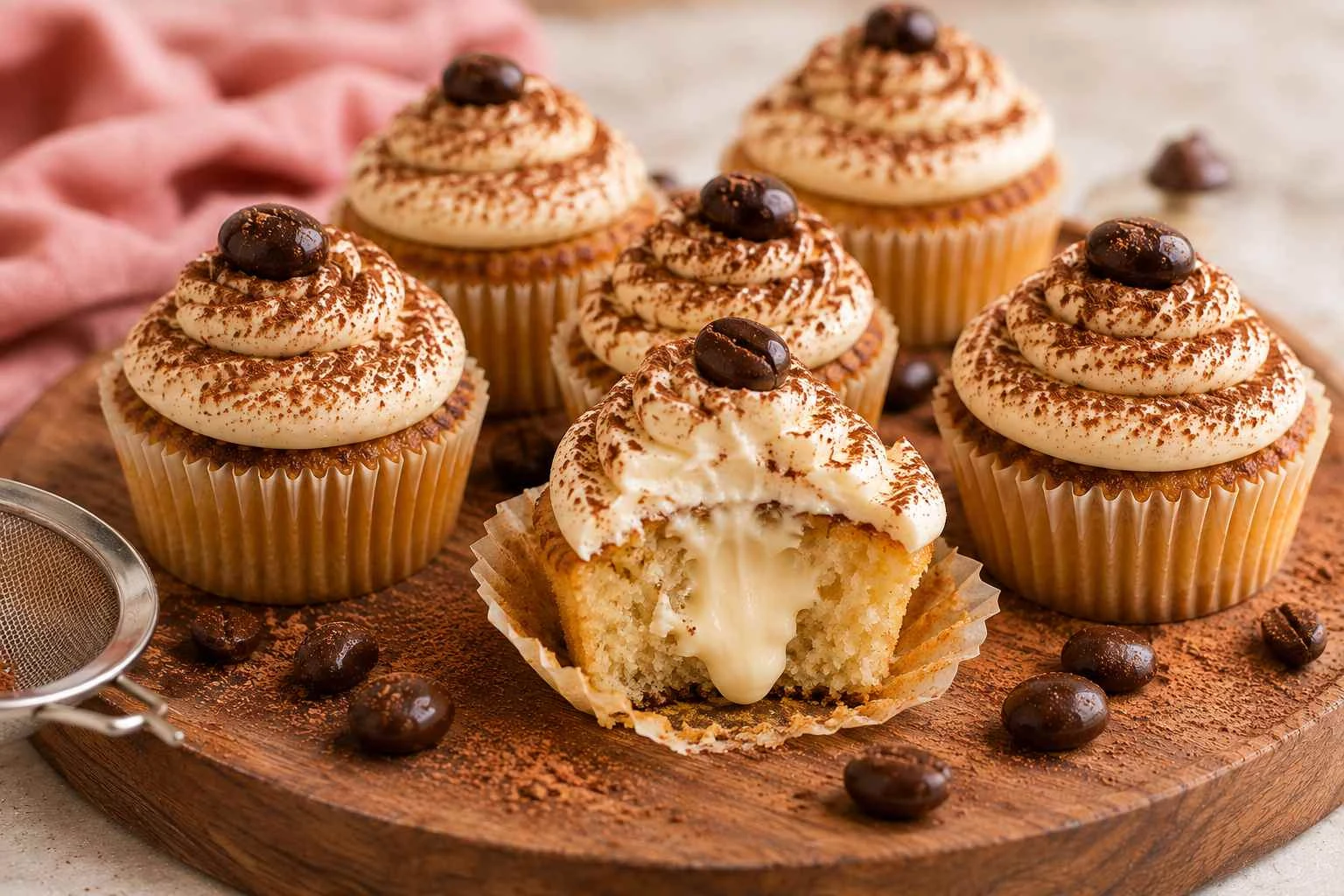
Done right, you get a light cupcake with a distinct coffee flavor from the soak, topped with a smooth, barely-sweet mascarpone frosting and a dusting of cocoa powder.
What Ingredients Do You Need for Tiramisu Cupcakes?
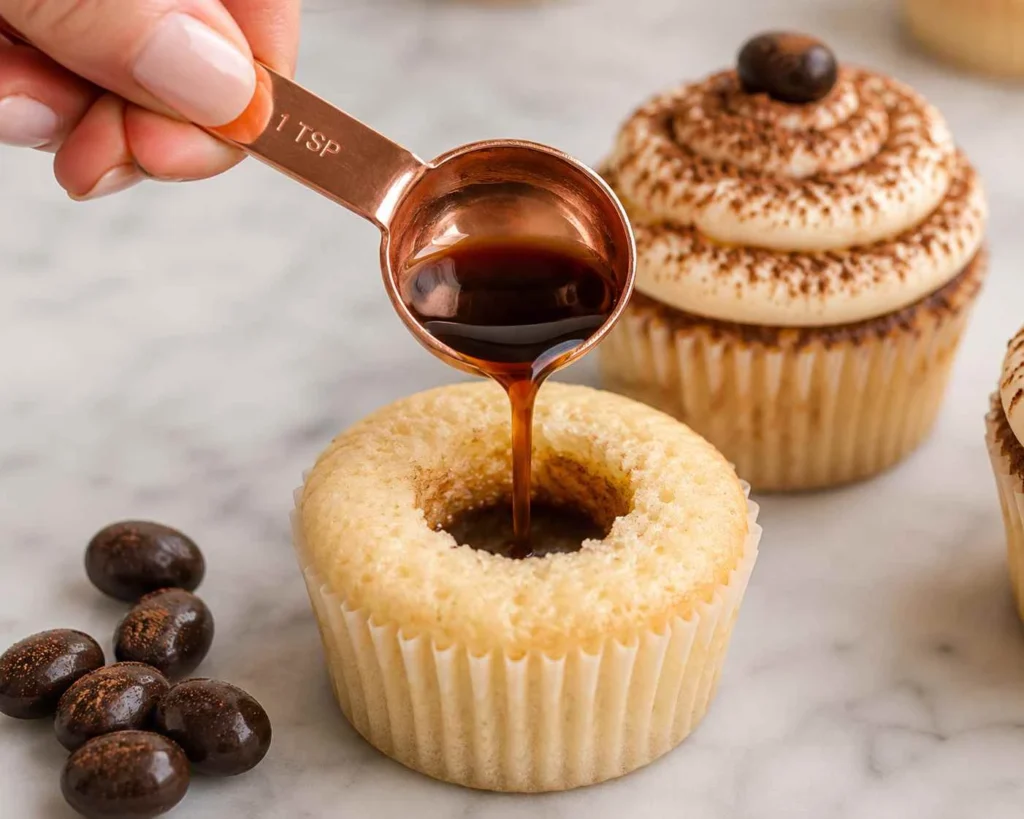
Fourteen ingredients split between the cupcake base, the espresso soak, and the mascarpone frosting.
| Ingredient | Amount | Purpose/Notes |
|---|---|---|
| All-purpose flour | 1 1/4 cups | Structure |
| Baking powder | 1 tsp | Lift |
| Salt | 1/4 tsp | Balances sweetness |
| Unsalted butter, softened | 1/2 cup | Fat and flavor |
| Granulated sugar | 3/4 cup | Sweetness and tender crumb |
| Eggs | 2 large | Structure and richness |
| Vanilla extract | 1 tsp | Flavor |
| Milk | 1/2 cup | Moisture |
| Brewed espresso, cooled (soak) | 1/2 cup | Coffee flavor |
| Coffee liqueur, optional (soak) | 2 tbsp | Traditional tiramisu flavor |
| Mascarpone cheese, room temperature | 8 oz | Base of the frosting |
| Heavy cream, cold | 1 cup | Whips the frosting to a spreadable texture |
| Powdered sugar | 1/3 cup | Sweetens the frosting |
| Unsweetened cocoa powder, for dusting | As needed | Traditional finish |
How Do You Make Tiramisu Cupcakes? (Step-by-Step)
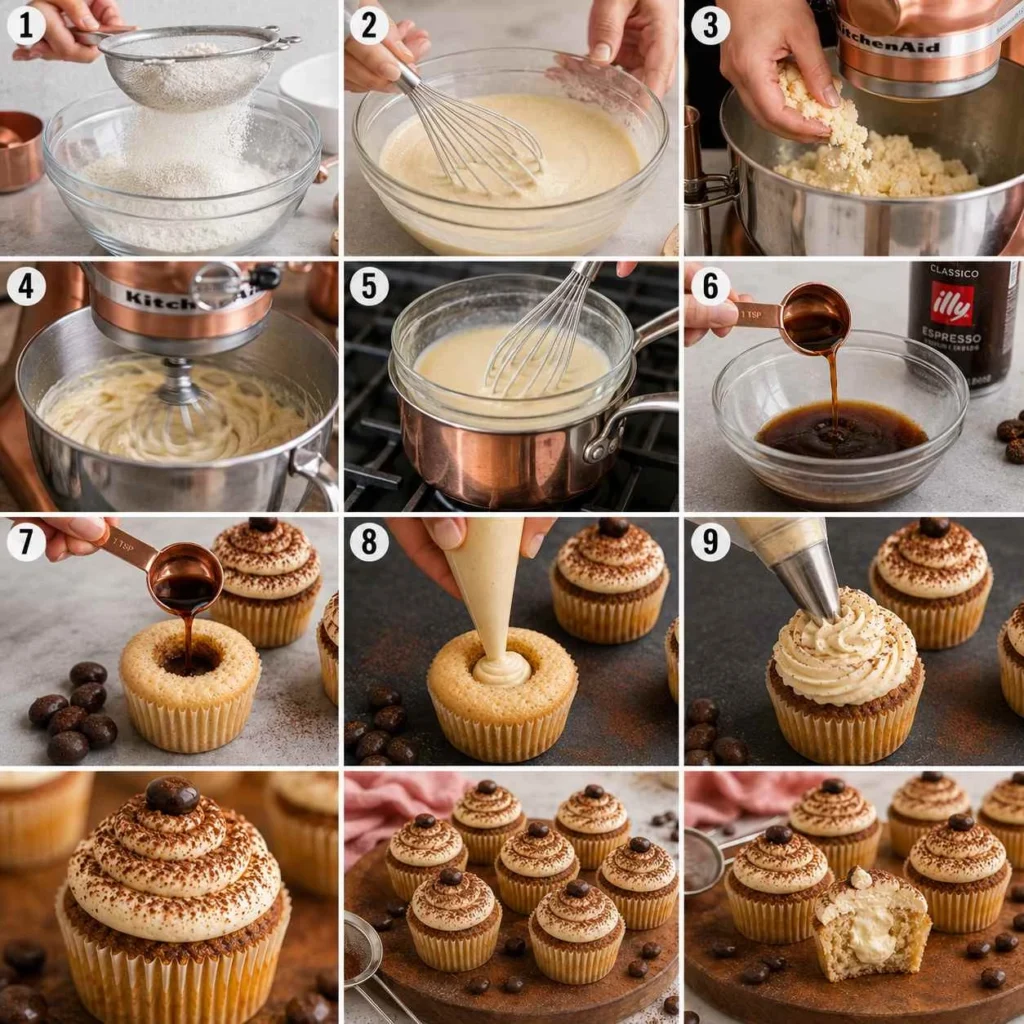
- Preheat and prep. Heat the oven to 350°F (175°C) and line a standard muffin tin with 12 liners.
- Whisk the dry ingredients. Combine the flour, baking powder, and salt.
- Cream the butter and sugar. Beat for 2-3 minutes until light and fluffy.
- Add the eggs and vanilla. Beat in one egg at a time, then the vanilla.
- Alternate dry ingredients and milk. Add in three additions, mixing just until combined.
- Bake. Fill liners two-thirds full and bake 16-18 minutes, until a toothpick comes out clean.
- Soak while warm. Combine the espresso and coffee liqueur, if using. Brush about a tablespoon onto each cupcake while it’s still warm. Cool completely.
- Make the frosting. Beat the room-temperature mascarpone until smooth. In a separate bowl, whip the cold heavy cream and powdered sugar to soft peaks, then fold into the mascarpone until just combined.
- Frost and dust. Pipe or spread the frosting over the cooled cupcakes and dust with cocoa powder right before serving.
Applying the Espresso Soak Without Sogging the Cupcake
Brushing warm cupcakes with a measured amount of soak, rather than dunking them or pouring it on freely, gives you control over exactly how much liquid the crumb absorbs. Warm cake absorbs liquid more readily than cooled cake, so this is also the point in the process where the soak has the most effect for the least amount used.
About a tablespoon per cupcake is enough to deliver clear coffee flavor without saturating the crumb to the point of falling apart when you pick it up.
Whipping Mascarpone Frosting Without Splitting It
Mascarpone frosting comes together in two stages for a reason: whip the cream separately to soft peaks first, then fold it into the smoothed mascarpone rather than throwing everything into one bowl and beating until stiff. Overbeating mascarpone directly, or overbeating the combined mixture, pushes the fat past the point where it holds an emulsion, and it starts to look grainy or separated instead of smooth.
Stop as soon as the mixture holds its shape on a spoon. If it’s already looking slightly broken, folding in a spoonful of unwhipped cold heavy cream can sometimes bring it back together; more whipping will not.
Why Does Mascarpone Frosting Split or Turn Grainy?
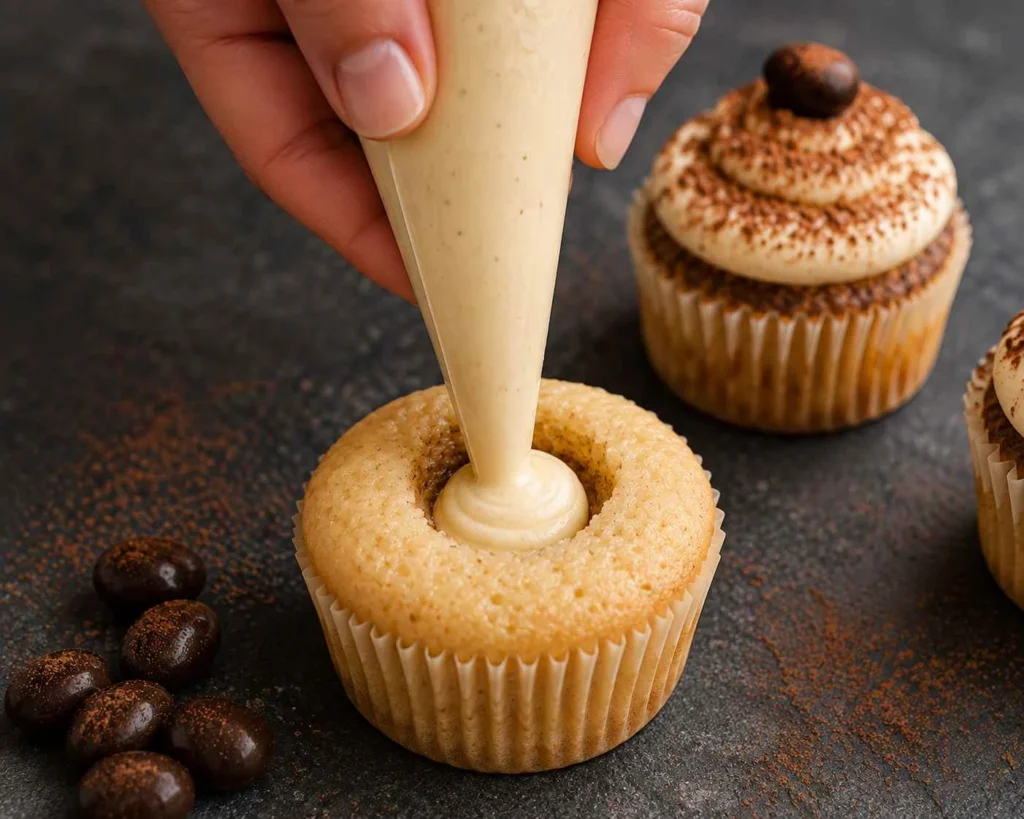
Mascarpone is a fresh, high-fat cheese with a looser structure than cream cheese, and it has less built-in stabilizer to hold its fat and moisture together under mechanical stress. Whip it too long, or whip it while it’s still cold and stiff, and the fat globules break apart from the surrounding liquid the same way overwhipped cream turns to butter and buttermilk.
Temperature mismatch between the mascarpone and the cream makes the problem worse. Room-temperature mascarpone blends smoothly with itself, but folding it against cream that’s much colder forces the fat in the mascarpone to firm up unevenly as the two mix, which shows up as small curdled-looking flecks even before overbeating becomes an issue.
Working in two stages, whipping the cream to soft peaks on its own and folding it gently into the smoothed mascarpone, keeps the total amount of agitation the mascarpone itself experiences to a minimum, which is the more reliable way to avoid pushing it past that breaking point (King Arthur Baking, 2026).
Troubleshooting Common Tiramisu Cupcake Problems
- Frosting looks grainy or curdled. It was overbeaten, or the mascarpone and cream were at very different temperatures. Whip the cream separately to soft peaks and fold it in gently, and use room-temperature mascarpone.
- Cupcakes fall apart when picked up. Too much soak was applied, or it was poured rather than brushed on. Stick to about a tablespoon per cupcake, brushed on while still warm.
- Frosting is too soft to hold its shape. The cream wasn’t whipped to soft peaks before folding in, or the mixture wasn’t chilled before piping. Refrigerate 15-20 minutes if it’s too soft to pipe.
- Cocoa dusting looks wet or clumpy. It was dusted too far ahead of serving and absorbed moisture from the frosting. Dust right before serving instead.
- Coffee flavor is too faint. Not enough soak was used, or it wasn’t brewed strong enough. Use a full tablespoon per cupcake and brew the espresso on the stronger side.
How to Store, Freeze, and Make Tiramisu Cupcakes Ahead of Time
| Method | How | Storage Time |
|---|---|---|
| Room temperature (unfrosted) | Airtight container | Up to 2 days |
| Refrigerate (frosted) | Airtight container | Up to 3 days |
| Freeze unfrosted, unsoaked cupcakes | Cool completely, layer with parchment in an airtight container | Up to 3 months |
| Make frosting ahead | Refrigerate in a sealed container | Up to 2 days |
Variations on Tiramisu Cupcakes
Chocolate-Dusted Tiramisu Cupcakes
Add shaved dark chocolate on top along with the traditional cocoa powder dusting.
Mini Tiramisu Cupcakes
Use a mini muffin tin, bake 10-12 minutes, and reduce the soak to about a teaspoon per cupcake.
Kahlua Tiramisu Cupcakes
Increase the coffee liqueur in the soak to 1/4 cup for a more pronounced boozy flavor.
Dairy-Free Tiramisu Cupcakes
Substitute a dairy-free mascarpone alternative and coconut cream for the frosting; whip the same way, watching closely since dairy-free versions can split more easily.
Gluten-Free Tiramisu Cupcakes
Use a 1:1 gluten-free flour blend for the cupcake base; the soak and frosting stay the same.
Frequently Asked Questions About Tiramisu Cupcakes
Why did my mascarpone frosting turn grainy?
It was most likely overbeaten, or the mascarpone and whipped cream were at very different temperatures when combined. Whip the cream separately to soft peaks first, then fold it gently into room-temperature mascarpone.
How much espresso soak should I use per cupcake?
About a tablespoon, brushed onto the cupcake while it’s still warm. More than that risks a cupcake that falls apart when picked up.
Can I make tiramisu cupcakes without alcohol?
Yes. Leave out the coffee liqueur and use espresso alone for the soak; the flavor will be slightly less complex but still clearly coffee-forward.
Can I fix mascarpone frosting after it’s already split?
Sometimes. Folding in a spoonful of cold, unwhipped heavy cream can bring a slightly broken frosting back together. Once it’s badly separated, though, it’s usually best to start over.
When should I dust the cupcakes with cocoa powder?
Right before serving. Cocoa powder dusted too far ahead absorbs moisture from the frosting underneath and loses its dry, powdery texture.
Conclusion
Tiramisu cupcakes that actually work come down to two habits: control the amount of espresso soak instead of pouring it on freely, and stop whipping the mascarpone frosting the moment it holds soft peaks. Everything else is a straightforward vanilla cupcake.
Now it’s your turn. Bake a batch, brush that soak on with a light hand, and tell us in the comments whether the frosting held its shape. If you liked this one, check out our Mocha Cupcakes and Chocolate Raspberry Cupcakes guides too.
Tiramisu Cupcakes
Tiramisu Cupcakes
Description
Tiramisu cupcakes with mascarpone frosting that actually holds its shape. Whip it just until soft peaks form, and brush the espresso soak on warm.Ingredients
For the Cupcakes
For the Espresso Soak
For the Mascarpone Frosting
Instructions
Bake the Cupcakes
-
Preheat the oven to 350°F (175°C) and line a standard muffin tin with 12 liners.
-
Whisk together the flour, baking powder, and salt.
-
Cream the butter and sugar for 2-3 minutes until light and fluffy.
-
Beat in the eggs one at a time, then the vanilla.
-
Alternate adding the dry ingredients and milk in three additions, mixing just until combined.
-
Fill liners two-thirds full and bake 16-18 minutes, until a toothpick comes out clean.
Soak, Frost, and Assemble
-
Combine the espresso and coffee liqueur, if using.
-
Brush about a tablespoon onto each cupcake while still warm. Cool completely.
-
Beat the room-temperature mascarpone until smooth.
-
In a separate bowl, whip the cold heavy cream and powdered sugar to soft peaks, then fold into the mascarpone until just combined.
-
Pipe or spread the frosting over the cooled cupcakes and dust with cocoa powder right before serving.
Sources:
- Tiramisu Cupcakes Recipe – King Arthur Baking
- Espresso Soaked Tiramisu Cupcakes with Fluffy Mascarpone Cream – Baran Bakery
Tiramisu Cupcakes Recipe Card
Tiramisu Cupcakes
Description
Tiramisu cupcakes with mascarpone frosting that actually holds its shape. Whip it just until soft peaks form, and brush the espresso soak on warm.
Ingredients
For the Cupcakes
For the Espresso Soak
For the Mascarpone Frosting
Instructions
- Preheat the oven to 350°F (175°C) and line a standard muffin tin with 12 liners.
- Whisk together the flour, baking powder, and salt.
- Cream the butter and sugar for 2-3 minutes until light and fluffy.
- Beat in the eggs one at a time, then the vanilla.
- Alternate adding the dry ingredients and milk in three additions, mixing just until combined.
- Fill liners two-thirds full and bake 16-18 minutes, until a toothpick comes out clean.
- Combine the espresso and coffee liqueur, if using.
- Brush about a tablespoon onto each cupcake while still warm. Cool completely.
- Beat the room-temperature mascarpone until smooth.
- In a separate bowl, whip the cold heavy cream and powdered sugar to soft peaks, then fold into the mascarpone until just combined.
- Pipe or spread the frosting over the cooled cupcakes and dust with cocoa powder right before serving.