


There’s a particular kind of quiet that falls over a kitchen the moment you slide a lemon meringue pie out of the oven. The peaks are just starting to gild at the tips, the filling underneath is still faintly jiggling, and the whole house smells like a lemon grove after rain. You set it on the counter, walk away for exactly as long as your willpower allows, and come back to slice into something that tastes like sunshine got whisked into a bowl.
Lemon meringue pie has a reputation. Bakers either swear by it as their signature dessert or avoid it entirely because they’ve been burned — literally and figuratively — by a meringue that wept a puddle of syrup onto the filling, a crust that turned soggy by dinnertime, or a curd that never fully set. None of that is really the pie’s fault. It comes down to a handful of small technique details, and once you know them, this dessert stops being intimidating and starts being the thing you bring to every potluck, holiday table, and Sunday dinner.
This recipe walks you through a from-scratch crust, a stovetop lemon curd filling that sets clean every time, and a meringue that holds its shape instead of shrinking away from the edges. You’ll get exact ingredient tables, grouped step-by-step instructions for each component, and fixes for the two problems that trip up even experienced bakers: weeping meringue and a filling that won’t slice cleanly. By the end, you’ll have a lemon meringue pie recipe you can make on repeat, with confidence, no matter the season.
Why This Lemon Meringue Pie Recipe Works
Most lemon meringue pie recipes fail in one of three places: the filling stays runny, the meringue weeps a layer of sticky syrup, or the meringue shrinks back from the crust as it cools. This recipe addresses all three head-on.
The lemon filling here is a cooked curd — egg yolks whisked with sugar, cornstarch, fresh lemon juice, and zest, then cooked gently on the stovetop until it thickens into something you could spread on toast. Cooking the yolks fully means the filling sets into clean slices, and there’s no raw egg involved in the curd itself. The cornstarch does double duty: it thickens the filling and helps keep moisture in check, which matters later when the meringue goes on top.
For the meringue, you’ll whip egg whites with sugar until they hold a stiff, glossy peak, then spread that meringue over the filling while it’s still hot from the stove. That warmth helps seal the meringue to the curd rather than leaving a slippery gap between the two layers, which is the most common reason meringue weeps. You’ll also anchor the meringue directly onto the crust edge, not just the filling, so it doesn’t pull back and shrink as it cools. A quick stovetop cornstarch paste folded into the whipped whites gives the meringue extra structure, so it holds those tall, toasted peaks instead of collapsing.
Ingredients You’ll Need for Lemon Meringue Pie
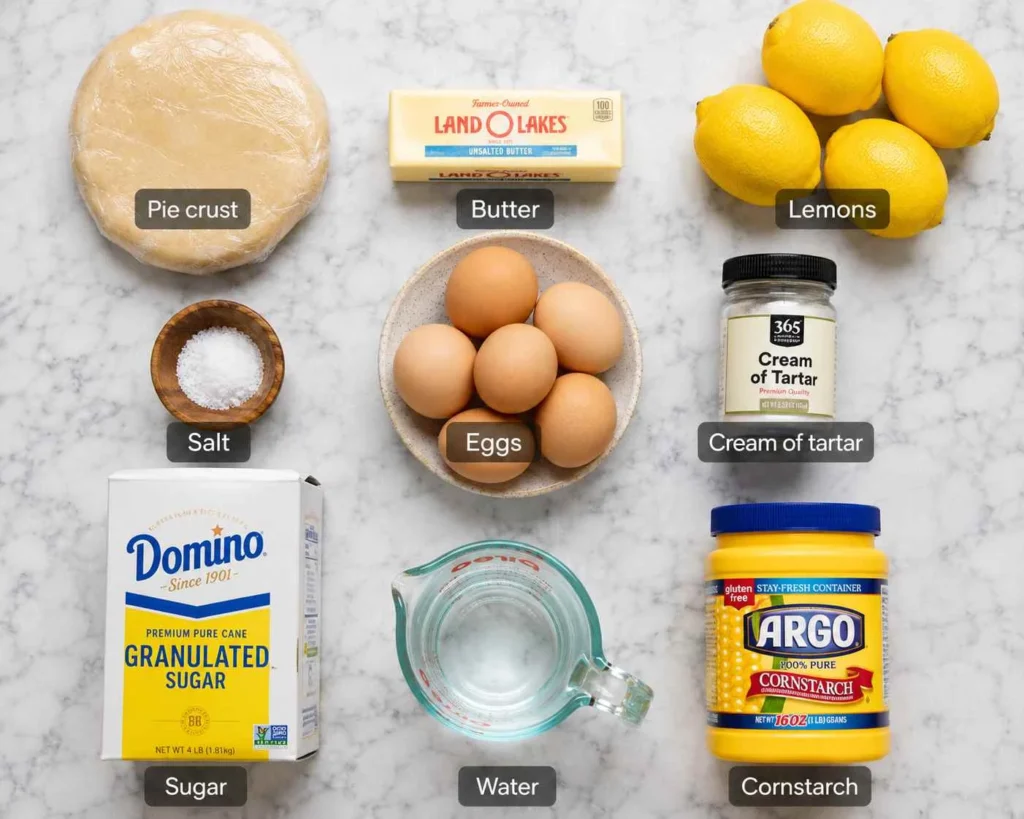
Gather everything before you start. The filling and meringue both move fast once they hit the heat, and having ingredients measured and within reach keeps the process smooth rather than frantic.
For the Crust
| Ingredient | Amount |
|---|---|
| All-purpose flour | 1 1/4 cups (160g) |
| Granulated sugar | 1 tablespoon |
| Salt | 1/2 teaspoon |
| Unsalted butter, cold and cubed | 1/2 cup (113g) |
| Egg yolk (optional, for a tender crust) | 1 |
| Ice water | 3–4 tablespoons |
For the Lemon Filling
| Ingredient | Amount |
|---|---|
| Granulated sugar | 1 1/2 cups (300g) |
| Cornstarch | 1/3 cup (40g) |
| Salt | 1/4 teaspoon |
| Water | 1 1/2 cups (360ml) |
| Egg yolks, lightly beaten | 5 large |
| Fresh lemon zest | 2 tablespoons |
| Fresh lemon juice | 3/4 cup (180ml), about 4–5 lemons |
| Unsalted butter | 3 tablespoons |
For the Meringue
| Ingredient | Amount |
|---|---|
| Egg whites, room temperature | 5 large |
| Cream of tartar | 1/2 teaspoon |
| Granulated sugar | 2/3 cup (135g) |
| Cornstarch | 1 teaspoon |
| Water | 2 tablespoons |
| Vanilla extract | 1/2 teaspoon |
How to Make Lemon Meringue Pie
Lemon meringue pie comes together in four stages: the crust, the lemon curd filling, the meringue, and the final bake that browns the top. Working in that order, with the crust fully cooled and the filling still hot when the meringue meets it, is what makes the difference between a pie that holds together and one that weeps on the counter.
Step 1: Make and Blind-Bake the Crust
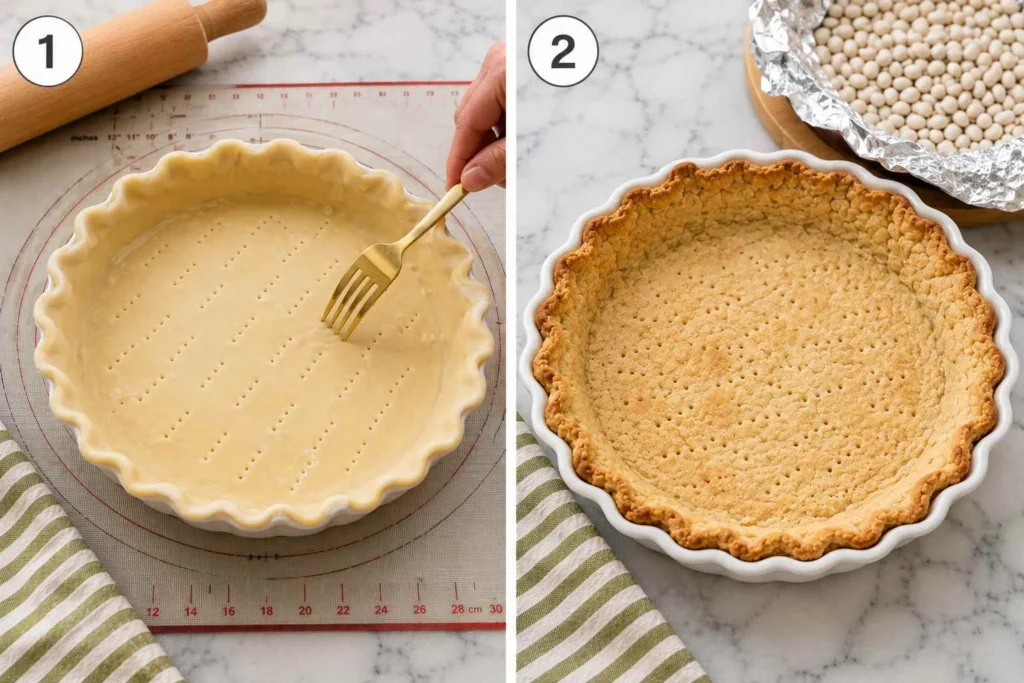
- Whisk the flour, sugar, and salt together in a large bowl.
- Cut the cold, cubed butter into the flour with a pastry blender or your fingers until the mixture looks like coarse crumbs with some pea-sized pieces remaining.
- Add the egg yolk, then drizzle in ice water one tablespoon at a time, tossing gently, until the dough just comes together when pressed.
- Shape the dough into a disc, wrap it, and chill for at least 30 minutes.
- Roll the dough out on a lightly floured surface and fit it into a 9-inch pie plate. Crimp the edges and chill for another 15 minutes.
- Prick the bottom with a fork, line with parchment paper, and fill with pie weights or dried beans.
- Blind bake at 375°F (190°C) for 20 minutes, then remove the weights and parchment and bake for another 8–10 minutes until golden. Cool completely on a wire rack before filling.
Step 2: Cook the Lemon Curd Filling
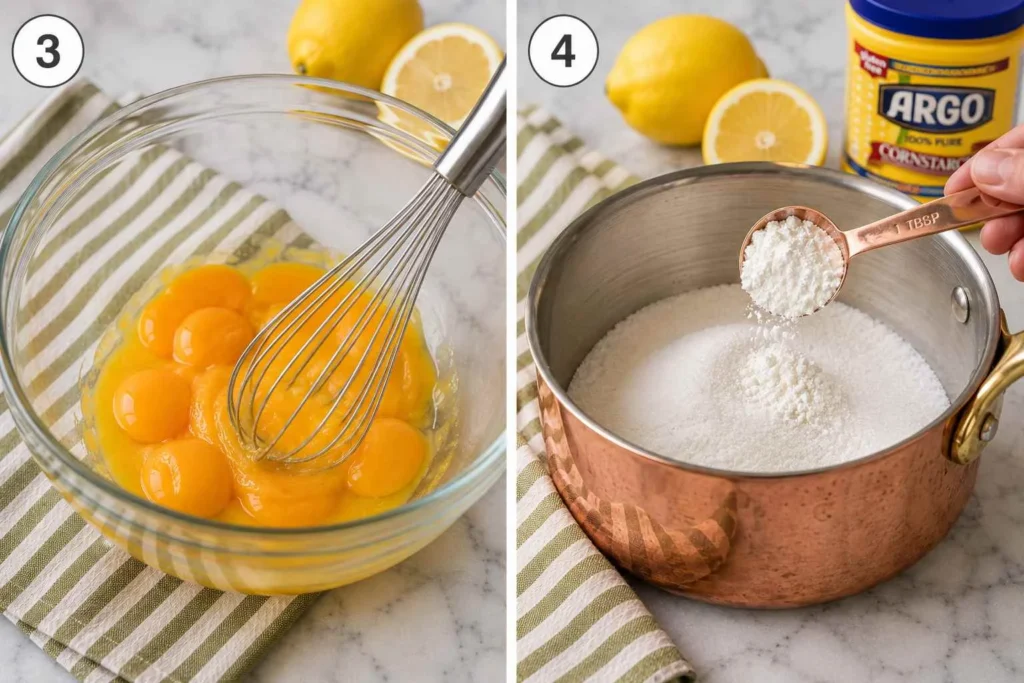
- In a medium saucepan, whisk together the sugar, cornstarch, salt, and water until smooth.
- Cook over medium heat, whisking constantly, until the mixture thickens and comes to a gentle boil, about 5–7 minutes.
- Ladle a small amount of the hot mixture into the beaten egg yolks, whisking constantly, to temper them. Repeat once more, then pour the tempered yolks back into the saucepan.
- Cook for another 2 minutes, whisking constantly, until the filling reaches about 170°F (77°C) and coats the back of a spoon. This fully cooks the yolks.
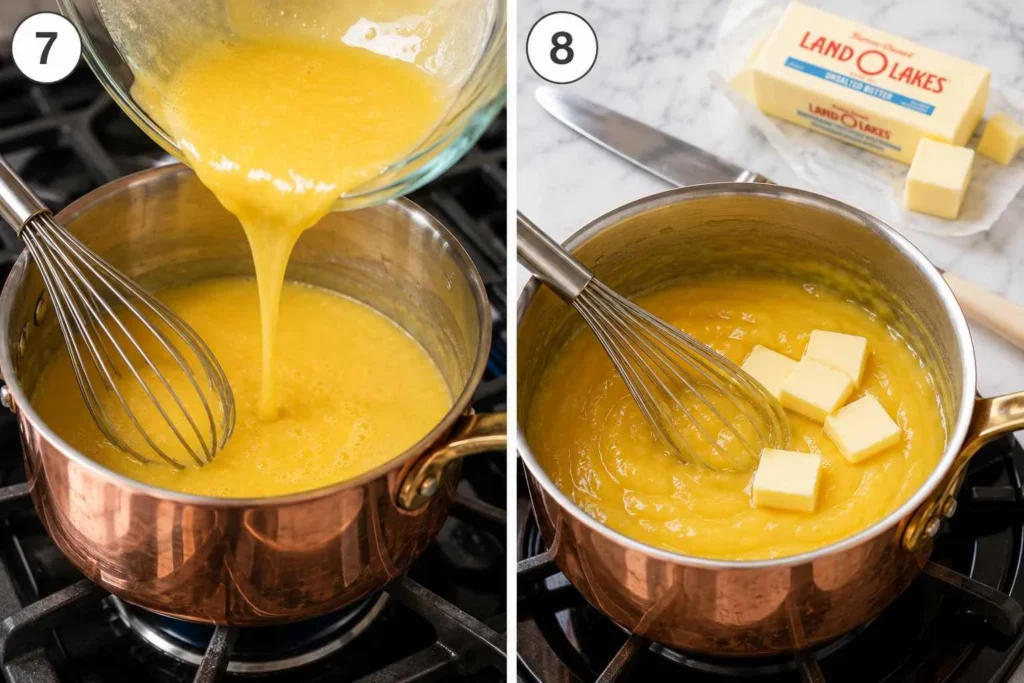
- Remove from heat and whisk in the lemon zest, lemon juice, and butter until glossy and smooth.
- Pour the hot filling directly into the cooled, baked crust and spread it into an even layer. Keep it hot — you’ll top it with meringue right away.
Step 3: Whip the Meringue
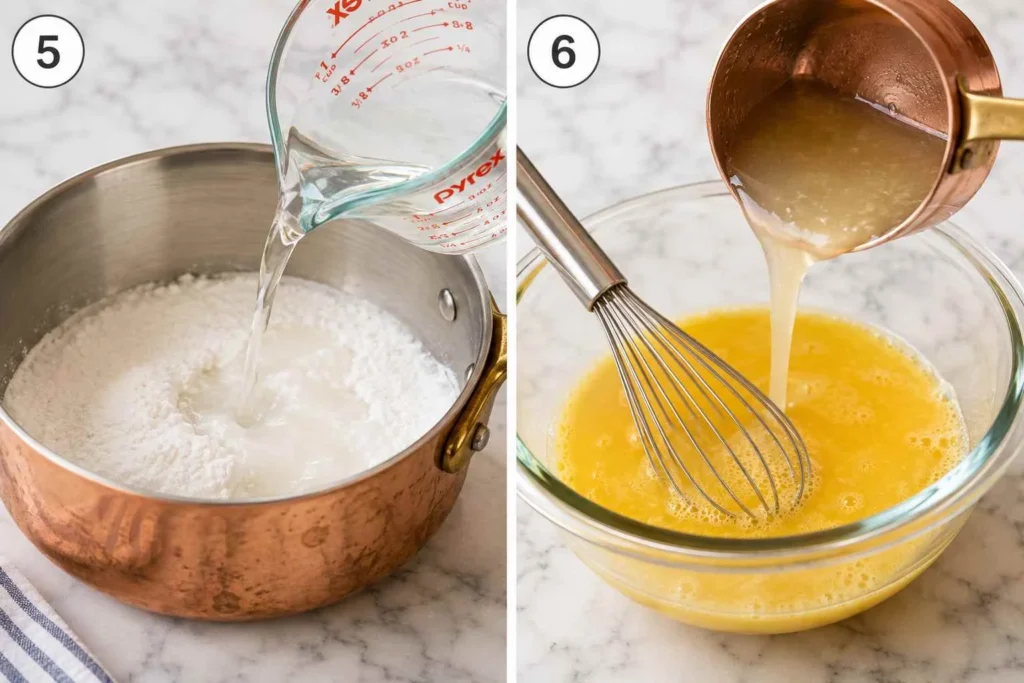
- In a small saucepan, whisk together the cornstarch and water, then cook over low heat, stirring, until it turns thick and translucent. Set this paste aside to cool slightly.
- In a clean, grease-free bowl, beat the room-temperature egg whites with the cream of tartar on medium speed until foamy.
- Increase the speed and gradually add the sugar, one tablespoon at a time, beating until the meringue holds stiff, glossy peaks.
- Beat in the vanilla and the cooled cornstarch paste until fully incorporated. The meringue should be thick and hold its shape when you lift the beaters.
Step 4: Bake and Brown the Meringue
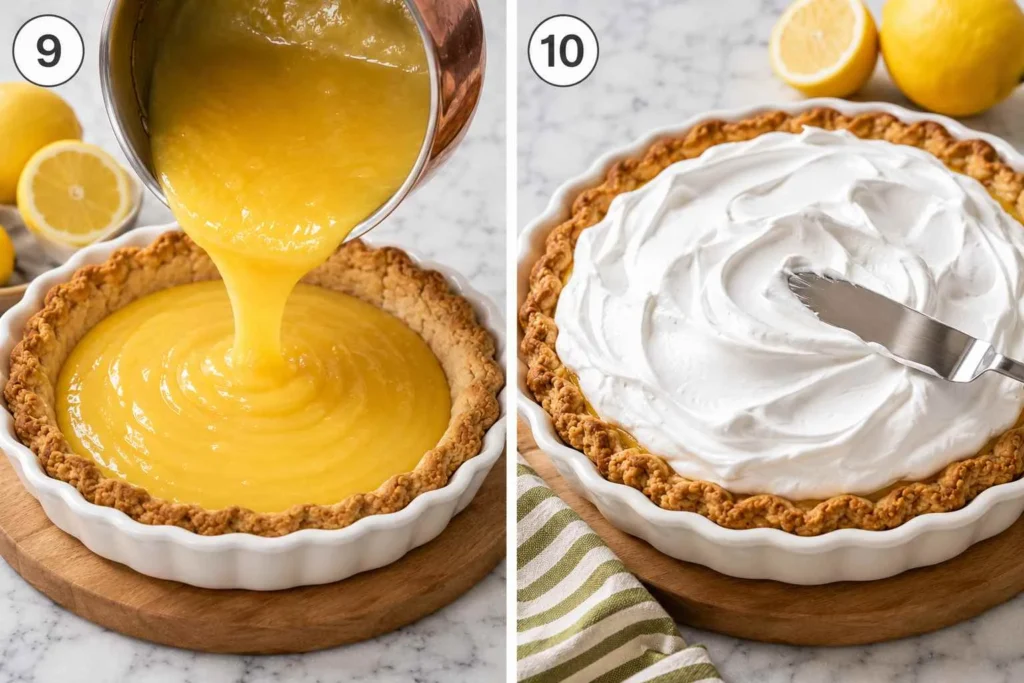
- While the lemon filling is still hot, spread the meringue over the top, working from the outer edge inward so it touches and seals to the crust all the way around.
- Use the back of a spoon or an offset spatula to create decorative peaks and swirls.
- Bake at 350°F (175°C) for 12–15 minutes, until the peaks are golden brown.
- Cool the pie at room temperature for about an hour, then refrigerate, uncovered, for 3–4 hours before slicing so the filling fully sets.
Tips for Perfect Lemon Meringue Pie
A few small habits separate a lemon meringue pie that looks like a bakery case showpiece from one that slides apart on the plate.
Prevent weeping meringue. Weeping — that layer of sticky syrup between the meringue and the filling — happens when undissolved sugar in the meringue draws moisture out of the egg whites, or when the meringue sits on a filling that’s gone cold. Spreading the meringue while the filling is still hot is your best defense, along with sealing it firmly to the crust edge. The cornstarch paste folded into the whites also acts like a sponge, holding onto moisture the sugar might otherwise pull loose. If you live somewhere humid, bake on a drier day when you can, since ambient moisture in the air makes weeping and beading more likely no matter how careful your technique is.
Prevent shrinking meringue. Meringue shrinks away from the crust when it isn’t anchored to the pastry itself, or when it’s overbeaten and loses elasticity. Always spread the meringue so it touches and covers the crust edge completely, not just the filling — that seal is what holds it in place as it bakes and cools.
Whip egg whites at room temperature. Cold egg whites don’t hold volume as well. Set them out for 20–30 minutes before you start, and make sure your bowl and beaters are completely grease-free, since any trace of fat will keep the whites from whipping to full volume.
Slice with a hot, wet knife. Dip your knife in hot water and wipe it dry between each cut. This keeps the meringue from dragging and gives you clean, bakery-style slices.
Don’t skip the full chill. Cutting into a lemon meringue pie before the filling has had several hours in the refrigerator is the most common reason it looks runny on the plate. The curd needs that cold time to fully set.
Variations and Dietary Swaps
Lemon meringue pie is easy to adapt once you understand the core structure of crust, curd, and meringue. If you’re building out a bigger citrus dessert spread, this pie sits well on a table next to our pies and tarts collection.
| Variation | How to Make the Swap |
|---|---|
| Gluten-free crust | Substitute a 1:1 gluten-free flour blend for the all-purpose flour in the crust |
| Dairy-free | Use a plant-based butter alternative in both the crust and the filling |
| Lower sugar | Reduce the sugar in the filling by up to 1/4 cup; taste and adjust, since sugar also affects texture |
| Graham cracker crust | Swap the pastry crust for a baked graham cracker crumb crust for a shortcut base |
| Key lime meringue pie | Replace the lemon juice and zest with fresh key lime juice and zest for a tart variation |
| Swiss meringue topping | Whisk egg whites and sugar over a double boiler to 160°F before whipping, for a more stable, silkier meringue that’s less prone to weeping |
How to Store Lemon Meringue Pie
Lemon meringue pie is a perishable dessert because of the egg-based filling and topping, so it needs to stay refrigerated rather than sitting out on the counter. According to the USDA Food Safety and Inspection Service, perishable foods shouldn’t sit at room temperature for more than two hours, so get your pie into the refrigerator promptly after it’s fully cooled.
| Storage Method | How Long | Notes |
|---|---|---|
| Room temperature | Up to 2 hours | Do not leave out longer; refrigerate promptly |
| Refrigerator | 3–4 days | Loosely tent with foil or plastic wrap, avoiding direct contact with the meringue |
| Freezer | Not recommended | Meringue breaks down, weeps, and turns rubbery or grainy once thawed |
Meringue-topped pies genuinely don’t freeze well. The whipped egg whites lose their structure as ice crystals form and then melt, leaving you with a weepy, deflated topping even if the crust and filling survive the process intact. If you want a freezer-friendly option, bake and freeze the crust and filling separately, and make the meringue fresh the day you plan to serve it.
Serving Suggestions
Lemon meringue pie is bright and rich at once, so it doesn’t need much dressing up. A dusting of extra lemon zest over the top adds color and a fresh citrus aroma right before serving. If you’re feeding a crowd, pair a slice with a scoop of vanilla ice cream to balance the tartness, or serve it alongside fresh berries for a lighter finish. It’s a natural fit for spring and summer gatherings, but honestly, it earns a spot on the dessert table any time of year, especially next to other citrus bakes, like this lemon cake or a batch of lemon cupcakes, if you’re building out a full lemon dessert spread.
Nutrition Facts
These values are estimates per slice, based on a pie cut into 8 servings, and will vary depending on the exact ingredients and brands you use. For detailed nutrient data on individual ingredients, the USDA FoodData Central database is a reliable reference.
| Nutrient | Amount per Slice |
|---|---|
| Calories | 350 kcal |
| Total Fat | 12g |
| Saturated Fat | 6g |
| Cholesterol | 145mg |
| Sodium | 210mg |
| Total Carbohydrates | 57g |
| Sugars | 40g |
| Protein | 5g |
Frequently Asked Questions
Why does my lemon meringue pie weep?
Weeping usually happens when undissolved sugar in the meringue pulls moisture out of the egg whites, or when the meringue is spread over a filling that’s already cooled. Adding a cooked cornstarch paste to the whipped whites, spreading the meringue while the filling is still hot, and sealing it to the crust edge all help prevent the syrupy layer that forms between meringue and filling.
Is lemon meringue pie safe to eat, given the egg whites aren’t fully cooked?
The lemon curd filling here is fully cooked on the stovetop, so the yolks reach a safe temperature well before the pie is assembled. The meringue, made from whipped egg whites and sugar, is briefly baked until golden, which browns and sets the surface. For the best food safety margin and the most stable texture, bake the meringue until it reaches a safe internal temperature throughout, or use a Swiss or Italian meringue method, where the egg whites are cooked with a hot sugar syrup or over a double boiler before whipping. The USDA Food Safety and Inspection Service recommends cooking egg dishes to an internal temperature of 160°F, which the Swiss or Italian method achieves directly during preparation.
Can I make lemon meringue pie ahead of time?
You can bake the crust up to a day ahead and store it, well wrapped, at room temperature. The lemon filling can also be made a day in advance and refrigerated separately. However, the meringue is best made and baked the same day you plan to serve the pie, since it doesn’t hold its texture well over multiple days, especially once refrigerated.
Why did my meringue shrink after baking?
Shrinking happens when the meringue isn’t anchored to the crust or when it’s overbeaten past the point of stable peaks. Always spread meringue so it touches and covers the crust edge completely, not just the filling, and stop whipping as soon as you reach stiff, glossy peaks rather than continuing until the mixture looks dry or clumpy. For more technique detail, King Arthur Baking’s guide to meringue rules is a good reference.
Can I freeze lemon meringue pie?
Freezing isn’t recommended for a fully assembled lemon meringue pie. The meringue’s structure breaks down as it freezes and thaws, leaving it weepy and rubbery. If you want to prep ahead, freeze the baked crust and the lemon filling separately, then make and bake fresh meringue on the day you serve it.
Ready to bring this one to your next gathering? Print the recipe card below, gather your ingredients, and give your meringue a proper chance to shine. Check out our recipe badges page to see how we rate and tag recipes like this one across the site.
Lemon Meringue Pie Recipe Card

Lemon Meringue Pie
Description
A classic lemon meringue pie with a flaky butter crust, a silky stovetop lemon curd filling, and a tall, toasted meringue topping that’s sealed to the crust edge to prevent weeping and shrinking.
Ingredients
For the Crust:
- 1 1/4 cups (160g) all-purpose flour
- 1 tablespoon granulated sugar
- 1/2 teaspoon salt
- 1/2 cup (113g) unsalted butter, cold and cubed
- 1 egg yolk (optional, for a tender crust)
- 3–4 tablespoons ice water
For the Lemon Filling:
- 1 1/2 cups (300g) granulated sugar
- 1/3 cup (40g) cornstarch
- 1/4 teaspoon salt
- 1 1/2 cups (360ml) water
- 5 large egg yolks, lightly beaten
- 2 tablespoons fresh lemon zest
- 3/4 cup (180ml) fresh lemon juice, about 4–5 lemons
- 3 tablespoons unsalted butter
For the Meringue:
- 5 large egg whites, room temperature
- 1/2 teaspoon cream of tartar
- 2/3 cup (135g) granulated sugar
- 1 teaspoon cornstarch
- 2 tablespoons water
- 1/2 teaspoon vanilla extract
Instructions
- Whisk the flour, sugar, and salt together in a large bowl.
- Cut the cold, cubed butter into the flour until the mixture looks like coarse crumbs with pea-sized pieces remaining.
- Add the egg yolk, then drizzle in ice water one tablespoon at a time until the dough just comes together.
- Shape into a disc, wrap, and chill for at least 30 minutes.
- Roll out and fit into a 9-inch pie plate. Crimp the edges and chill for another 15 minutes.
- Prick the bottom, line with parchment, and fill with pie weights.
- Blind bake at 375°F for 20 minutes, remove weights, then bake 8–10 minutes more until golden. Cool completely.
- Whisk sugar, cornstarch, salt, and water together in a saucepan.
- Cook over medium heat, whisking constantly, until thick and gently boiling, about 5–7 minutes.
- Temper the egg yolks with a little hot mixture, then whisk the yolks back into the saucepan.
- Cook 2 more minutes until the filling reaches about 170°F and coats the back of a spoon.
- Off heat, whisk in lemon zest, lemon juice, and butter until smooth. Pour hot into the baked crust.
- Cook the cornstarch and water together in a small saucepan until thick and translucent; cool slightly.
- Beat room-temperature egg whites with cream of tartar until foamy.
- Gradually add sugar, beating until stiff, glossy peaks form.
- Beat in vanilla and the cooled cornstarch paste.
- Spread the meringue over the hot filling, sealing it to the crust edge all the way around.
- Bake at 350°F for 12–15 minutes until golden.
- Cool at room temperature 1 hour, then refrigerate uncovered 3–4 hours before slicing.
Crust:
Lemon Curd Filling:
Meringue:
Bake and Cool:
Equipment You’ll Need
- 9-inch pie plate
- Pastry blender or fork
- Rolling pin
- Pie weights or dried beans
- Medium saucepan
- Small saucepan
- Whisk
- Stand mixer or hand mixer
- Microplane or zester
- Offset spatula