

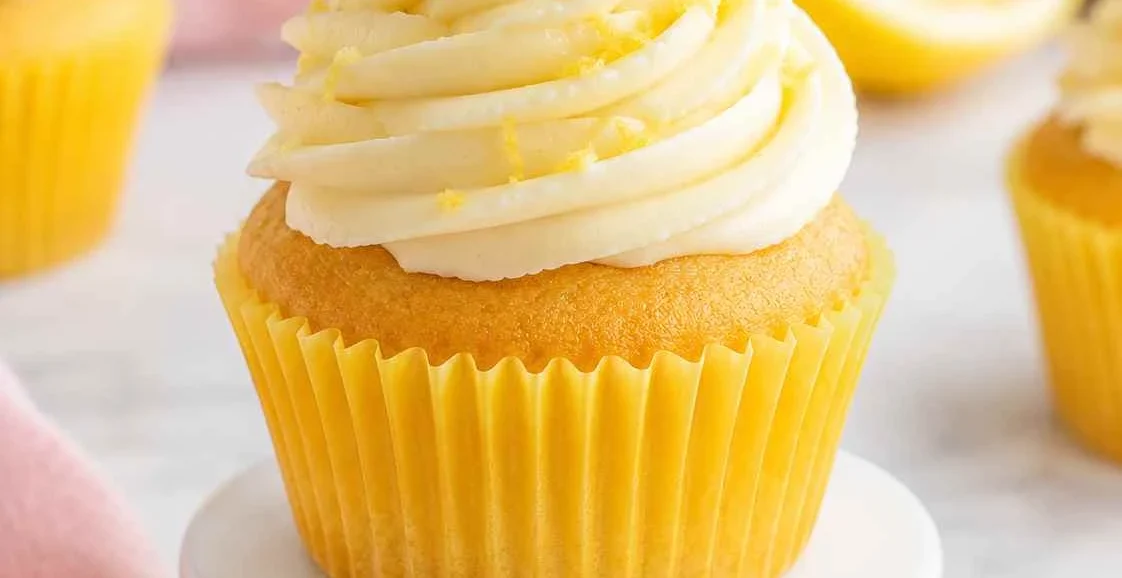
There’s a particular kind of disappointment that comes from biting into a “lemon” cupcake that tastes like plain vanilla cake with a faint citrus memory clinging to the edges. You can see the little flecks of zest in the crumb, so you know someone meant for it to taste like lemon. But what actually hits your tongue is sugar, a little tang, and not much else. It’s the bakery-case equivalent of a false promise.
Real lemon flavor is different. It’s bright and a little sharp, the kind of taste that wakes up your whole mouth before the sweetness even registers. It’s the smell of your grandmother’s kitchen when she was zesting lemons for a pound cake, or the first bite of lemon bar at a summer potluck that made you go back for a second piece before you’d even finished the first. Good lemon desserts don’t hide behind sugar — they cut through it.
This recipe is built around getting that real, unmistakable lemon flavor into a cupcake, not just a hint of it. The trick isn’t more lemon juice, and it isn’t a splash of lemon extract from the baking aisle. It comes down to one simple habit most home bakers skip: rubbing the zest into the sugar before you do anything else. Once you’ve made lemon cupcakes this way, the pale, timid version is hard to go back to.
Why This Lemon Cupcakes Recipe Works
Most of a lemon’s flavor doesn’t live in the juice — it lives in the zest. The colored outer skin of the lemon is packed with tiny oil glands, and those oils carry the aromatic compounds that give lemon its distinct, perfumey punch. Juice mostly brings acidity and moisture, which is useful, but it’s not where the flavor is concentrated. That’s why a cupcake made with juice alone can taste sour without tasting particularly lemony.
The fix is simple: instead of just tossing lemon zest into the batter, you rub it into the granulated sugar with your fingertips before you start creaming. The friction and the natural oils on your skin help release those aromatic oils from the zest and distribute them evenly through every grain of sugar. By the time you cream that sugar with the butter, the lemon flavor is already dispersed through the entire mixture rather than sitting in isolated little flecks. King Arthur Baking’s guide to baking with lemon beyond juice covers this same principle in more depth if you want to see how it applies across other lemon desserts.
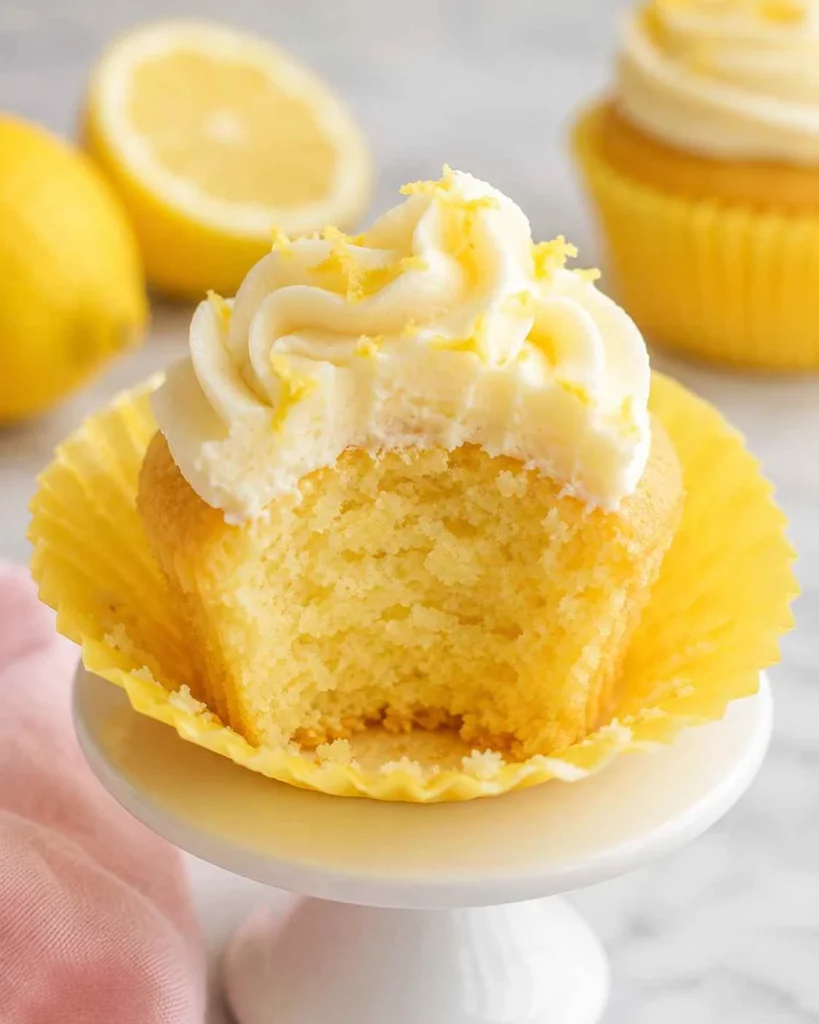
It only takes about a minute of rubbing, and it’s the single biggest difference between a lemon cupcake that tastes like lemon and one that just tastes like cake with a rumor of lemon somewhere in it.
Lemon Cupcakes Ingredients
This recipe uses ingredients you probably already keep on hand, aside from the lemons themselves. Buy your lemons a day or two ahead if you can — you’ll need both the zest and a couple tablespoons of juice, and fresh fruit makes a real difference in both the cupcakes and the buttercream.
Ingredient Table — Lemon Cupcake Batter
| Ingredient | Amount | Notes |
|---|---|---|
| Cake flour (or all-purpose) | 1 1/2 cups (180g) | Cake flour gives a slightly more tender crumb |
| Baking powder | 1 1/2 tsp | Check that it’s fresh for a good rise |
| Salt | 1/4 tsp | |
| Granulated sugar | 1 cup (200g) | Rubbed with the zest before creaming |
| Lemon zest | Zest of 2 lemons | Yellow part only, avoid the bitter white pith |
| Unsalted butter, softened | 1/2 cup (113g) | |
| Large eggs, room temperature | 2 | |
| Fresh lemon juice | 1 tbsp | |
| Vanilla extract | 1/2 tsp | |
| Buttermilk | 1/2 cup (120ml) | Room temperature |
Ingredient Table — Lemon Buttercream
| Ingredient | Amount | Notes |
|---|---|---|
| Unsalted butter, softened | 1 cup | |
| Powdered sugar, sifted | 3 1/2 cups | Sifting prevents lumps |
| Fresh lemon juice | 2-3 tbsp | Add gradually to control texture |
| Lemon zest | 1 tsp | |
| Salt | pinch | Balances the sweetness |
How to Make Lemon Cupcakes From Scratch
Once your zest and sugar are rubbed together, the rest of this recipe comes together the way most cupcake batters do — the main thing to watch is not overmixing once the flour goes in. Here’s the process broken into three stages.
Rub the Zest
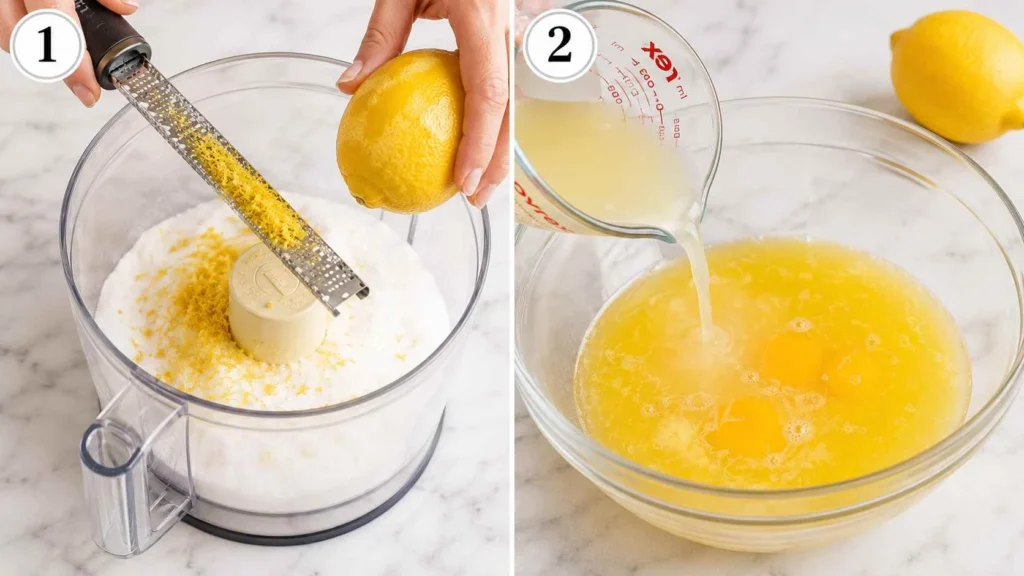
- Zest both lemons directly over the granulated sugar in a large mixing bowl, using a microplane or fine zester.
- Rub the zest into the sugar with your fingertips for about a minute, until the sugar turns damp, slightly clumpy, and very fragrant.
- Set the fragrant sugar aside — this is the base of your batter’s flavor.
Mix the Batter
- Preheat your oven to 350°F (175°C) and line a 12-cup muffin tin with cupcake liners.
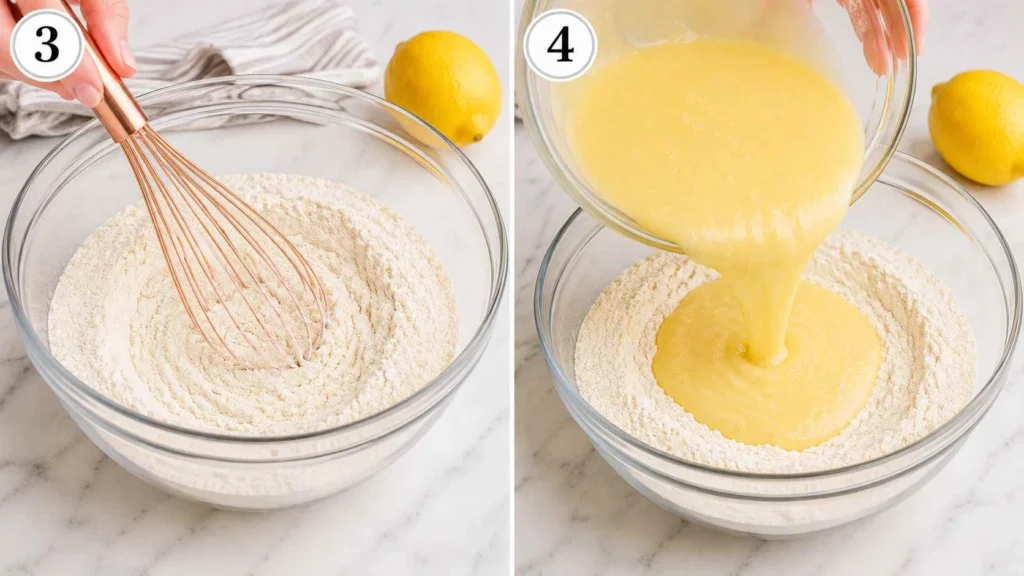
- In a separate bowl, whisk together the cake flour, baking powder, and salt. Set aside.
- Cream the lemon sugar with the softened butter on medium speed for 2-3 minutes, until pale and fluffy.
- Beat in the eggs one at a time, then add the lemon juice and vanilla extract, mixing until combined.
- With the mixer on low, add the dry ingredients and buttermilk in alternating additions — dry, wet, dry, wet, dry — mixing just until each addition disappears into the batter. Stop as soon as you no longer see streaks of flour.
Bake
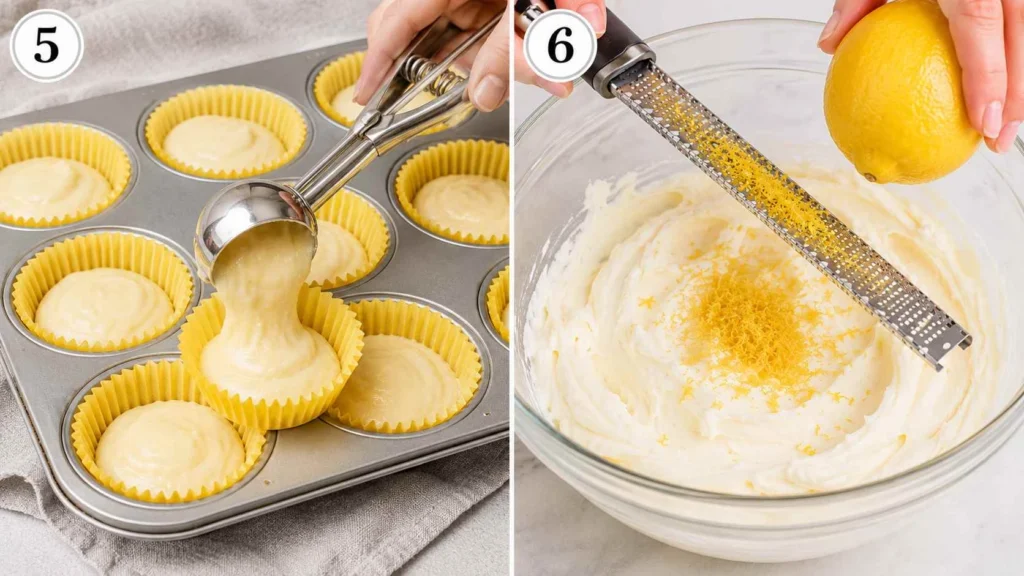
- Divide the batter evenly among the liners, filling each about two-thirds full.
- Bake at 350°F (175°C) for 18-20 minutes, until a toothpick inserted in the center comes out clean.
- Let the cupcakes cool in the tin for 5 minutes, then transfer to a wire rack to cool completely before frosting.
How to Make Lemon Buttercream
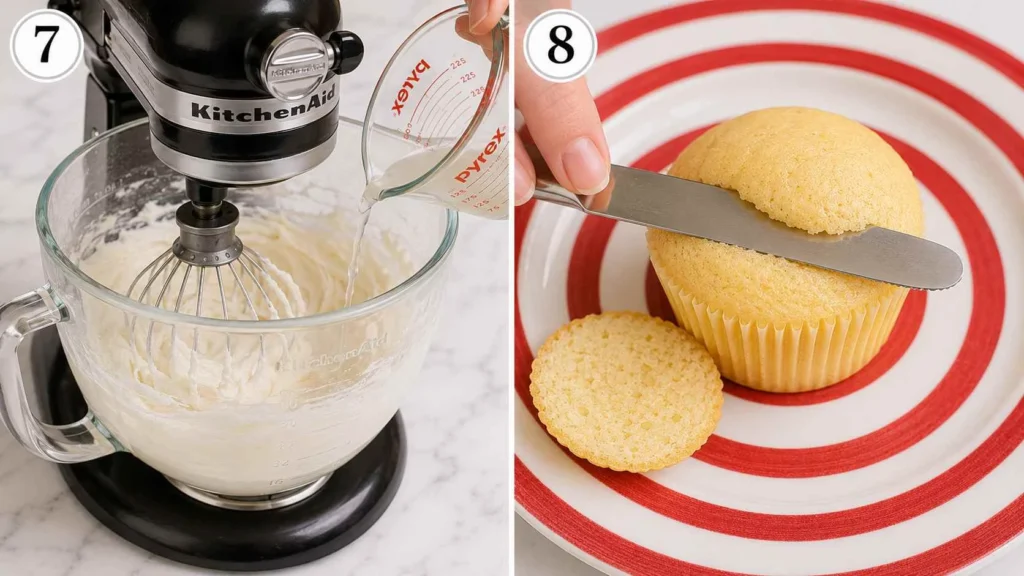
Lemon buttercream comes together the same way most American buttercreams do, with one small caveat: because you’re adding liquid in the form of lemon juice, you want to bring it in gradually so the frosting doesn’t turn soupy on you.
- Beat the softened butter on medium-high speed for 3-4 minutes, until pale in color and noticeably fluffy.
- Reduce the mixer to low and add the powdered sugar about a cup at a time, mixing until each addition is incorporated before adding more.
- Add the lemon juice and lemon zest gradually, a spoonful at a time, so the frosting doesn’t turn runny — stop adding juice once you hit the consistency you want.
- Add the pinch of salt and beat on medium-high for another 1-2 minutes, until the buttercream is light, fluffy, and easy to spread or pipe.
Tips for the Best Lemon Cupcakes
- Always zest your lemons before you juice them — it’s much harder, and messier, to zest a lemon after it’s been squeezed.
- Rub the zest into the sugar rather than just stirring it into the batter at the end. That extra minute of friction releases far more lemon oil and flavor.
- Use fresh lemon juice, not the bottled kind, for both the batter and the buttercream — bottled juice tastes flat and slightly metallic by comparison.
- Stop mixing as soon as the flour disappears into the batter. Overmixing develops gluten and leaves you with dense, tough cupcakes instead of tender ones.
- Let the cupcakes cool completely before frosting. Warm cupcakes will melt the buttercream right off the top.
- If you love bold-flavored cupcakes, it’s worth trying Mocha Cupcakes next — same idea of building a real, unmistakable flavor instead of a faint one, just on the coffee side of the spectrum.
Lemon Cupcake Variations
Once you’ve got the base recipe down, it’s an easy one to riff on. Here are a few directions worth trying.
- Lemon blueberry cupcakes: fold 3/4 cup of fresh blueberries, tossed in a little flour, into the finished batter before baking.
- Lemon lavender cupcakes: add 1/2 teaspoon of finely ground culinary lavender to the dry ingredients for a soft floral note behind the citrus.
- Mini cupcakes: use a mini muffin tin and reduce the bake time to about 10-12 minutes, checking early.
- Dairy-free swap: substitute a dairy-free butter alternative and a plant-based buttermilk (plant milk plus a teaspoon of vinegar or lemon juice) in both the cake and the frosting.
Dietary Variation Table
| Variation | Swap | Notes |
|---|---|---|
| Gluten-free | 1:1 gluten-free baking flour blend in place of cake flour | Look for a blend that already includes xanthan gum |
| Dairy-free | Plant-based butter and dairy-free buttermilk (plant milk + vinegar) in both cake and frosting | Choose a plant-based butter with a similar fat content to dairy butter for best texture |
How to Store Lemon Cupcakes
Because lemon buttercream is butter-based, frosted cupcakes should go in the refrigerator rather than sit out for extended periods, especially in a warm kitchen. The USDA’s food safety guidance on leftovers is a good general reference for how long dairy-based foods hold up safely at room temperature.
- Store unfrosted cupcakes at room temperature in an airtight container for up to 2 days.
- Store frosted cupcakes in the refrigerator, in an airtight container, for 3-4 days — let them sit at room temperature for 20-30 minutes before serving so the buttercream softens back up.
- Freeze unfrosted cupcakes, well wrapped, for up to 3 months.
- Freezing frosted cupcakes isn’t recommended — the buttercream texture suffers, and condensation can make the cake soggy as it thaws.
Make-Ahead & Storage Timeline Table
| Storage Method | How Long | Notes |
|---|---|---|
| Room temperature, unfrosted | 2 days | Keep in an airtight container |
| Refrigerated, frosted | 3-4 days | Bring to room temperature before serving |
| Freezer, unfrosted | 3 months | Wrap tightly to prevent freezer burn |
| Freezer, frosted | Not recommended | Buttercream texture and cake moisture both suffer |
What to Serve With Lemon Cupcakes
Lemon cupcakes are bright enough to hold their own at a spring brunch, a summer cookout, or a holiday table that needs something lighter next to heavier desserts. A few pairing ideas:
- Fresh berries — raspberries and blueberries both play well against the citrus.
- A pot of black tea or iced tea, which echoes the cupcake’s brightness instead of competing with it.
- Shortbread cookies on the same dessert table, for textural contrast.
If you’re craving the same bright, zesty flavor but want a full cake instead of individual cupcakes, our Easy Lemon Cake uses the same zest-forward approach in a moist, single-cake format that’s perfect for slicing at a gathering.
Lemon Cupcakes Nutrition Facts
These figures are estimates for one frosted cupcake, based on a batch of 12, and will vary depending on your exact ingredients and portion sizes.
Nutrition Table
| Nutrient | Amount per Cupcake |
|---|---|
| Calories | ~280-310 kcal |
| Total Fat | ~13-15g |
| Carbohydrates | ~38-41g |
| Sugar | ~29-31g |
| Protein | ~2-3g |
Frequently Asked Questions
How do you make lemon cupcakes from scratch?
You make lemon cupcakes from scratch by rubbing fresh lemon zest into sugar to release its oils, creaming that sugar with butter, then mixing in eggs, lemon juice, and vanilla before alternating in the dry ingredients and buttermilk. Bake at 350°F (175°C) for 18-20 minutes, cool completely, and top with lemon buttercream.
Why don’t my lemon cupcakes taste very lemony?
This usually comes down to where the lemon flavor is coming from. Juice alone brings acidity but not much aroma, since most of a lemon’s flavor lives in the oils found in the zest. If your lemon cupcakes taste flat, try zesting more generously and rubbing that zest into the sugar before creaming, rather than adding it as an afterthought at the end.
Can I use bottled lemon juice for lemon cupcakes?
You can in a pinch, but fresh juice makes a noticeable difference. Bottled lemon juice tends to taste flatter and slightly metallic compared to juice squeezed straight from the fruit, and since you’re already zesting fresh lemons for this recipe, juicing them at the same time is barely any extra work.
How long do lemon cupcakes last?
Unfrosted lemon cupcakes keep at room temperature in an airtight container for about 2 days. Once frosted with lemon buttercream, they should go in the refrigerator, where they’ll stay good for 3-4 days — just let them warm up a bit before serving.
Can I make lemon cupcakes ahead of time?
Yes. You can bake the unfrosted cupcakes up to a day or two in advance and store them at room temperature in an airtight container, or freeze them for up to 3 months. Make the buttercream fresh, or refrigerate it separately, and frost the cupcakes the day you plan to serve them for the best texture.
Ready to Bake?
Real lemon flavor doesn’t happen by accident — it comes from getting the zest’s oils into your batter before you ever turn on the mixer, and from using fresh juice instead of the bottled substitute. Once you’ve made lemon cupcakes this way, the pale, faintly-lemon version most bakeries sell is hard to settle for again.
If this recipe hit the spot, take a look through more of our cupcake recipes for other flavor combinations worth trying, or browse recipes by badge to find something that matches whatever you’re in the mood to bake next.
Lemon Cupcakes Recipe Card
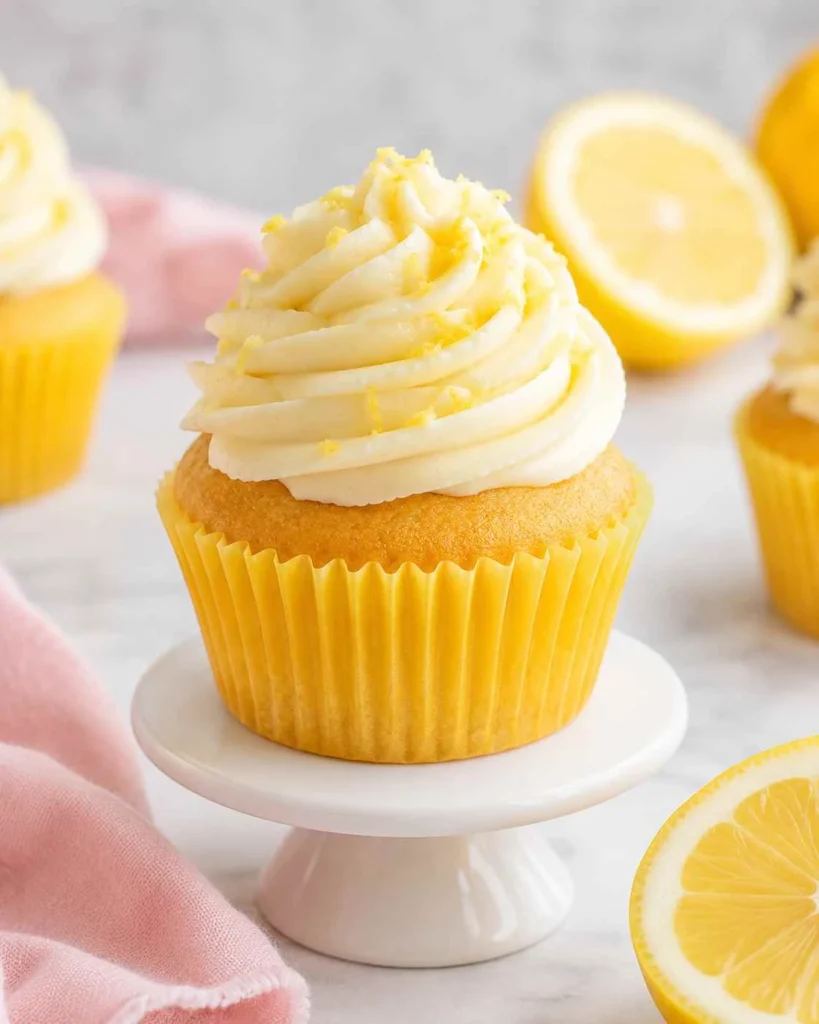
Lemon Cupcakes
Description
Bright, zesty lemon cupcakes topped with real lemon buttercream.
Ingredients
For the Lemon Cupcakes:
- Cake flour (or all-purpose)
- Baking powder
- Salt
- Granulated sugar
- Lemon zest
- Unsalted butter, softened
- Large eggs, room temperature
- Fresh lemon juice
- Vanilla extract
- Buttermilk
For the Lemon Buttercream:
- Unsalted butter, softened
- Powdered sugar, sifted
- Fresh lemon juice
- Lemon zest
- Salt
Instructions
- Zest both lemons directly over the granulated sugar in a large mixing bowl.
- Rub the zest into the sugar with your fingertips for about a minute, until damp, clumpy, and fragrant.
- Preheat oven to 350°F (175°C) and line a 12-cup muffin tin with cupcake liners.
- Whisk the flour, baking powder, and salt together in a separate bowl.
- Cream the lemon sugar with the butter until pale and fluffy, about 2-3 minutes.
- Beat in the eggs, lemon juice, and vanilla extract until combined.
- Add the dry ingredients and buttermilk in alternating additions, mixing just until combined.
- Fill cupcake liners two-thirds full with batter.
- Bake for 18-20 minutes, until a toothpick comes out clean.
- Cool in the tin for 5 minutes, then transfer to a wire rack to cool completely before frosting.
- Beat the butter until pale and fluffy, about 3-4 minutes.
- Add the powdered sugar gradually, about a cup at a time, mixing well between additions.
- Add the lemon juice and zest gradually so the frosting doesn’t turn runny.
- Beat until light and spreadable, then frost the cooled cupcakes.
Rub the Zest
Mix the Batter
Bake
Make the Lemon Buttercream
Equipment You’ll Need
- 12-cup muffin tin
- Cupcake liners
- Microplane or fine zester
- Stand or hand mixer
- Cooling rack
- Piping bag and tip (optional)