

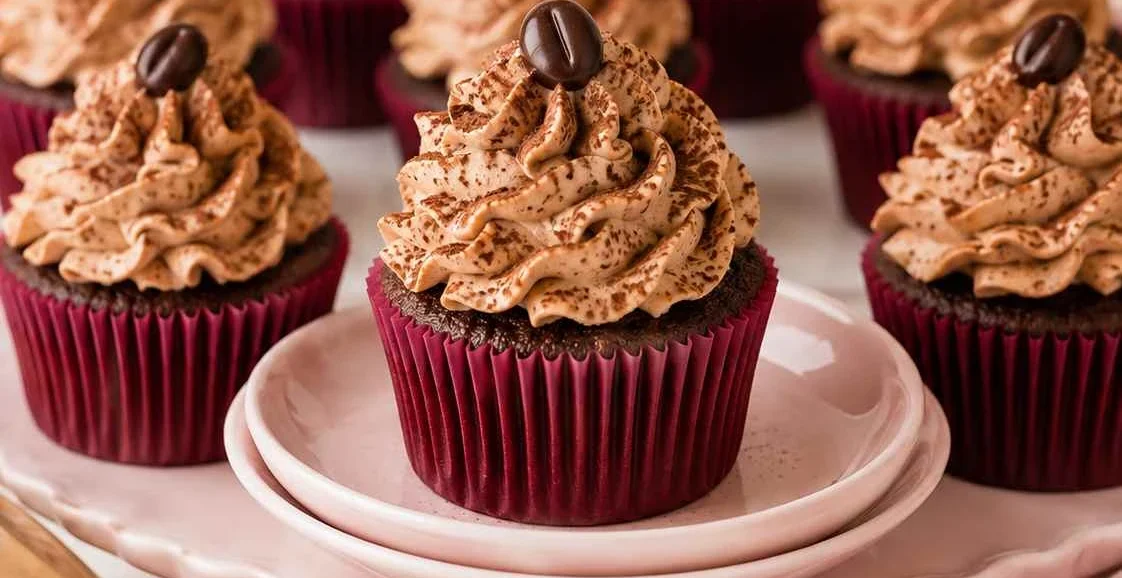
Mocha cupcakes get real, noticeable coffee flavor when you dissolve the espresso powder in the batter’s hot liquid before it goes anywhere near the flour, rather than whisking the powder in dry with the other dry ingredients. Undissolved espresso powder stays locked inside its own granules through baking, which is the most common reason a “mocha” cupcake ends up tasting like a plain chocolate one.
Mocha, chocolate and coffee together, sounds simple enough to get right, but a lot of home versions come out of the oven with barely any coffee flavor at all. The chocolate usually isn’t the problem. The coffee is.
This guide covers a full mocha cupcake and espresso buttercream recipe, plus the dissolving technique and ingredient choice that make the coffee flavor actually show up.
Key Takeaways
- Dissolve espresso powder in the batter’s hot liquid (hot water or hot coffee) before mixing it in, not into the dry flour mixture.
- Use espresso powder, not instant coffee. Espresso powder is finer and more soluble, and reads less bitter in baked goods.
- Add espresso powder to the frosting too, dissolved in a splash of milk or cream, for coffee flavor that carries through the whole cupcake, not just the crumb.
- A cupcake batter that looks thin after the hot liquid goes in is normal; that liquid is what carries the coffee flavor through the batter.
What Are Mocha Cupcakes?
Mocha cupcakes are chocolate cupcakes flavored with coffee, typically espresso powder dissolved into the batter, topped with an espresso buttercream or a coffee-spiked chocolate ganache. The name comes from mocha, the coffee drink built on the same chocolate-and-coffee pairing.
What separates a good mocha cupcake from a mediocre one usually isn’t the recipe’s ingredient list, most versions look similar on paper, it’s whether the coffee flavor was actually extracted from the espresso powder before baking locked it in place.
Done right, you get a moist chocolate cupcake with coffee flavor woven through the crumb itself, not just sitting on top in the frosting.
What Ingredients Do You Need for Mocha Cupcakes?
Thirteen ingredients split between the mocha cupcake base and the espresso buttercream.
| Ingredient | Amount | Purpose/Notes |
|---|---|---|
| All-purpose flour | 1 cup | Structure |
| Unsweetened cocoa powder | 1/3 cup | Chocolate flavor |
| Baking soda | 3/4 tsp | Lift |
| Baking powder | 1/4 tsp | Additional lift |
| Salt | 1/4 tsp | Balances sweetness |
| Granulated sugar | 3/4 cup | Sweetness |
| Vegetable oil | 1/3 cup | Keeps cupcakes moist |
| Egg | 1 large | Structure |
| Vanilla extract | 1/2 tsp | Flavor |
| Buttermilk | 1/2 cup | Moisture and tenderness |
| Hot water | 1/4 cup | Dissolves the espresso powder, thins the batter |
| Espresso powder (batter) | 1 1/2 tsp | Coffee flavor throughout the crumb |
| Unsalted butter, powdered sugar, espresso powder, milk (frosting) | 1 cup, 3 cups, 1 tsp, 2-3 tbsp | Espresso buttercream |
How Do You Make Mocha Cupcakes? (Step-by-Step)
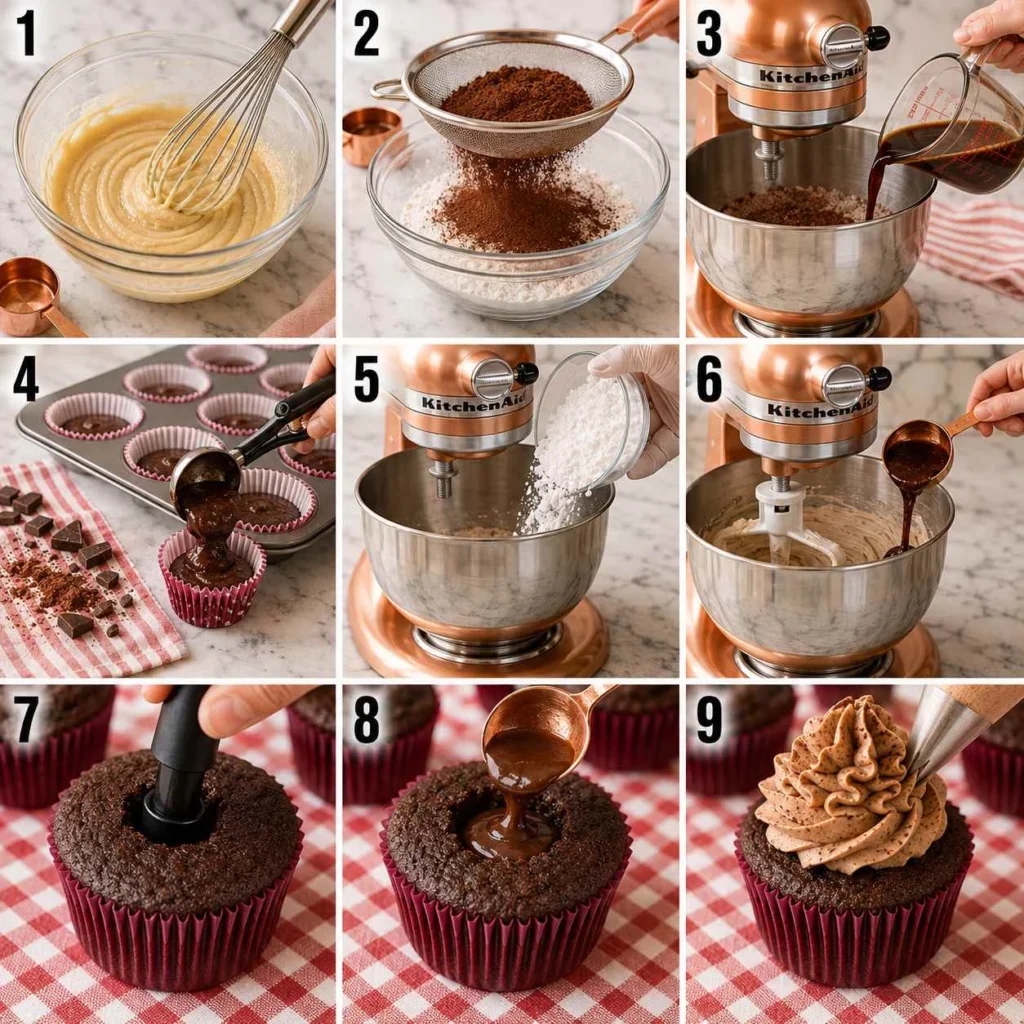
- Preheat and prep. Heat the oven to 350°F (175°C) and line a standard muffin tin with 12 liners.
- Whisk the dry ingredients. Combine the flour, cocoa powder, baking soda, baking powder, and salt.
- Whisk the wet ingredients. Combine the oil, sugar, egg, and vanilla.
- Alternate dry ingredients and buttermilk. Add in three additions, mixing just until combined.
- Dissolve the espresso powder. Stir the espresso powder into the hot water until fully dissolved, then stir this into the batter. The batter will look thin; this is normal.
- Bake. Fill liners two-thirds full and bake 18-20 minutes, until a toothpick comes out clean. Cool completely.
- Make the frosting. Dissolve the espresso powder in the milk. Beat the butter until smooth, then add powdered sugar gradually, alternating with the espresso milk, until fluffy.
- Frost. Pipe or spread the espresso buttercream over the cooled cupcakes.
Dissolving Espresso Powder the Right Way
Espresso powder is soluble, but it needs a liquid and a bit of heat to actually dissolve rather than just distribute. Stirring it into hot water until it disappears completely, before that water goes into the batter, releases the flavor compounds into the liquid where they’ll spread evenly through the crumb.
Whisking espresso powder straight into the dry flour mixture skips that step. The powder gets distributed, but a meaningful portion of it stays as intact granules through mixing and baking, and flavor that’s still locked inside a granule doesn’t reach your tongue the way dissolved flavor does.
Espresso Powder vs. Instant Coffee
Espresso powder and instant coffee aren’t interchangeable in baking, even though both dissolve in hot liquid. Espresso powder is ground finer and roasted for a more concentrated, less bitter flavor, while instant coffee tends to read harsher and more one-note once it’s baked into a crumb rather than sipped as a drink.
Either will technically work, but espresso powder is the more reliable choice if the goal is real coffee depth without pushing the cupcake toward bitter.
Why Does Coffee Flavor Taste Weak in Baked Mocha Cupcakes?
Baking is hard on delicate flavor compounds, and coffee’s aromatic compounds are more volatile than most bakers expect, some break down or evaporate off during the bake regardless of how the espresso powder was added. Starting with fully dissolved espresso powder means more of that flavor is already distributed through the batter’s liquid before heat has a chance to work against it.
An undissolved granule of espresso powder sitting in dry flour has to first absorb moisture from the batter around it before it can release flavor, and that process competes directly with the batter setting up in the oven. By the time the granule has released what it’s going to release, baking is largely finished, and a portion of that flavor never fully made it into the crumb.
Building coffee flavor in two places, the batter and the frosting, also compensates for what’s inevitably lost to baking; even a well-dissolved batter will taste noticeably weaker after 18-20 minutes at 350°F than the batter tasted raw, so a coffee-forward frosting picks up the difference (Serious Eats, 2026).
Troubleshooting Common Mocha Cupcake Problems
- Coffee flavor is barely noticeable. The espresso powder was likely whisked into the dry flour instead of dissolved in hot liquid first. Dissolve it fully before adding it to the batter, and add some to the frosting too.
- Cupcakes taste bitter instead of coffee-forward. Instant coffee was probably used instead of espresso powder, or too much was used. Swap to espresso powder and start with the amount specified.
- Frosting has visible gritty specks. The espresso powder wasn’t fully dissolved in the milk before it went into the butter. Stir it into warm milk until it disappears completely first.
- Batter looks too thin after adding the coffee liquid. This is normal for a mocha cupcake; the hot liquid is what carries the coffee flavor. It bakes up normally.
- Cupcakes taste like plain chocolate. Same root cause as weak flavor: undissolved or insufficient espresso powder. Double-check it dissolved completely in the hot water before mixing it in.
How to Store, Freeze, and Make Mocha Cupcakes Ahead of Time
| Method | How | Storage Time |
|---|---|---|
| Room temperature (unfrosted) | Airtight container | Up to 3 days |
| Refrigerate (frosted) | Airtight container | Up to 5 days |
| Freeze unfrosted cupcakes | Cool completely, layer with parchment in an airtight container | Up to 3 months |
| Refrigerate frosting separately | Airtight container | Up to 1 week |
Variations on Mocha Cupcakes
Mocha Ganache Cupcakes
Swap the espresso buttercream for a chocolate ganache with a teaspoon of dissolved espresso powder stirred in.
Mini Mocha Cupcakes
Use a mini muffin tin and reduce the bake time to 10-12 minutes; the espresso ratio stays the same.
Dark Chocolate Mocha Cupcakes
Use a dutch-process dark cocoa powder for a deeper chocolate base that pairs well with the coffee.
Caramel Mocha Cupcakes
Drizzle cooled cupcakes with caramel sauce before piping on the espresso buttercream.
Gluten-Free Mocha Cupcakes
Use a 1:1 gluten-free flour blend for the cupcake base; the espresso dissolving technique stays the same.
Frequently Asked Questions About Mocha Cupcakes
Why don’t my mocha cupcakes taste like coffee?
The espresso powder was most likely added dry to the flour instead of dissolved in the batter’s hot liquid first. Dissolving it fully before mixing releases far more of its flavor into the crumb.
Can I use instant coffee instead of espresso powder?
You can, but expect a harsher, more bitter flavor than espresso powder gives, since it’s coarser and less refined for baking. Espresso powder is the more reliable choice if you want coffee flavor without bitterness.
Why does the batter look so thin after adding the coffee?
The hot water carrying the dissolved espresso powder thins the batter noticeably, and that’s normal. It bakes up into a standard moist chocolate cupcake.
Should I add coffee flavor to the frosting too?
Yes. Baking breaks down some of coffee’s flavor compounds regardless of technique, so a coffee-flavored frosting helps make up the difference and keeps the coffee taste present in every bite.
How much espresso powder should I use?
About 1 1/2 teaspoons in the batter and 1 teaspoon in the frosting is enough for a clear mocha flavor without tipping into bitterness. Adjust up slightly if you want a stronger coffee taste.
Conclusion
Mocha cupcakes with real coffee flavor come down to one habit: dissolve the espresso powder in hot liquid before it goes into the batter, instead of whisking it in dry. Everything else is a standard chocolate cupcake and buttercream.
Now it’s your turn. Bake a batch, dissolve that espresso powder fully, and tell us in the comments whether the coffee flavor finally came through. If you liked this one, check out our Chocolate Raspberry Cupcakes and German Chocolate Cupcakes guides too.
Mocha Cupcakes
Mocha Cupcakes
Description
Mocha cupcakes with coffee flavor that actually comes through. Dissolve the espresso powder in hot liquid instead of whisking it into the dry flour.Ingredients
For the Mocha Cupcakes
For the Espresso Buttercream
Instructions
Bake the Cupcakes
-
Preheat the oven to 350°F (175°C) and line a standard muffin tin with 12 liners.
-
Whisk together the flour, cocoa powder, baking soda, baking powder, and salt.
-
Whisk together the oil, sugar, egg, and vanilla.
-
Alternate adding the dry ingredients and buttermilk in three additions, mixing just until combined.
-
Stir the espresso powder into the hot water until fully dissolved, then stir into the batter. The batter will look thin.
-
Fill liners two-thirds full and bake 18-20 minutes, until a toothpick comes out clean. Cool completely.
Make the Frosting and Assemble
-
Dissolve the espresso powder in the milk.
-
Beat the butter until smooth, then add powdered sugar gradually, alternating with the espresso milk, until fluffy.
-
Pipe or spread the espresso buttercream over the cooled cupcakes.
Sources:
Mocha Cupcakes Recipe Card
Mocha Cupcakes
Description
Mocha cupcakes with coffee flavor that actually comes through. Dissolve the espresso powder in hot liquid instead of whisking it into the dry flour.
Ingredients
For the Mocha Cupcakes
For the Espresso Buttercream
Instructions
- Preheat the oven to 350°F (175°C) and line a standard muffin tin with 12 liners.
- Whisk together the flour, cocoa powder, baking soda, baking powder, and salt.
- Whisk together the oil, sugar, egg, and vanilla.
- Alternate adding the dry ingredients and buttermilk in three additions, mixing just until combined.
- Stir the espresso powder into the hot water until fully dissolved, then stir into the batter. The batter will look thin.
- Fill liners two-thirds full and bake 18-20 minutes, until a toothpick comes out clean. Cool completely.
- Dissolve the espresso powder in the milk.
- Beat the butter until smooth, then add powdered sugar gradually, alternating with the espresso milk, until fluffy.
- Pipe or spread the espresso buttercream over the cooled cupcakes.