

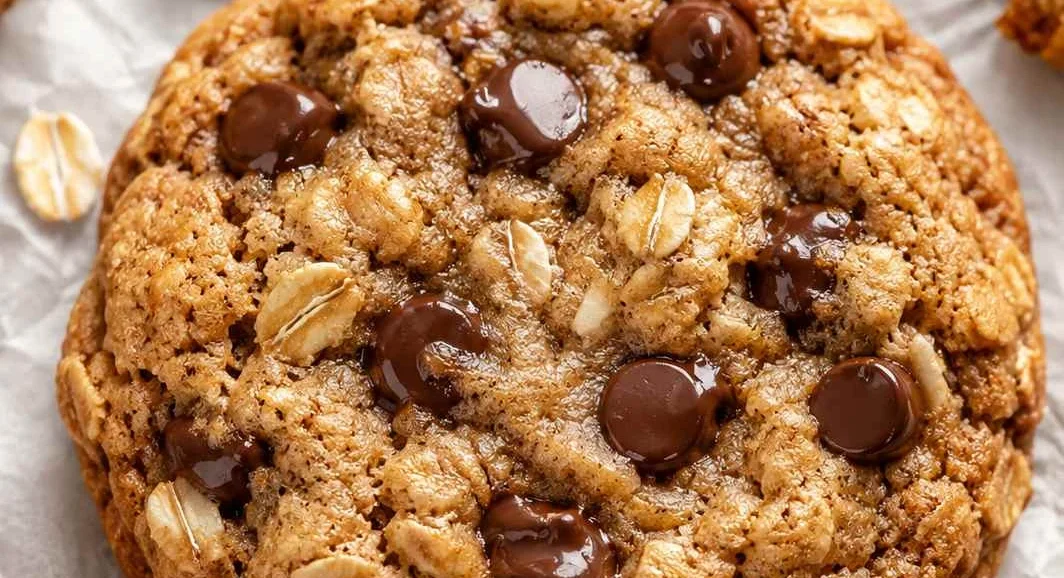
Oatmeal chocolate chip cookies stay chewy instead of cakey when you whip the butter and sugar for only about 3 minutes, use baking soda instead of baking powder, and pull the tray while the centers still look slightly underdone. Old-fashioned rolled oats, not quick oats, give you the best chew. Bake at 350°F (175°C) for 10 to 12 minutes.
You’ve made this cookie before. It starts with good intentions: real butter, a handful of chocolate chips, oats measured out on the counter. Then it comes out of the oven puffed up and springy, more muffin-top than cookie, and you’re left wondering what happened between the mixing bowl and the tray.
That gap between cakey and chewy isn’t random. It comes down to a handful of specific choices you make before the dough ever sees the oven. This guide walks through the full recipe, the reasons cakey texture happens in the first place, and what to change if your last batch didn’t turn out the way you wanted.
Key Takeaways
- Whip butter and sugar for about 3 minutes, not longer. Overwhipping adds air that bakes into a cake-like crumb.
- Baking soda promotes spread and chew; baking powder promotes lift and cake texture. Don’t swap one for the other.
- Old-fashioned rolled oats hold their shape better than quick oats, which soften the dough too much.
- Pull the cookies at 10 to 12 minutes while centers still look glossy. They finish setting on the tray.
What Makes Oatmeal Chocolate Chip Cookies Different From Regular Cookies?
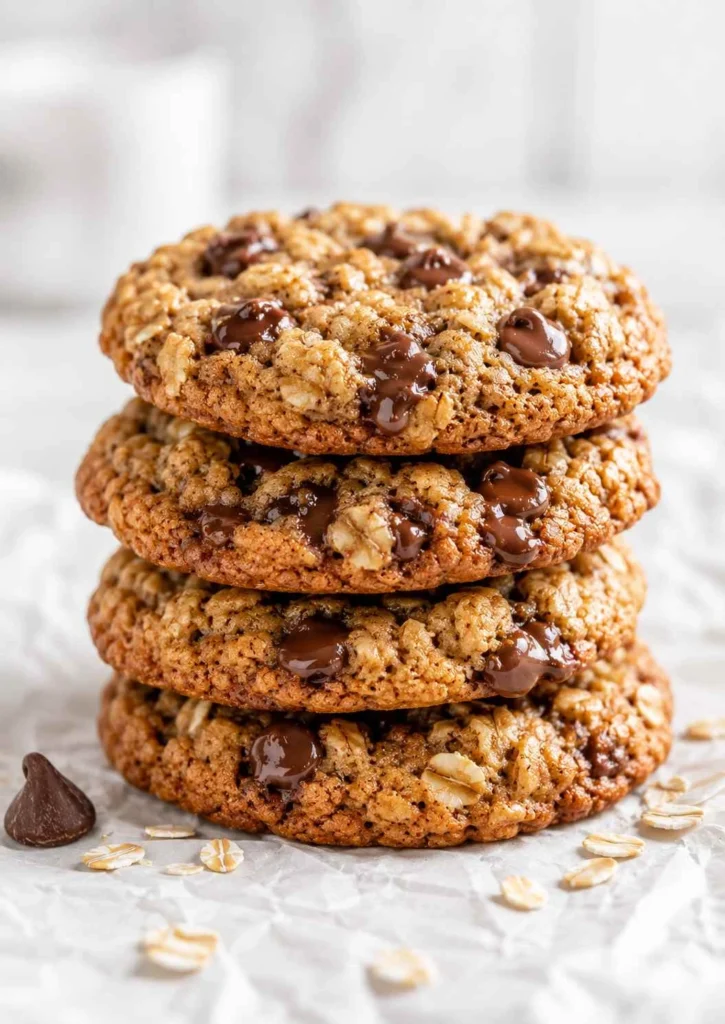
Oatmeal chocolate chip cookies swap part of the flour structure for rolled oats, which changes both texture and how the dough behaves in the oven. Oats absorb moisture more slowly than flour, so the dough often needs a short rest before baking to hydrate evenly.
The chocolate chip part is straightforward, but the oatmeal part is where most home bakers run into trouble. Oats bring chew when they’re handled right, and a dense, cakey crumb when they’re not, and the difference usually traces back to mixing technique rather than the oats themselves.
Done well, this cookie lands in a specific texture zone: crisp edges, a chewy middle, and enough structure to hold melted pockets of chocolate without falling apart.
What Ingredients Do You Need for Oatmeal Chocolate Chip Cookies?
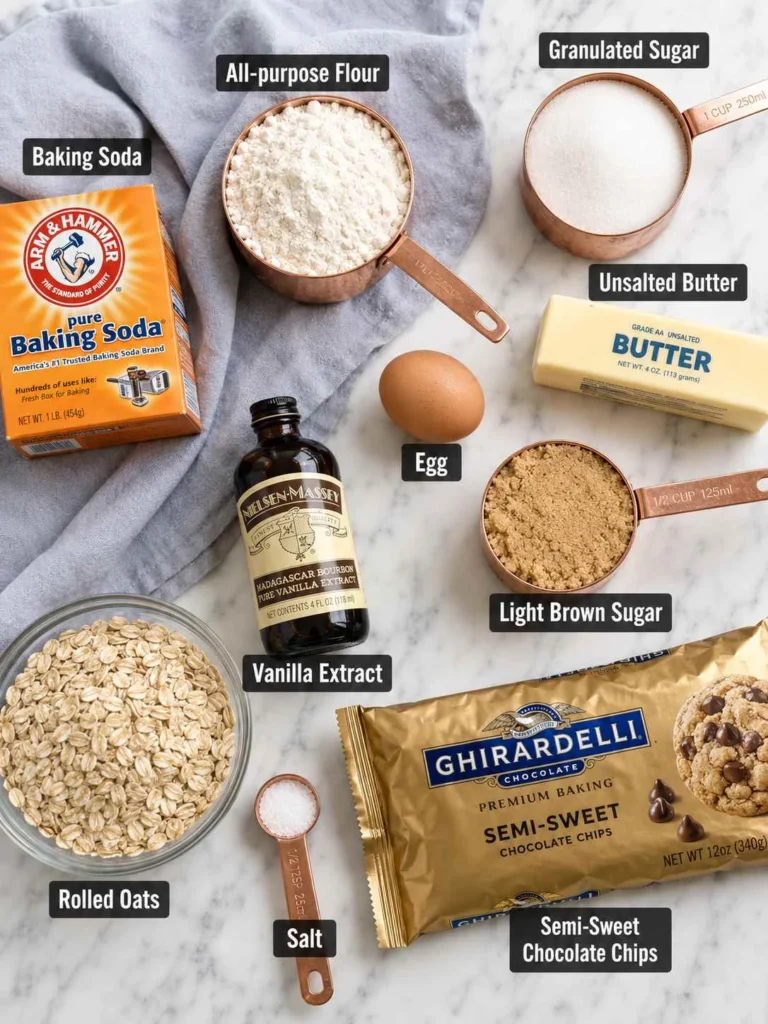
Ten ingredients, and the ratio between brown and granulated sugar matters more than most recipes let on.
| Ingredient | Amount | Purpose/Notes |
|---|---|---|
| Unsalted butter, softened | 1 cup | Fat and flavor; softened, not melted |
| Light brown sugar | 1 cup | Adds moisture and chew; use more brown than white |
| Granulated sugar | 1/2 cup | Sweetness and crisp edges |
| Eggs | 2 large | Structure and richness |
| Vanilla extract | 1 tsp | Rounds out flavor |
| All-purpose flour | 1 1/2 cups | Structure |
| Baking soda | 1 tsp | Promotes spread and chew, not baking powder |
| Salt | 1/2 tsp | Balances sweetness |
| Ground cinnamon (optional) | 1 tsp | Warms the flavor |
| Old-fashioned rolled oats | 3 cups | Chew and texture; not quick oats |
| Semisweet chocolate chips | 2 cups | The chocolate chip part |
How Do You Make Oatmeal Chocolate Chip Cookies? (Step-by-Step)
- Preheat and prep. Heat the oven to 350°F (175°C) and line two baking sheets with parchment.
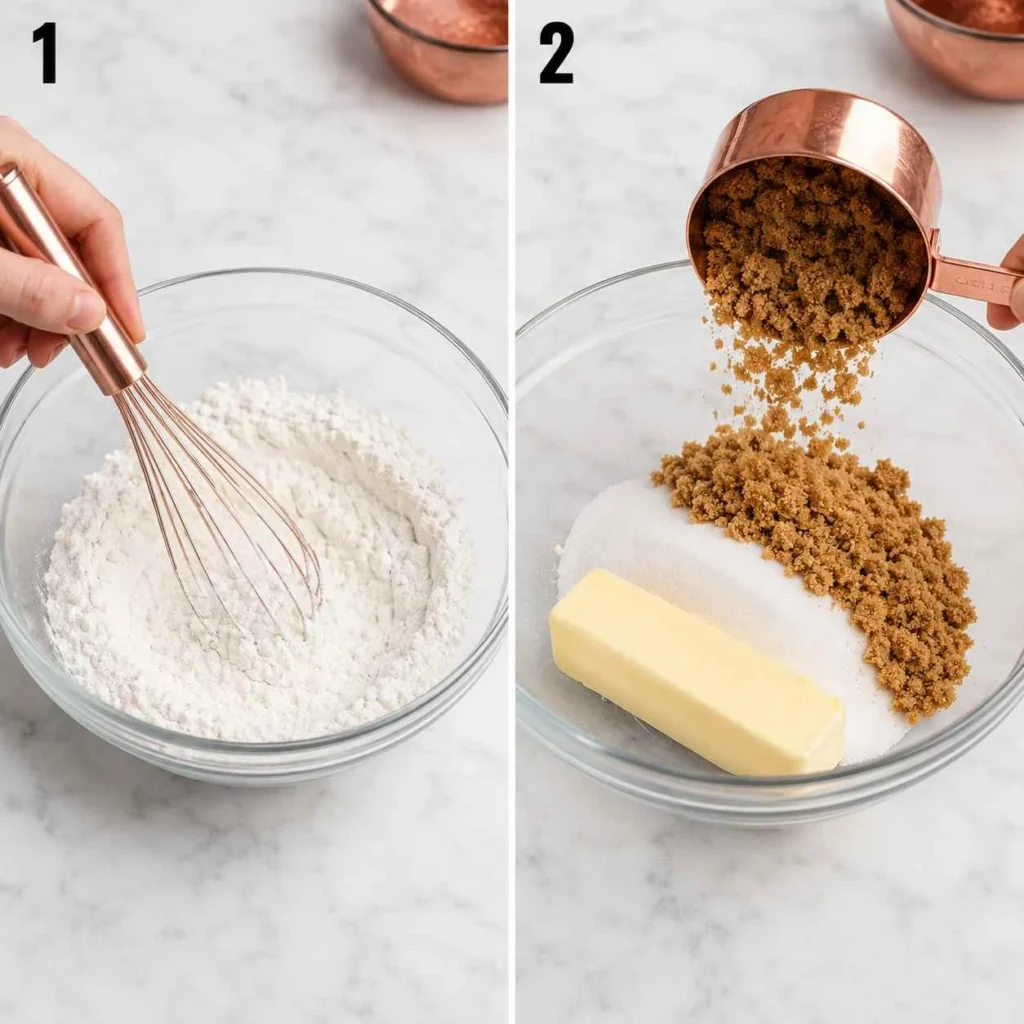
- Cream the fats and sugars. Beat the butter, brown sugar, and granulated sugar for about 3 minutes, until light and fluffy but not overly airy.
- Add eggs and vanilla. Beat in the eggs one at a time, then the vanilla, until just combined.
- Combine the dry ingredients. Whisk the flour, baking soda, salt, and cinnamon in a separate bowl.
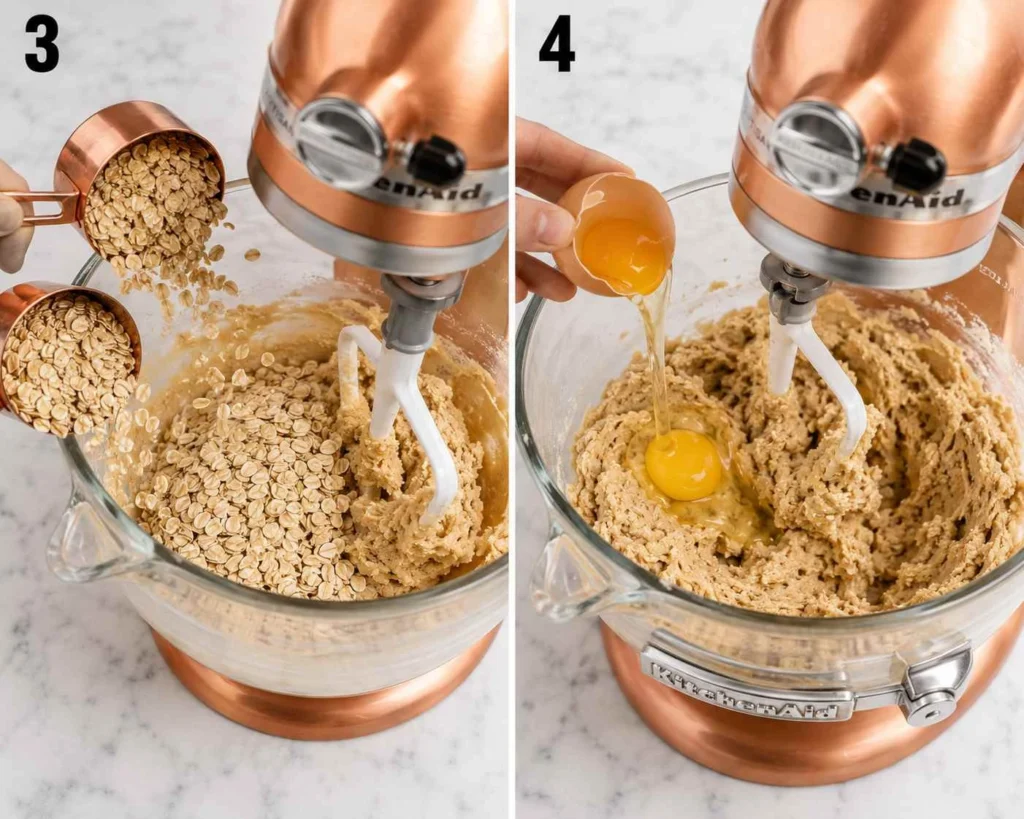
- Fold together. Fold the dry ingredients into the wet mixture until just combined. Fold in the oats and chocolate chips by hand.
- Chill briefly. Rest the dough 30 minutes so the oats can hydrate (up to 3 days if you want to bake in batches).
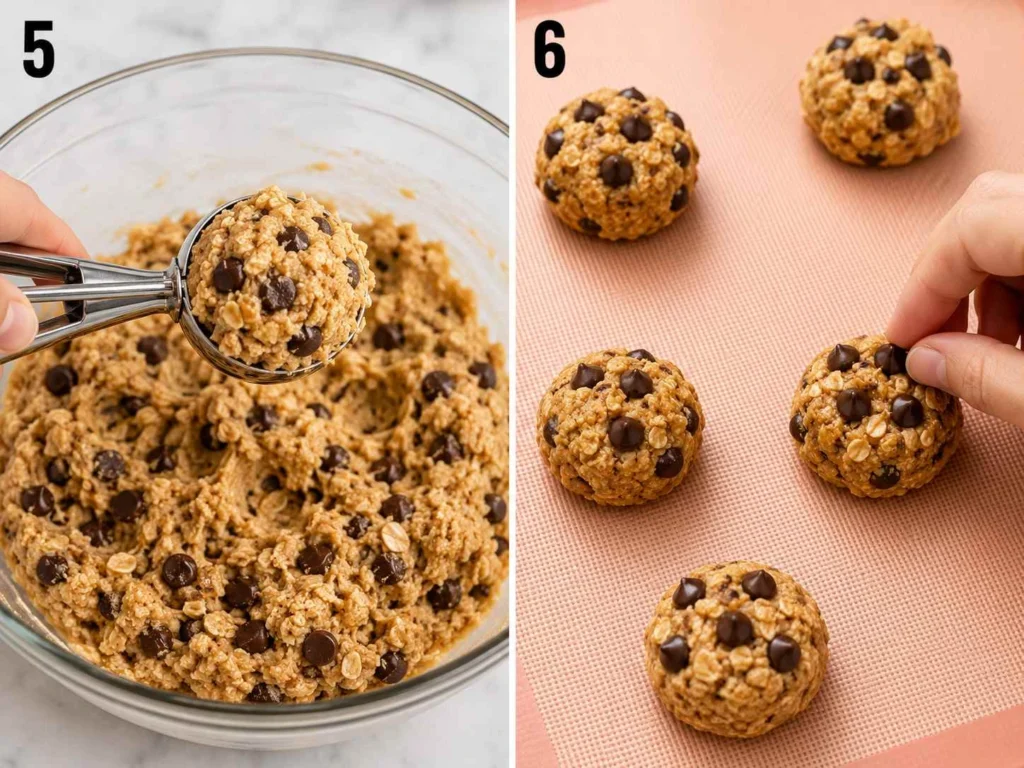
- Scoop and bake. Portion 2-tablespoon scoops onto the sheets, spacing 2 inches apart, and bake 10 to 12 minutes.
Why You Shouldn’t Overwhip the Butter
Whipping butter and sugar for too long incorporates extra air into the dough, and that air behaves the same way it does in a cake: it lightens and lifts the crumb instead of letting it settle into a dense, chewy bite. Three minutes with a hand mixer, or about two on medium with a stand mixer, is enough to get the mixture light without overdoing it.
If your cookies have consistently come out puffy and soft rather than chewy, cutting your creaming time in half is often the single biggest fix.
Old-Fashioned Oats vs. Quick Oats
Old-fashioned rolled oats keep their shape in the dough and give the finished cookie a distinct chew and visible texture. Quick oats are cut smaller and absorb liquid faster, which softens the dough more than you want and can push the texture toward cakey territory on its own.
Steel-cut oats are the one type to avoid here; they stay too firm and won’t soften properly during baking.
Why Are Oatmeal Cookies Cakey Instead of Chewy?
Cakey texture in oatmeal cookies almost always comes down to three overlapping causes: too much air whipped into the butter, the wrong leavening agent, and not enough egg yolk relative to egg white (Chowhound, 2026).
Baking soda promotes spread and browning, which reads as chewy. Baking powder promotes lift, which reads as cake. If a recipe calls for baking powder and your cookies come out puffy, that’s very likely why. Egg whites add fluffiness on their own, while yolks add richness and fat without extra water, so recipes that skew yolk-heavy tend to stay denser and chewier.
Overmixing after the flour goes in makes the problem worse. Folding the dry ingredients in gently, and switching to a spatula once the oats and chocolate chips join the dough, keeps gluten development to a minimum and protects the chew you’re working for.
Troubleshooting Common Oatmeal Chocolate Chip Cookie Problems
- Cookies are cakey. Cut your creaming time to about 3 minutes, confirm you’re using baking soda rather than baking powder, and don’t overmix once the flour is in.
- Cookies are spreading too thin. Your butter may have been too warm when you started, or the dough needs a chill. Rest it 30 minutes before baking.
- Cookies are dry or crumbly. Too much flour is the usual cause. Spoon flour into the measuring cup and level it off rather than scooping directly from the bag.
- Chocolate chips sink to the bottom. Toss the chips in a spoonful of the flour mixture before folding them in to help them stay suspended.
- Cookies taste flat. A pinch more salt or a full teaspoon of cinnamon goes a long way in an oat-based dough, since oats mute sweetness more than flour does.
How to Store, Freeze, and Make Oatmeal Chocolate Chip Cookies Ahead of Time
| Method | How | Storage Time |
|---|---|---|
| Room temperature | Airtight container, add a slice of bread to keep them soft | Up to 1 week |
| Freeze baked cookies | Cool completely, layer with parchment in an airtight container | Up to 3 months |
| Freeze dough balls | Scoop, freeze flat on a tray, then bag; bake from frozen, add 1-2 minutes | Up to 3 months |
| Refrigerate dough | Cover tightly | Up to 3 days |
Variations on Classic Oatmeal Chocolate Chip Cookies
Oatmeal Raisin Chocolate Chip Cookies
Swap half the chocolate chips for raisins, or use both for a cookie that splits the difference.
Brown Butter Oatmeal Chocolate Chip Cookies
Brown the butter first, then chill it back to a soft, spreadable state before creaming. It adds a nutty, toffee-like depth to the finished cookie.
Oatmeal Chocolate Chip Walnut Cookies
Fold in 3/4 cup of chopped walnuts along with the chocolate chips for crunch and a more bakery-style texture.
Coconut Oatmeal Chocolate Chip Cookies
Add 1/2 cup of shredded coconut to the dry ingredients for extra chew and a subtle sweetness.
Gluten-Free Oatmeal Chocolate Chip Cookies
Use a 1:1 gluten-free flour blend and confirm your oats are certified gluten-free, since standard oats are often cross-contaminated during processing.
Frequently Asked Questions About Oatmeal Chocolate Chip Cookies
Why are my oatmeal chocolate chip cookies cakey?
Overwhipped butter, baking powder instead of baking soda, or overmixed dough are the three most common causes. Whip the butter and sugar for about 3 minutes, confirm your recipe uses baking soda, and fold in the flour gently rather than beating it in.
Can I use quick oats instead of old-fashioned oats?
You can, but the texture changes. Quick oats break down faster and soften the dough more, which pushes the cookie closer to cakey. Old-fashioned rolled oats give the chewiest, most textured result.
Do I need to chill oatmeal chocolate chip cookie dough?
A short 30-minute rest helps the oats hydrate and firms the butter enough to control spread. It’s not strictly required, but it noticeably improves texture, especially if your kitchen runs warm.
How long do oatmeal chocolate chip cookies stay soft?
About a week in an airtight container at room temperature. Adding a slice of plain bread to the container helps them stay soft even longer by donating moisture back to the cookies.
Can I freeze oatmeal chocolate chip cookie dough?
Yes. Scoop the dough into balls, freeze them flat on a tray until solid, then transfer to a freezer bag for up to 3 months. Bake straight from frozen, adding 1 to 2 minutes to the bake time.
Conclusion
Chewy, not cakey, comes down to three decisions: how long you whip the butter, which leavening agent you use, and when you pull the tray. Get those right and old-fashioned oats do the rest of the work for you.
Now it’s your turn. Mix up a batch this week, and let us know in the comments whether cutting your creaming time made the difference you were hoping for.
Craving something with a cracked, fudgy top instead? Try our chocolate crinkle cookies, or browse the full recipe collection for your next bake.
Oatmeal Chocolate Chip Cookies Recipe Card
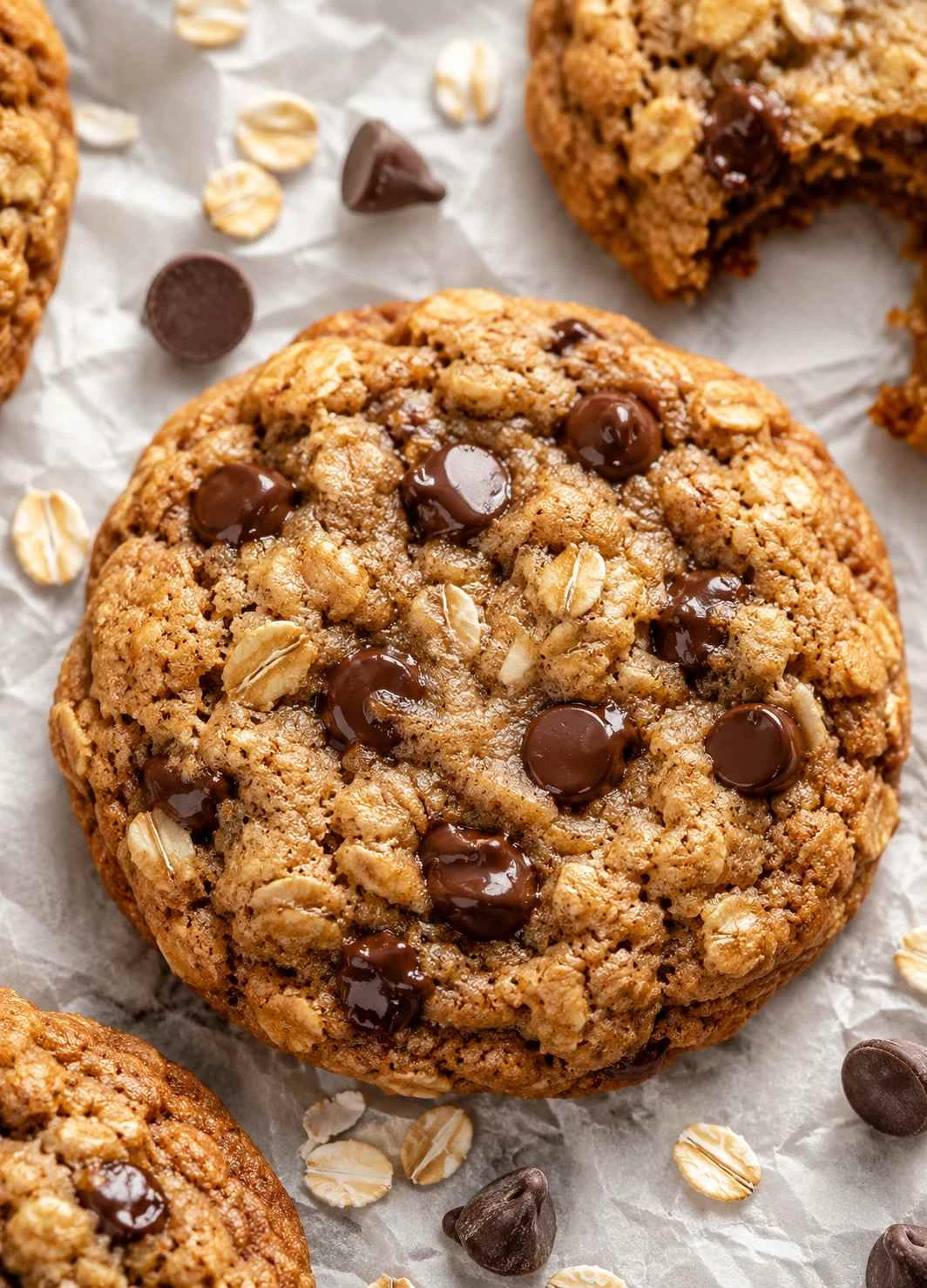
Oatmeal Chocolate Chip Cookies
Description
Chewy oatmeal chocolate chip cookies that never turn cakey. Whip the butter briefly, use baking soda, and pull the tray while centers still look soft.
Ingredients
Instructions
- Preheat the oven to 350°F (175°C) and line two baking sheets with parchment paper.
- Beat the butter, brown sugar, and granulated sugar for about 3 minutes, until light and fluffy but not overly airy. Overwhipping is the top cause of cakey cookies.
- Beat in the eggs one at a time, then the vanilla, until just combined.
- Whisk the flour, baking soda, salt, and cinnamon together in a separate bowl.
- Fold the dry ingredients into the wet mixture until just combined.
- Fold in the oats and chocolate chips by hand.
- Rest the dough for 30 minutes at room temperature or in the fridge. Up to 3 days if chilled.
- Scoop 2-tablespoon portions onto the prepared sheets, spacing 2 inches apart.
- Bake 10 to 12 minutes, until edges are golden and centers still look slightly underbaked.
- Cool on the baking sheet for 5 minutes, then transfer to a wire rack.
Sources, retrieved 2026-07-30:
- Chowhound, Why Your Oatmeal Cookies Are Cakey (Instead Of Soft And Chewy), https://www.chowhound.com/1812757/how-to-oatmeal-cookies-soft-chewy/
- King Arthur Baking, Oatmeal Chocolate Chip Cookies Recipe, https://www.kingarthurbaking.com/recipes/oatmeal-chocolate-chip-cookies-recipe