

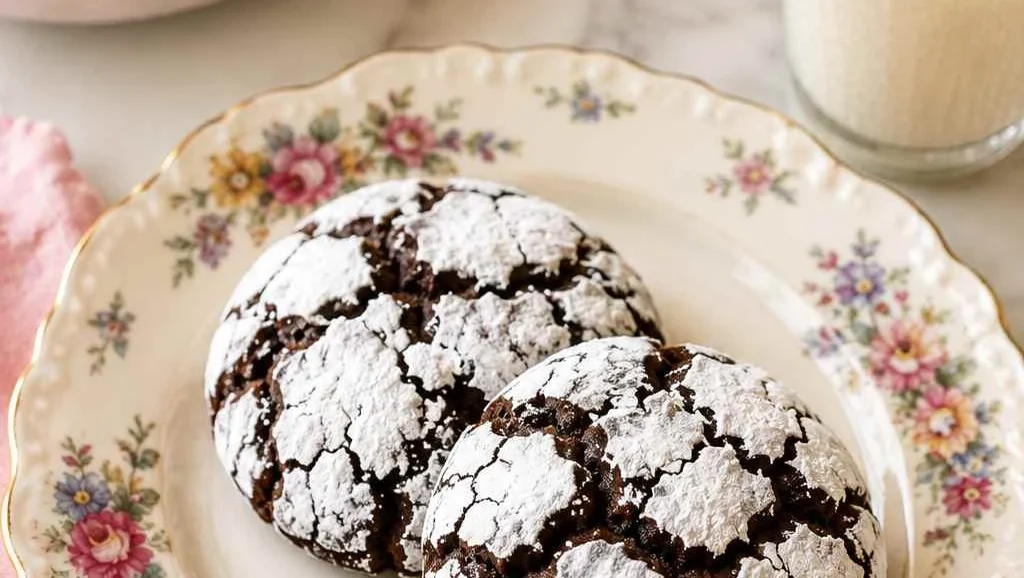
Chocolate crinkle cookies get their signature cracked, snow-dusted top from two things: chilled dough and a double coat of sugar, granulated first, then powdered. Chill the dough at least 2 hours, roll each ball in both sugars, and bake 10 to 12 minutes at 325°F (163°C). Makes 24 cookies in about 2.5 hours, most of it hands-off chilling time.
You know the cookie. Deep, dark chocolate underneath a dusting of powdered sugar that’s split open into a web of white cracks, like snow settling over a rocky hillside. That’s a chocolate crinkle cookie, and it’s one of the few desserts that looks far harder to make than it actually is.
Maybe you’ve had one at a holiday cookie exchange and wondered how anyone gets that crackled top so consistent. Or maybe your last batch came out flat and shiny, and you’re here to figure out what went wrong. Either way, you’re in the right spot.
Key Takeaways
- Chilled dough and a two-step sugar coating (granulated, then powdered) are the two things that actually control whether your cookies crack.
- Bake at 325°F (163°C) for 10 to 12 minutes. The cookies should look slightly underbaked when you pull them out.
- Baked cookies keep about a week at room temperature. Both baked cookies and raw dough balls freeze well for up to 3 months.
- Total time: about 2 hours 30 minutes, most of it inactive chilling. Yield: 24 cookies.
What Are Chocolate Crinkle Cookies?
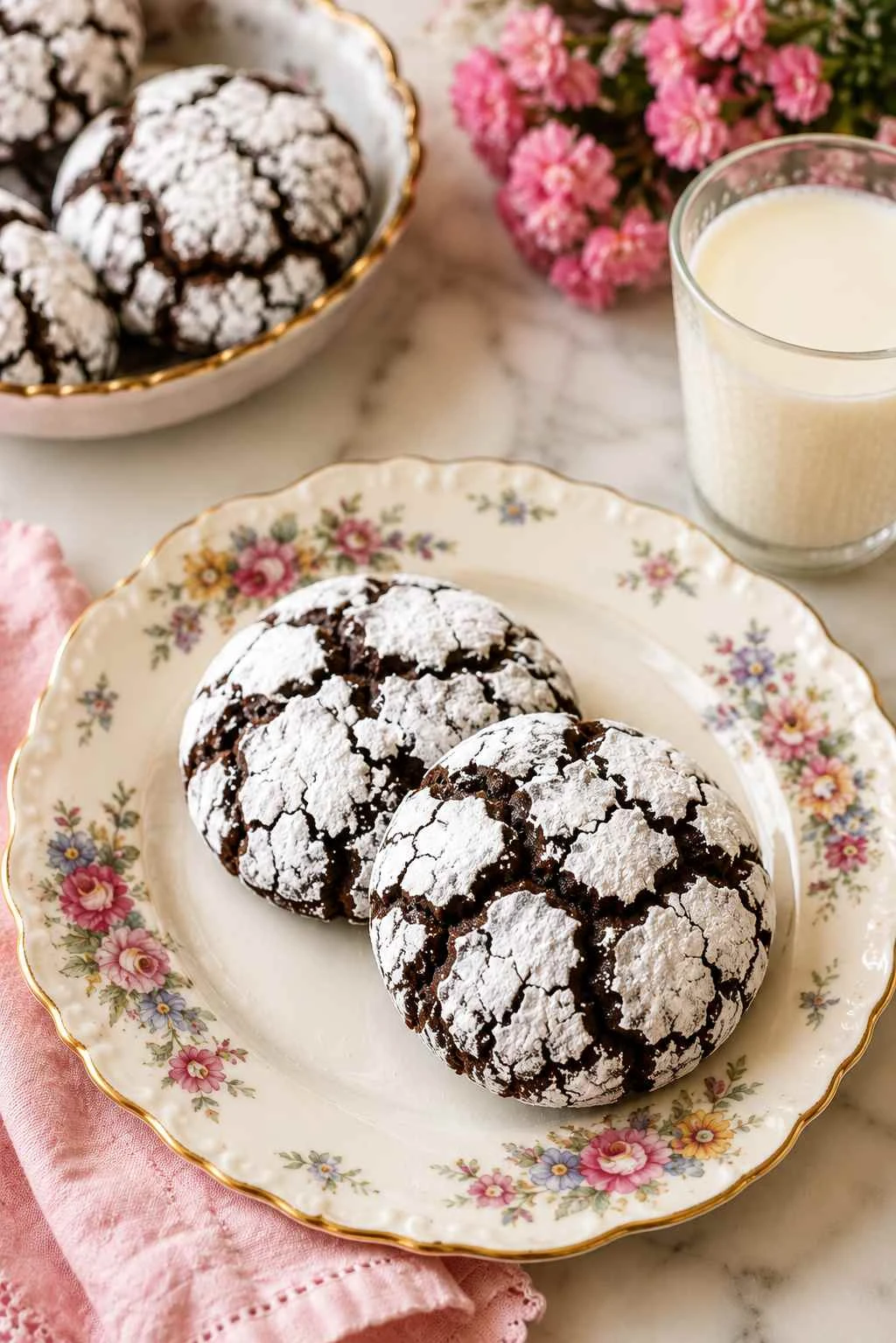
A chocolate crinkle cookie is a soft, fudgy cocoa cookie rolled first in granulated sugar, then in powdered sugar, so the surface cracks open into a marbled pattern as it bakes and spreads. Think of it as sitting somewhere between a brownie and a cookie: dense and chewy in the middle, with a slightly crisp, sugar-dusted shell.
They’re a staple at holiday cookie swaps for a simple reason: they look like they took real effort, but the dough comes together in one bowl with no mixer required. You’ll sometimes see them called “chocolate crinkles,” and a version with a similarly cracked appearance shows up in Filipino home baking too, with its own history and texture.
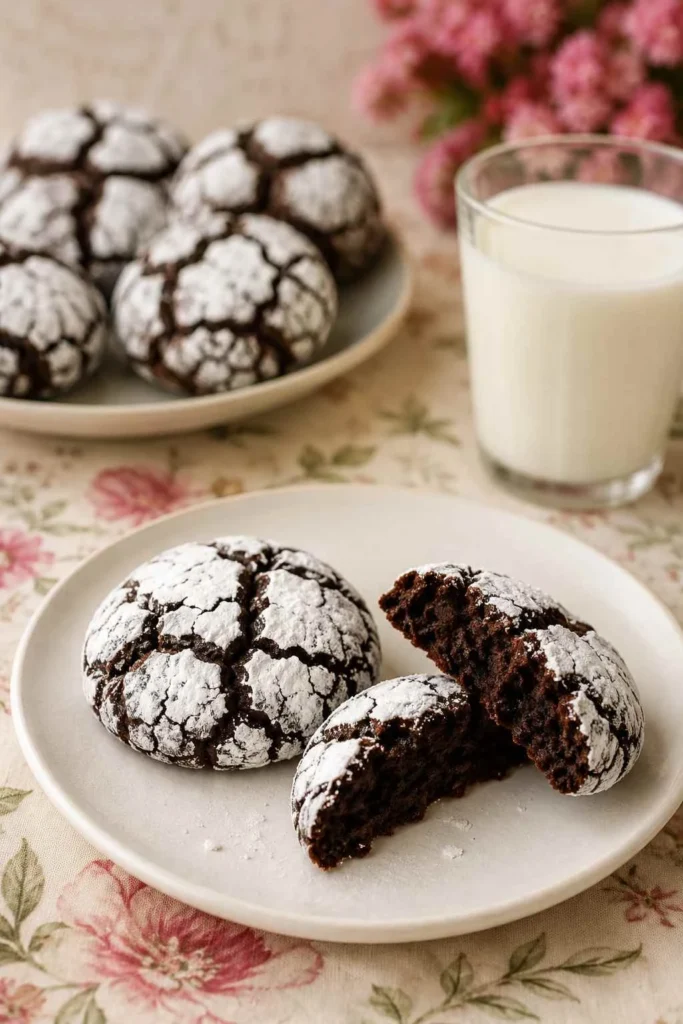
What sets them apart from a standard chocolate cookie isn’t the flavor. It’s the contrast: bittersweet cocoa against sweet powdered sugar, and a soft interior against a shell that shatters slightly when you bite into it.
What Ingredients Do You Need for Chocolate Crinkle Cookies?
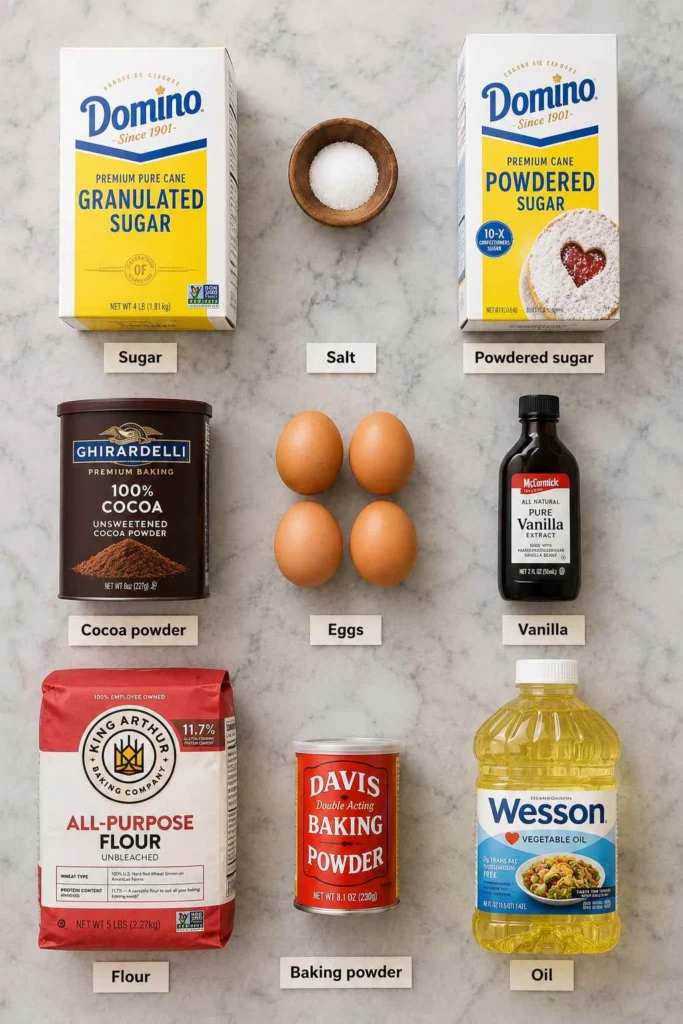
Nine ingredients, most of which are already in your pantry. Here’s what each one is doing in the dough, and why the sugar gets split into two separate coats.
| Ingredient | Amount | Purpose/Notes |
|---|---|---|
| All-purpose flour | 1 cup | Gives the dough structure |
| Unsweetened cocoa powder | 1/2 cup | Flavor and color; dutch-process gives a darker look |
| Baking powder | 1 1/2 tsp | Helps the cookies lift and spread |
| Salt | 1/4 tsp | Balances the sweetness |
| Granulated sugar (dough) | 1/2 cup | Sweetens the dough itself |
| Vegetable oil | 1/2 cup | Keeps the texture dense and fudgy; melted butter also works |
| Eggs | 2 large | Binds everything and adds structure |
| Vanilla extract | 1 tsp | Rounds out the chocolate flavor |
| Granulated sugar (rolling) | 1/3 cup | First coat; creates the scaffold for the crack |
| Powdered sugar (rolling) | 1/2 cup | Second coat; the signature white crackle |
A quick note on substitutions: oil produces a softer, fudgier cookie, while melted butter gives a bit more structure and a slightly richer flavor. Either works, but don’t skip the double sugar coat regardless of which fat you choose.
How Do You Make Chocolate Crinkle Cookies? (Step-by-Step)
Chocolate crinkle cookies come together in five stages: mix, chill, roll, coat, and bake. Full measurements and the printable version are in the recipe card below; here’s the walkthrough.
- Whisk the dry ingredients. Combine the flour, cocoa powder, baking powder, and salt in a bowl. Set it aside.
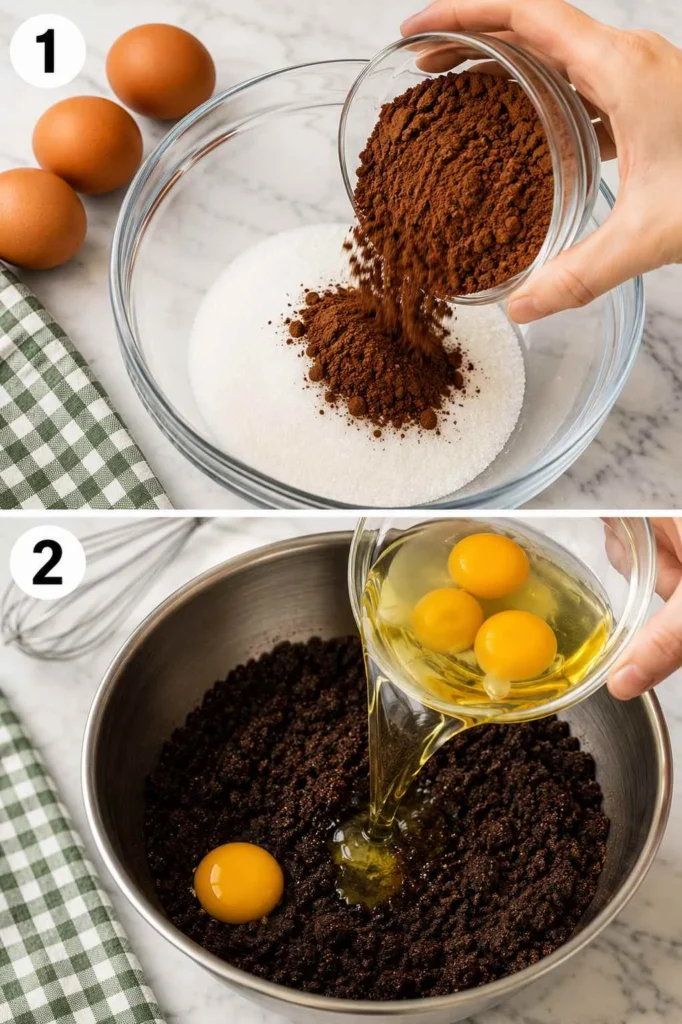
- Mix the wet ingredients. Whisk the oil, granulated sugar, eggs, and vanilla until smooth and slightly glossy.
- Combine. Fold the dry ingredients into the wet mixture until no streaks of flour remain. The dough will be thick, almost like brownie batter that’s been given more structure.
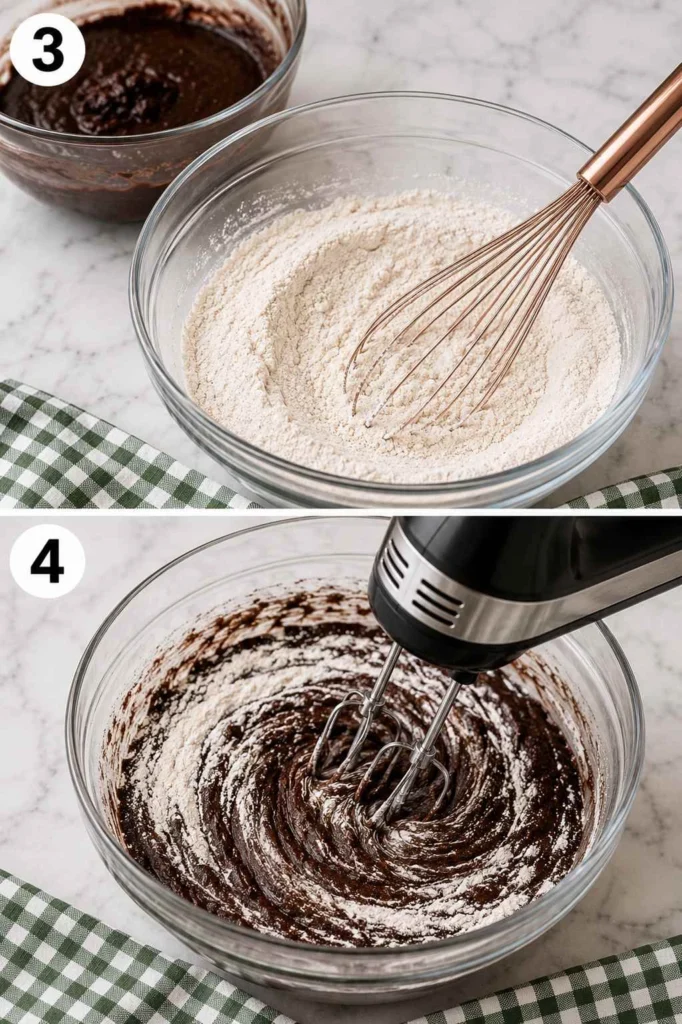
- Chill the dough. Cover it and refrigerate for at least 2 hours.
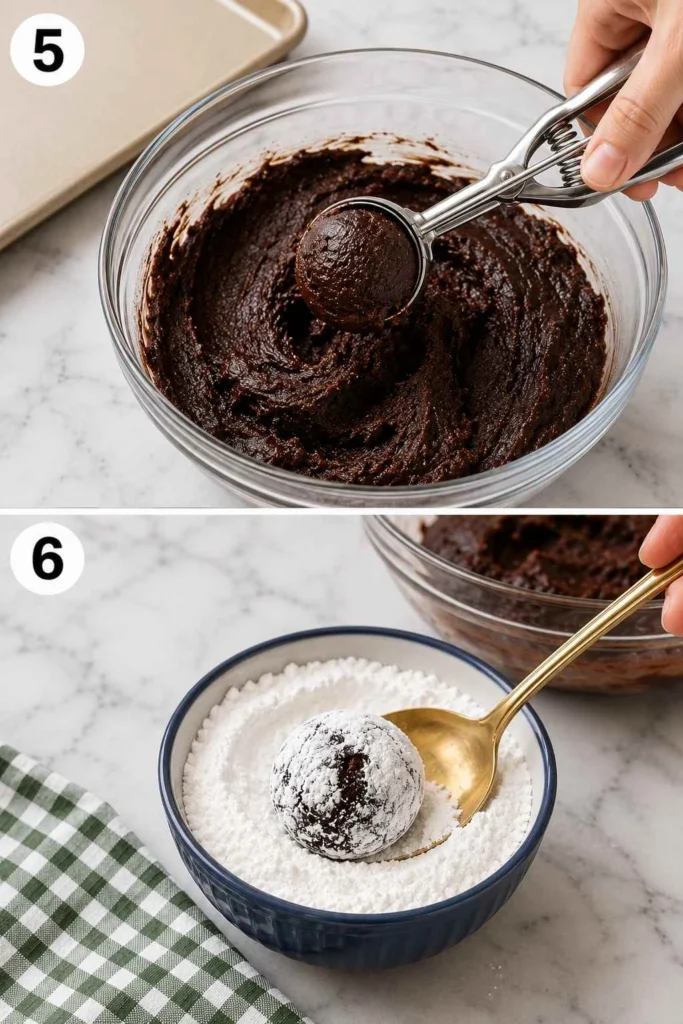
- Roll, coat, and bake. Scoop the dough into balls, roll each one first in granulated sugar and then in powdered sugar, and bake until the edges are set but the centers still look a little soft.
Why Chilling the Dough Matters
Skipping the chill step is the single most common reason crinkle cookies come out flat and shiny instead of cracked. Cold dough holds its shape in the oven long enough for the sugar coating to dry and set before the cookie fully spreads, which is what creates the cracks in the first place.
Give the dough a minimum of 2 hours in the fridge, though you can push it to 2 days if you want to bake in batches. Warm dough spreads too fast, the sugar coating melts into it before it has a chance to dry, and you end up with a puddle instead of a dome.
The Double-Sugar-Coating Technique
Here’s the part most recipes mention but rarely explain well: roll each dough ball in granulated sugar first, then in powdered sugar. Skip the granulated layer and go straight to powdered sugar, and you’ll likely end up with a coating that dissolves into a gray, uneven mess, especially if your kitchen runs humid.
The granulated sugar acts almost like a scaffold. It holds the powdered sugar in place and slows down how quickly the coating absorbs moisture from the dough, which keeps it white and intact through baking.
The Science of Why Crinkle Cookies Crack
Cracks form because the cookie’s surface dries out and hardens faster than the center finishes rising and spreading. It’s a moisture problem, not a leavening one, and once you understand the mechanism, the whole process makes a lot more sense.
According to America’s Test Kitchen’s breakdown of the technique, the granulated sugar coating pulls moisture from the dough’s surface more aggressively than powdered sugar alone would. As the cookie bakes, some of those sugar crystals dissolve into a light syrup, then recrystallize, and that cycle speeds up how fast the surface dries out relative to the interior (America’s Test Kitchen, 2026). A surface that dries faster than it can stretch is a surface that cracks.
Dough temperature plays a role too. Colder dough spreads more slowly, giving the surface extra time to set and dry before the cookie reaches its final shape, which is exactly why the chilling step isn’t optional if you want reliable cracks.
Why Aren’t My Crinkle Cookies Cracking? (Troubleshooting)
If your last batch came out disappointingly smooth, it’s almost always one of these five issues.
- The dough wasn’t chilled long enough. Give it the full 2 hours, and don’t rush this step even if you’re tempted to.
- You skipped the granulated sugar layer. Going straight to powdered sugar is the most common shortcut that backfires.
- Your oven temperature is off. Too low, and the cookies spread slowly without cracking; too high, and they set before they can spread at all. A five-dollar oven thermometer solves this.
- There’s too much flour in the dough. Scoop-and-level your flour rather than packing it into the measuring cup, or the dough turns dense and dry, and dry dough won’t spread or crack the way it should.
- You’re baking on a warm cookie sheet. Reusing a tray straight out of the oven means the dough starts spreading before it even chills in the oven’s early heat. Let trays cool between batches, or keep a second one in rotation.
How Do You Store, Freeze, and Make Chocolate Crinkle Cookies Ahead of Time?
Storing Baked Cookies
Once they’re fully cooled, keep chocolate crinkle cookies in an airtight container at room temperature. They’ll stay soft and fresh for about a week. Skip the fridge unless your kitchen runs unusually warm and humid, since refrigeration tends to dry cookies out faster than it preserves them.
Freezing Options
Both the baked cookies and the raw dough freeze well, which makes this recipe genuinely useful for planning ahead of a holiday or party.
| Method | How | Storage Time |
|---|---|---|
| Freeze baked cookies | Cool completely, layer with parchment paper in an airtight container | Up to 3 months |
| Freeze unbaked dough balls | Roll into balls before the sugar coating, freeze flat on a tray, then bag | Up to 3 months |
| Refrigerate dough | Cover tightly with plastic wrap | Up to 2 days |
If you freeze dough balls before rolling them in sugar, coat them in granulated and powdered sugar straight from frozen, then bake as usual, adding a minute or two to the bake time.
Variations and Flavor Twists on Classic Chocolate Crinkle Cookies
Once you’ve got the base recipe down, these five twists are the easiest way to keep things interesting.
Peppermint Chocolate Crinkles
Add 1/2 teaspoon of peppermint extract to the wet ingredients and top each cookie with a sprinkle of crushed candy cane before baking.
Espresso Mocha Crinkles
Stir 1 to 2 teaspoons of instant espresso powder into the dry ingredients. It won’t make the cookies taste like coffee so much as deepen the chocolate flavor.
Peanut Butter Chip Crinkles
Fold 1/2 cup of peanut butter chips into the dough after mixing. The salty-sweet combination pairs surprisingly well with the sugar coating.
Double Chocolate Crinkles
Add 1/2 cup of mini chocolate chips or finely chopped chocolate to the dough for pockets of melted chocolate throughout.
Gluten-Free Chocolate Crinkles
Swap the all-purpose flour for a 1:1 gluten-free baking blend. The texture stays close to the original, though the cookies may spread slightly less.
Frequently Asked Questions About Chocolate Crinkle Cookies
Why are my chocolate crinkle cookies flat instead of crackly?
This usually comes down to under-chilled dough, warm dough temperature, or skipping the granulated sugar layer before the powdered sugar coat. Chill the dough for a full 2 hours minimum, and always coat in granulated sugar first. Check the troubleshooting section above for the complete list of fixes.
Can I make chocolate crinkle cookies without a mixer?
Yes. Because the batter is oil-based rather than butter-based, a whisk and a spatula do the job just fine. You don’t need to cream anything, which is part of what makes this recipe approachable for beginner bakers.
How long do chocolate crinkle cookies last?
Stored in an airtight container at room temperature, chocolate crinkle cookies stay soft and fresh for about a week. For longer storage, freeze the baked cookies for up to 3 months.
Can I use butter instead of oil in chocolate crinkle cookies?
You can, though the texture shifts slightly. Oil produces a softer, fudgier cookie that stays moist for longer, while melted butter gives a firmer bite with a bit more flavor depth. Either version still cracks properly as long as the dough is chilled.
Do chocolate crinkle cookies need to be refrigerated after baking?
No. An airtight container at room temperature is all you need. Refrigerating baked cookies tends to dry them out faster than it keeps them fresh, so save the fridge for the raw dough instead.
Conclusion
Two things separate a crackled, bakery-style chocolate crinkle cookie from a flat, disappointing one: chilled dough and that double sugar coat. Get those right, and everything else in this recipe is forgiving, which is exactly why it’s become a holiday baking staple in the first place.
Now it’s your turn. Mix up a batch this weekend, try one of the five variations above, and tell us in the comments which crack pattern turned out best in your oven.
Want a completely different kind of cookie next? Try our classic shortbread cookies for a crumbly, buttery contrast, our s’mores cookies for a marshmallow-topped bake, or browse the full recipe collection for your next bake.
Chocolate Crinkle Cookies Recipe Card
Chocolate Crinkle Cookies
Description
Fudgy chocolate crinkle cookies with a guaranteed crackled top. Chill the dough, double-coat in sugar, and bake 10-12 minutes at 325°F for a bakery-style finish every time.
Ingredients
For the Cookie Dough
For Rolling
Instructions
- Whisk the flour, cocoa powder, baking powder, and salt together in a bowl. Set aside.
- In a separate bowl, whisk the oil, granulated sugar, eggs, and vanilla until smooth and glossy.
- Fold the dry ingredients into the wet mixture until no streaks of flour remain. The dough will be thick.
- Cover the dough and refrigerate for at least 2 hours, up to 2 days. Chilling is what allows the cracks to form. Do not skip this step.
- Preheat the oven to 325°F (163°C) and line two baking sheets with parchment paper.
- Scoop the chilled dough into 1.5-tablespoon balls.
- Roll each ball in granulated sugar first, then roll in powdered sugar until fully coated.
- Place the balls on the prepared sheets, spacing them about 2 inches apart.
- Bake for 10 to 12 minutes, until the edges are set and the tops have cracked, with centers that still look slightly soft.
- Cool the cookies on the baking sheet for 5 minutes, then transfer to a wire rack to finish cooling.
Sources, retrieved 2026-07-30:
- America’s Test Kitchen, Science: The Key to Crinkly Cookies, https://www.americastestkitchen.com/how_tos/8922-science-the-key-to-crinkly-cookies
- Sally’s Baking Addiction, Double Chocolate Crinkle Cookies, https://sallysbakingaddiction.com/double-chocolate-crinkle-cookies/
- Preppy Kitchen, Chocolate Crinkle Cookies Recipe, https://preppykitchen.com/chocolate-crinkle-cookies/