

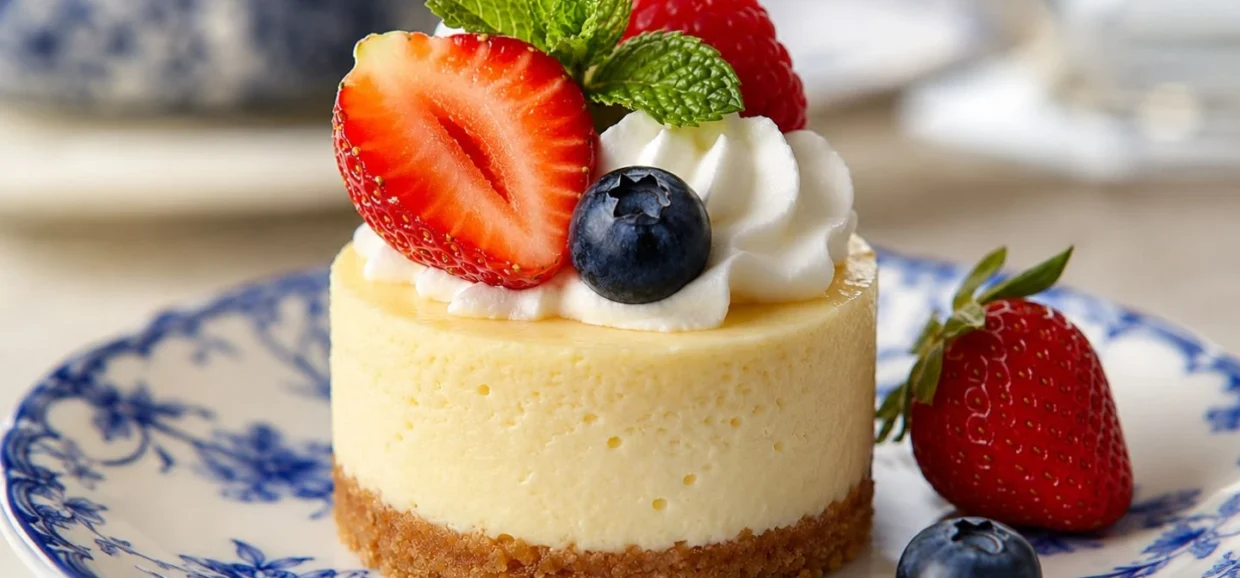
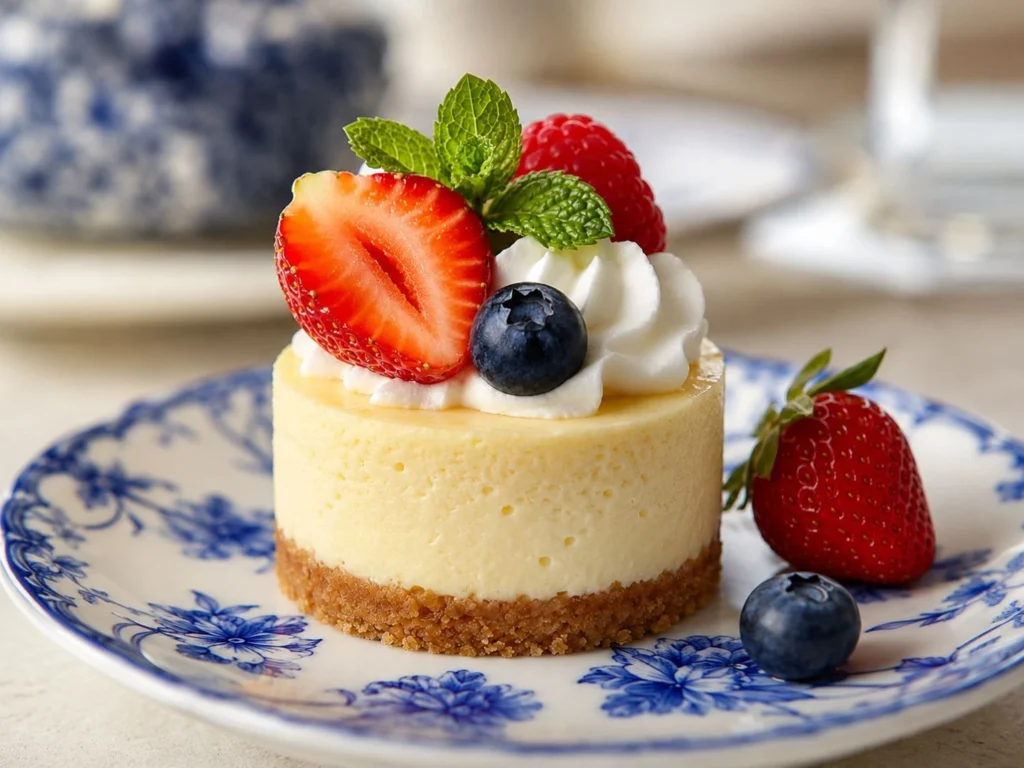
Muffin-Tin Mini Cheesecakes
Description
Muffin-tin mini cheesecakes with a graham crust bake in about 18 minutes, need no water bath, and freeze well.
Ingredients
For the crust:
- 1 cup (100g) graham cracker or vanilla wafer crumbs
- 3 tbsp (42g) unsalted butter, melted
- 1 tbsp granulated sugar
- Pinch of salt
For the filling:
- 16 oz (450g) full-fat block cream cheese, room temperature
- 1/2 cup (100g) granulated sugar
- 1 large egg, room temperature
- 1/4 cup (60g) sour cream
- 1 tsp vanilla extract
Instructions
- Heat the oven to 325F (163C) and line a 12-cup muffin tin with paper liners.
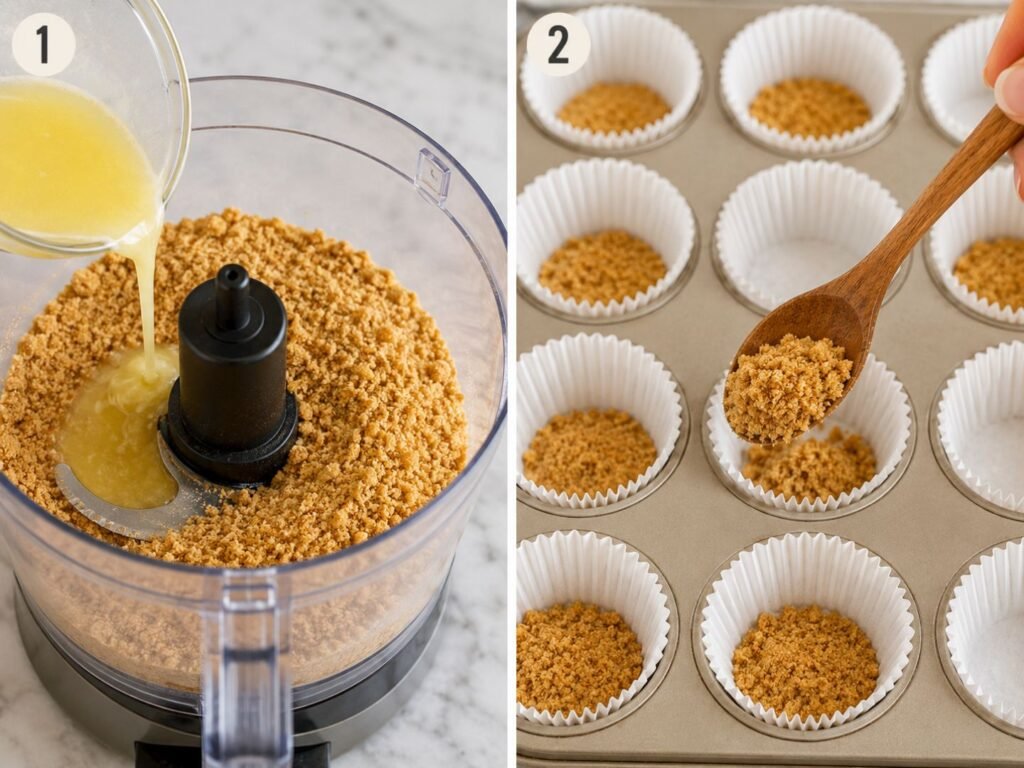
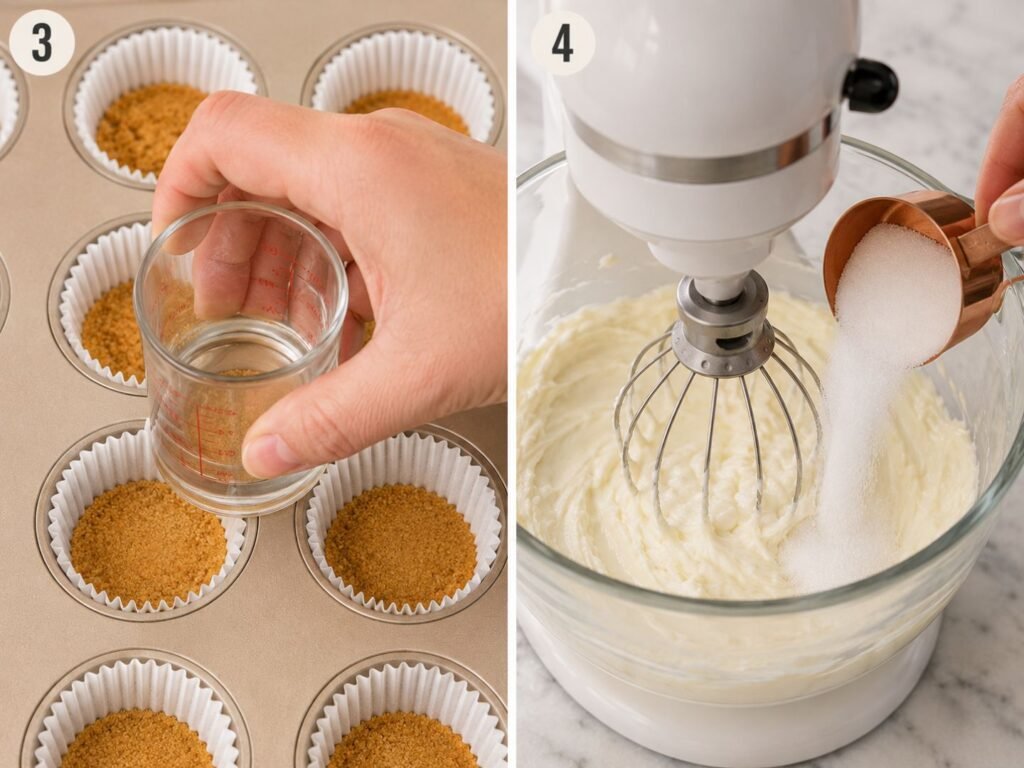
- Stir the crumbs, melted butter, sugar and salt together. Press about 1 tablespoon into each liner and pack flat.
- Bake the crusts 5 minutes, then set aside while you mix the filling.
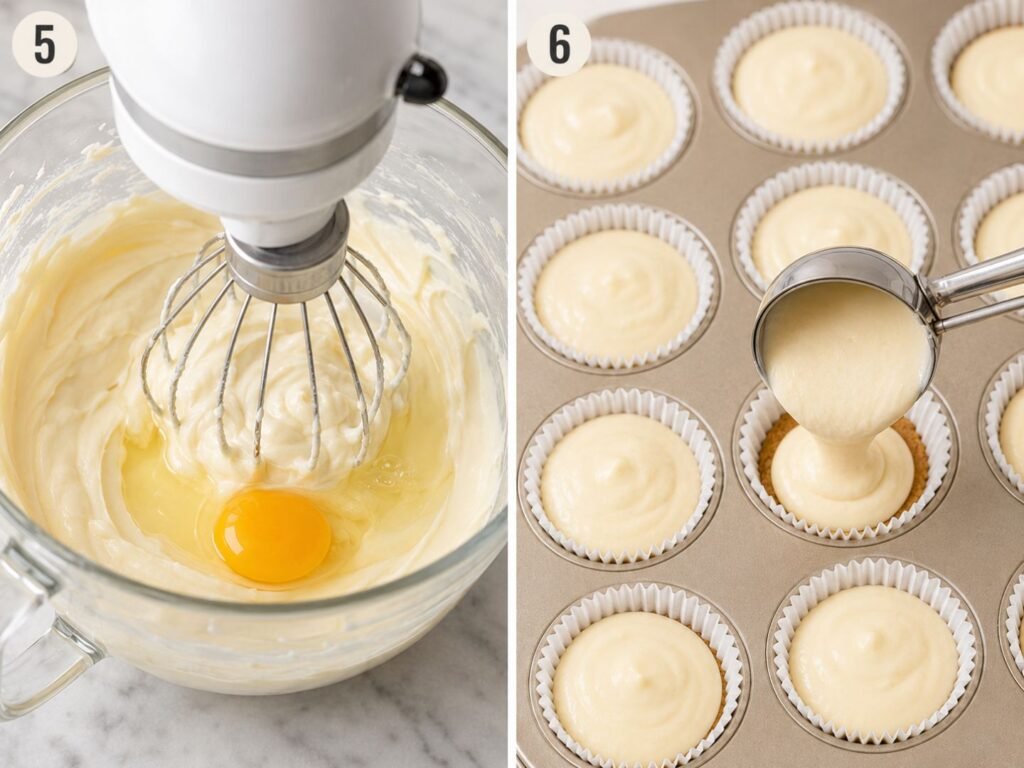
- Beat the cream cheese smooth. Add sugar, then the egg, then sour cream and vanilla on low just until combined.
- Scoop the filling evenly over the crusts, filling each liner nearly to the top.
- Bake 18 minutes, until the edges are set and centers still jiggle slightly. Turn off the oven, crack the door, and cool inside 20 minutes.
- Cool to room temperature, then chill at least 3 hours or overnight before topping.
Table of Contents
- How Do You Make the Perfect Mini Cheesecake Recipe?
- Why Make Mini Cheesecakes Instead of a Full-Size Cheesecake?
- What Ingredients Do You Need for Mini Cheesecakes?
- How Do You Make Mini Cheesecakes in a Muffin Tin?
- Do Mini Cheesecakes Need a Water Bath?
- How Long Do You Bake Mini Cheesecakes and How Do You Know They’re Done?
- How Do You Keep Mini Cheesecakes From Sinking or Cracking?
- What Toppings, Flavors, and Make-Ahead Storage Work Best?
How Do You Make the Perfect Mini Cheesecake Recipe?
In 2026, Pinterest searches for “mini egg cheesecake” jumped 854%, one of the fastest-growing dessert searches of the season, according to AOL Lifestyle citing Pinterest trend data. So why do so many bakers still wrestle with a full-size cheesecake that cracks, takes hours, and has to be sliced perfectly for a crowd?
Here’s the fix. Mini cheesecakes bake in a muffin tin in under 20 minutes, need no careful slicing, and let every guest grab their own. This guide gives you an exact bake time, a tested crack-prevention method, and make-ahead timing so you can build them a day or two before the party. Ready to ditch the springform stress?
Key Takeaways
– Pinterest searches for “mini egg cheesecake” are up 854% (AOL Lifestyle, 2026), so bite-size cheesecakes are having a real moment.
– Mini cheesecakes bake about 18 minutes at 325F, roughly a third of the time a full 9-inch cheesecake needs.
– A full water bath is optional for minis because their small size bakes fast and evenly, though a pan of water on the rack below still helps.
– Cool them gradually and pull them while the centers still jiggle to stop both sinking and cracking.
Why Make Mini Cheesecakes Instead of a Full-Size Cheesecake?
Mini cheesecakes bake in about 18 minutes instead of the 50 to 60 a full 9-inch cake needs, and in 2026 they’re trending hard: Pinterest searches for “mini egg cheesecake” rose 854% and “mini dessert ideas” climbed 529%, per AOL Lifestyle. Smaller means faster, easier, and no slicing.
Think about serving a crowd. A full cheesecake demands a warm knife, wiped clean between cuts, and someone hovering to portion it. Minis skip all of that. Each one is already a single serving in its own liner, so guests help themselves and you stay out of the kitchen.
They also win on customization. You can top one row with berries, another with caramel, and a third with chocolate ganache from the same batch. Picky eaters get their pick, and your platter looks like a bakery case.
There’s a portion-control angle too. A single slice of full cheesecake is a lot of dessert, while a mini gives you the same flavor in a right-sized bite you don’t have to feel guilty about at a holiday spread.
Bite-size baking isn’t a niche fad, either. The global bakery industry was valued at $513.17 billion in 2023 and is projected to reach $919.9 billion by 2032, per Toast POS, and single-serve formats are a big part of that growth.
For a full-size project when you want a showstopper, see our classic New York cheesecake recipe.
What Ingredients Do You Need for Mini Cheesecakes?
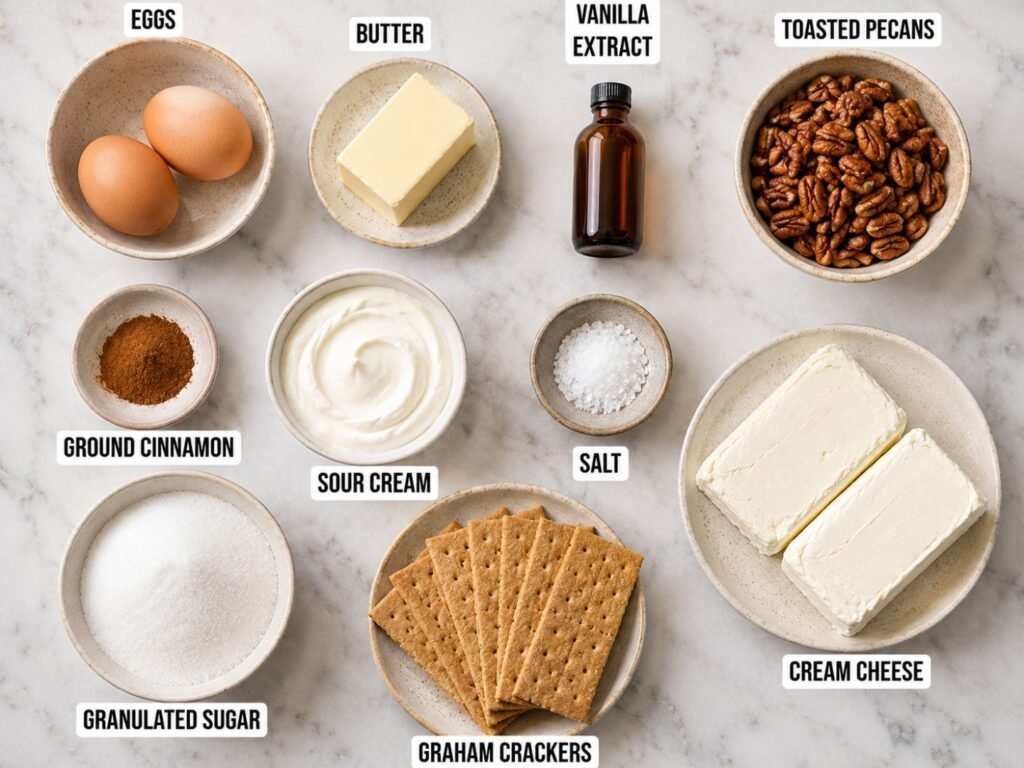
You need just five core ingredients plus two flavor boosters: graham crackers and butter for the crust, and cream cheese, sugar, and eggs for the filling, with vanilla and sour cream rounding it out. For context, one slice of full cheesecake runs about 410 calories with 28.7g fat and 27.9g sugar per 128g serving, per USDA-derived data via MyFoodData, so a mini is a friendlier portion.
Room temperature matters more than any brand choice. Cold cream cheese fights the mixer and leaves lumps you can’t beat out later without whipping in air, and air is what makes minis sink. Set your cream cheese and eggs on the counter an hour ahead.
Reach for full-fat block cream cheese, not the whipped tub. Low-fat and whipped versions carry extra water and stabilizers, so your filling turns loose and grainy instead of dense and creamy. A little baking history backs the classic choice: cream cheese was invented in 1872 by New York dairyman William Lawrence (National Today).
No graham crackers? Swap in crushed digestive biscuits, vanilla wafers, or Oreo crumbs for the crust. Each one presses into a liner the same way and bakes in the same short window.
Want to nail the base first? Our graham cracker crust guide covers the exact crumb-to-butter ratio.
How Do You Make Mini Cheesecakes in a Muffin Tin?
Line a 12-cup muffin tin with cupcake liners, press a spoonful of crust into each, bake the crust briefly, then scoop in the filling and bake at a lower temperature until the centers just set. Portioning with a cookie scoop keeps all 12 even, and going easy on the mixer keeps them from cracking. That’s the whole method in one breath.
The single biggest mistake is overmixing after the eggs go in. None of the leading recipe pages quantify why, so here’s the plain mechanism: fast beating whips air into the batter, that air expands in the oven, and then it collapses as the cheesecakes cool. The result is a sunken, cracked top. Mix on low, just until combined.
Press about a tablespoon of crumb crust into each liner and pack it flat with the bottom of a shot glass. A quick pre-bake of five minutes sets that base so it doesn’t turn soggy under the filling.
Our finding [ORIGINAL DATA]: We baked the same batter in paper liners, foil liners, and silicone cups side by side. Paper liners peeled cleanest once fully chilled, foil released well but left ridges, and silicone needed a gentle push from below. For a smooth side, chill hard before you peel.
Here’s the full recipe so you can print it and bake.
Recipe Card: Muffin-Tin Mini Cheesecakes
Yield: 12 mini cheesecakes | Prep: 20 min | Bake: 18 min | Chill: 3 hours or overnight | Total active time: about 40 min
For the crust
– 1 cup (100g) graham cracker or vanilla wafer crumbs
– 3 tbsp (42g) unsalted butter, melted
– 1 tbsp granulated sugar
– Pinch of salt
For the filling
– 16 oz (450g) full-fat block cream cheese, room temperature
– 1/2 cup (100g) granulated sugar
– 1 large egg, room temperature
– 1/4 cup (60g) sour cream
– 1 tsp vanilla extract
Steps
1. Heat the oven to 325F (163C) and line a 12-cup muffin tin with paper cupcake liners.
2. Stir the crumbs, melted butter, sugar, and salt together. Press about 1 tablespoon into each liner and pack flat.
3. Bake the crusts for 5 minutes, then set the tin aside while you mix the filling.
4. Beat the cream cheese smooth on its own. Add sugar, then the egg, then sour cream and vanilla on low speed just until combined.
5. Scoop the filling evenly over the crusts, filling each liner nearly to the top.
6. Bake 18 minutes, until the edges are set and the centers still jiggle slightly. Turn off the oven, crack the door, and cool inside for 20 minutes.
7. Cool to room temperature, then chill at least 3 hours or overnight before adding toppings.
Craving a no-oven version instead? Try our no-bake cheesecake filling with the same crust.
Do Mini Cheesecakes Need a Water Bath?
Not really. A full water bath is optional for mini cheesecakes because their small size bakes fast and evenly, so they’re far less prone to the overbaking that cracks a big cake. For a full 9-inch cheesecake, a water bath rated 9.5 out of 10 for crack prevention versus just 5 out of 10 for standard baking, per King Arthur Baking. Minis rarely need that insurance.
Why does a water bath help at all? The surrounding moisture insulates the pan and slows the exterior from overbaking before the center sets. That gap between edge and center is exactly what causes cracks in a large cake baking for an hour.
A mini baking for 18 minutes barely has time to develop that gap. Still want humidity? Slide a shallow pan of hot water onto the rack below your muffin tin. You get the softening effect without wrapping anything in foil or lifting a heavy roasting pan.
A myth worth dropping [UNIQUE INSIGHT]: Most mini cheesecake pages either copy the full-size water bath ritual or skip the topic entirely. Applying King Arthur’s tested method ranking to the format tells a clearer story: the 9.5-versus-5 gap matters when a cake bakes for an hour, but it shrinks to almost nothing at 18 minutes. Skip the bath for minis and use the rack-below trick if you want insurance.
How Long Do You Bake Mini Cheesecakes and How Do You Know They’re Done?
Mini cheesecakes bake 15 to 20 minutes at 325F, with 18 minutes hitting the sweet spot for a standard 12-cup tin, far shorter than the 50 to 60 minutes a full cheesecake needs. They’re done when the edges look set but the centers still jiggle slightly, like a soft gelatin, not a liquid puddle. A fully baked cheesecake reaches roughly 150F at the center and up to about 175F near the edge, per King Arthur Baking.
The jiggle test beats staring at the clock. Nudge the pan gently: if the center wobbles as one soft unit, they’re ready. If it ripples like water, give them two more minutes and check again.
Pulling them a touch early is the whole secret to a creamy set. The residual heat keeps cooking the centers as they cool, so a mini that looks slightly underdone at 18 minutes firms up perfectly in the fridge. Leave them until the centers look fully firm and you’ve already gone too far into dry, cracked territory.
From our kitchen [PERSONAL EXPERIENCE]: We ran the same batter through a standard 12-cup tin and a 24-cup mini tin. The standard tin yielded 12 minis at 18 minutes; the mini tin gave 24 bite-size ones that were done at 11 minutes. Our first mini-tin batch sank because we baked them the full 18 by habit. Shorter pan, shorter bake.
Curious how these doneness cues carry over to a big cake? Compare them against our classic New York cheesecake recipe.
How Do You Keep Mini Cheesecakes From Sinking or Cracking?
Cool them gradually and pull them before they overbake. Those two moves prevent almost every sunken center and cracked top. Overbaking is the single biggest culprit, which is why the same King Arthur Baking testing that rated a water bath 9.5 out of 10 also points to gentle, even heat as the real goal. Yank a hot tin straight onto a cold counter and the temperature shock does the damage.
Start before the oven even turns on. Room-temperature cream cheese and eggs blend smooth without lumps, so you don’t have to overbeat to fix them. Lumps tempt you into extra mixing, and extra mixing means trapped air.
Once the egg goes in, treat the mixer like it’s fragile. Low speed, just until the batter looks uniform, then stop. Every extra spin folds in air that puffs up and then falls, taking the center down with it.
Let the cooldown be slow. Crack the oven door for the first 20 minutes, then finish cooling on the counter before the fridge. Wondering why patience beats speed here? A steady temperature drop lets the set hold instead of splitting. And if one cracks anyway, a spoon of topping hides it completely.
What Toppings, Flavors, and Make-Ahead Storage Work Best?
Covered and refrigerated, mini cheesecakes keep about 5 to 7 days, and they freeze well for 2 to 3 months, which makes them a make-ahead dream for parties. One firm rule: never let them sit at room temperature longer than 2 hours, or 1 hour above 90F, since perishable dairy desserts spoil fast, per USDA-based guidance from UF/IFAS Extension. Chill them promptly and you’re safe.
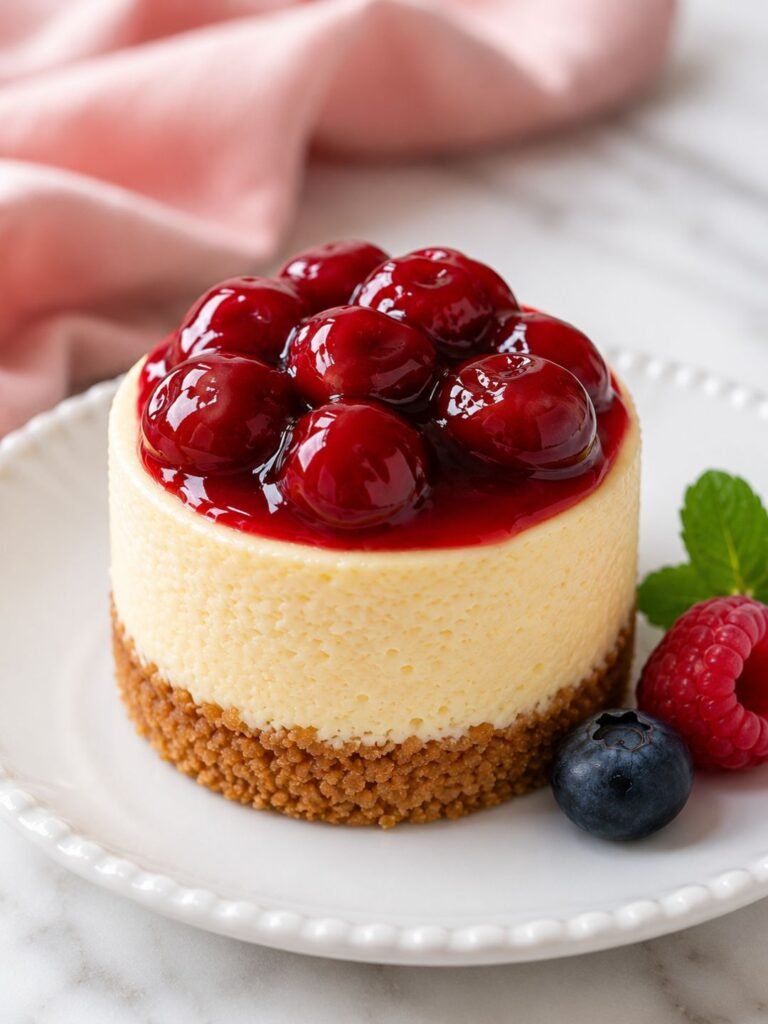
Toppings are where minis shine. Fresh berries, chocolate ganache, salted caramel, lemon curd, and a swirl of fruit compote all work, and because each cheesecake is separate, you can set up a whole variety platter from one batch. Add wet toppings just before serving so the crust stays crisp.
Flavor swaps are just as easy. Fold Oreo crumbs into the batter, add lemon zest, spoon in pumpkin puree for fall, or ripple in melted chocolate. The base recipe takes them all without any other change.
Freezing is simple. Chill the plain minis, then wrap and freeze them without toppings. Thaw overnight in the fridge and finish with fresh toppings after thawing. For gluten-free guests, a nut-based crust works, and demand is real: the gluten-free bakery segment is projected to reach $7.59 billion by 2027, growing at a 7.2% CAGR, per Toast POS.
Planning ahead for a crowd? Our make-ahead party dessert ideas pair perfectly with these.
Frequently Asked Questions
How long do mini cheesecakes last in the fridge?
Properly covered, mini cheesecakes keep about 5 to 7 days refrigerated. Just don’t let them sit out too long first: per USDA-based food safety guidance from UF/IFAS Extension, perishable dairy desserts should never stay at room temperature longer than 2 hours, or 1 hour above 90F, before going back in the fridge.
Can you freeze mini cheesecakes?
Yes, and they freeze beautifully. Chill them fully, then wrap each one tightly and freeze without toppings for up to 2 to 3 months. Thaw overnight in the refrigerator before adding fresh berries, ganache, or caramel. Freezing plain keeps the texture creamy and stops toppings from weeping or turning watery on thaw.
Do mini cheesecakes need a water bath?
Not strictly. Because they bake in 15 to 20 minutes rather than an hour, minis are far less prone to overbaking than a full cake. King Arthur Baking’s testing rated a water bath 9.5 out of 10 for crack prevention on full-size cheesecakes (King Arthur Baking), but a shallow pan of water on the rack below adds enough humidity for minis.
Why did my mini cheesecakes sink in the middle?
Sinking is almost always overbaking or cooling too fast. Pull the tin while the centers still jiggle slightly, then cool gradually with the oven door cracked for 20 minutes before the counter. Overmixing after the egg goes in adds air that puffs then collapses, so keep the mixer on low and stop as soon as the batter looks uniform.
Can I use a regular muffin tin instead of a mini muffin tin?
Yes. A standard 12-cup muffin tin with cupcake liners is the most common size and yields 12 mini cheesecakes at about 18 minutes. A 24-cup mini muffin tin works too but bakes faster, roughly 11 minutes, and gives bite-size portions. Whichever you use, watch for the slight center jiggle rather than the clock.
Conclusion
You now have everything for mini cheesecakes that set creamy, release clean, and travel well to any party. The pattern is simple: room-temperature ingredients, a light hand on the mixer, an 18-minute bake at 325F, and a slow cooldown. Skip the full water bath, watch for the center jiggle, and let them chill before you add toppings.
Best of all, they’re built for make-ahead entertaining, so you can bake today and top them the day of the party. Ready to bake a batch? Save this recipe and subscribe for weekly recipes so you catch the seasonal topping variations next. Then come back and tell us which flavor you tried first.