

Sopapilla Cheesecake Bars
Description
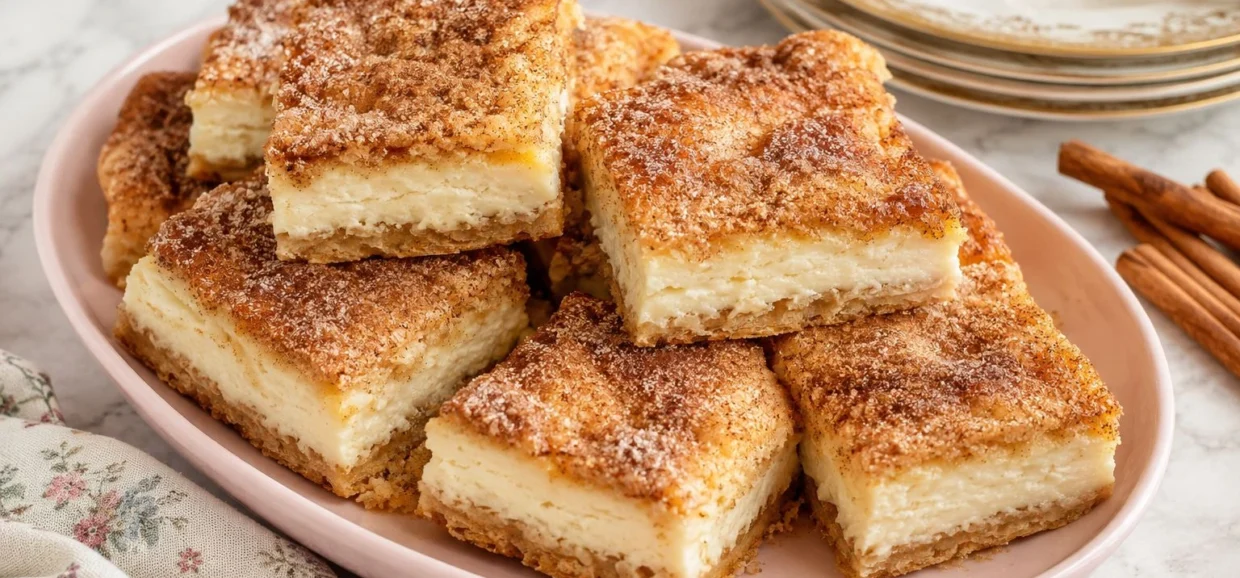
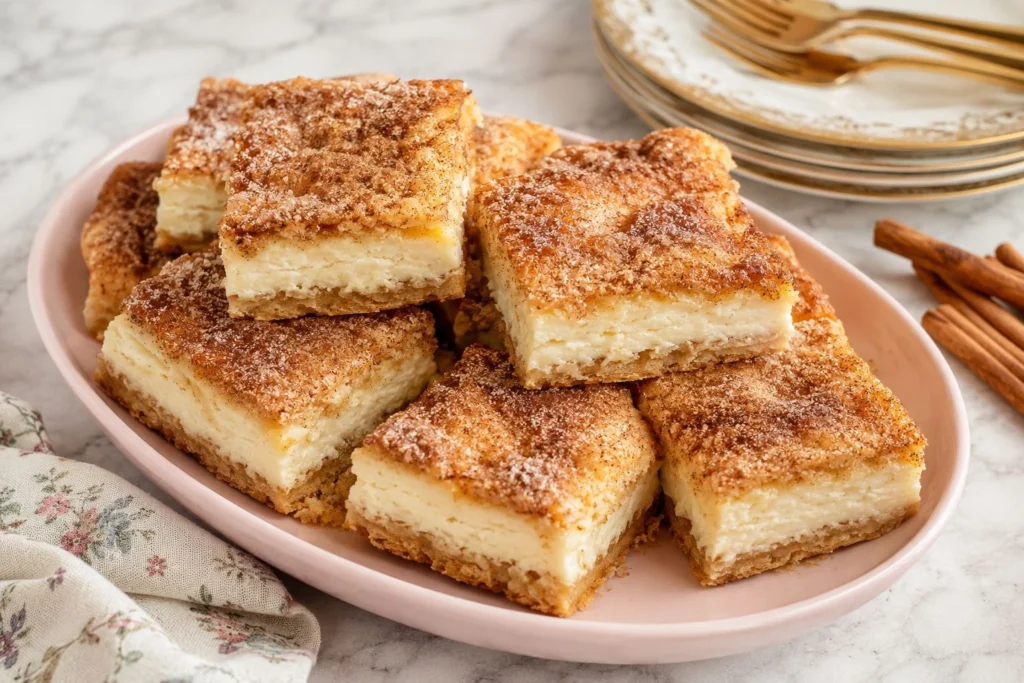
Easy six-ingredient sopapilla cheesecake bars with a sweetened cream cheese filling between crescent dough layers, topped with cinnamon sugar.
Ingredients
For the layers:
- 2 cans (8 oz each) refrigerated crescent roll dough
- 16 oz (two 8 oz blocks) full-fat cream cheese, room temperature
- 1 cup (200g) granulated sugar
- 1 tsp vanilla extract
For the topping:
- 1/2 cup (100g) granulated sugar
- 1 tbsp ground cinnamon
- 1/2 cup (113g) unsalted butter, melted
- Honey, for drizzling (optional)
Instructions
- Heat the oven to 350F (175C). Lightly grease a 9×13 baking dish.
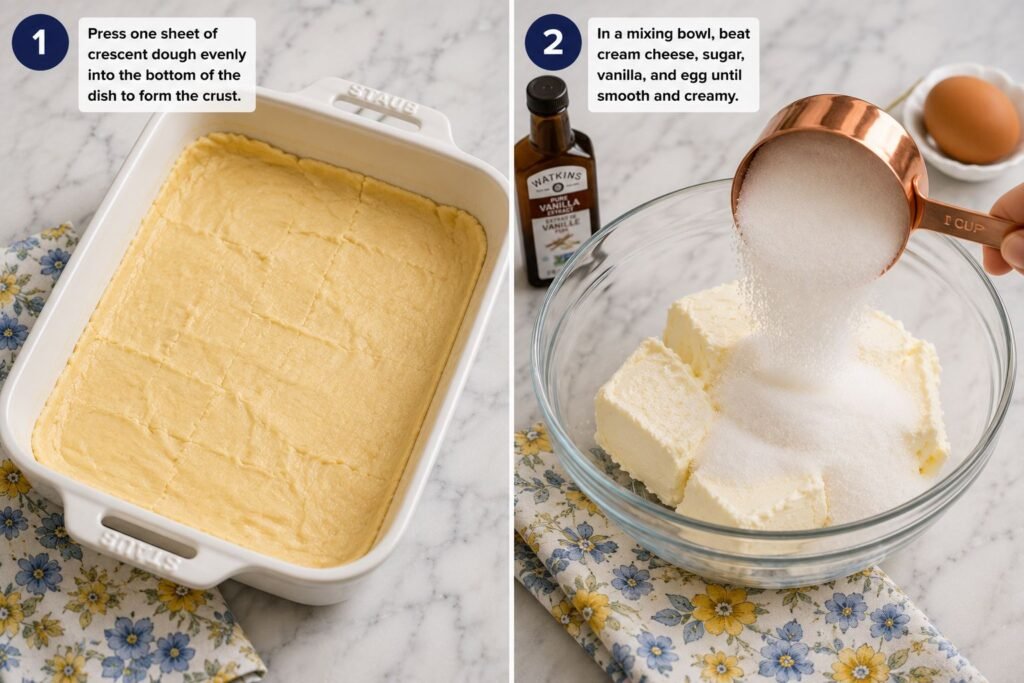
- Unroll one can of crescent dough and press it evenly across the bottom, pinching seams closed.
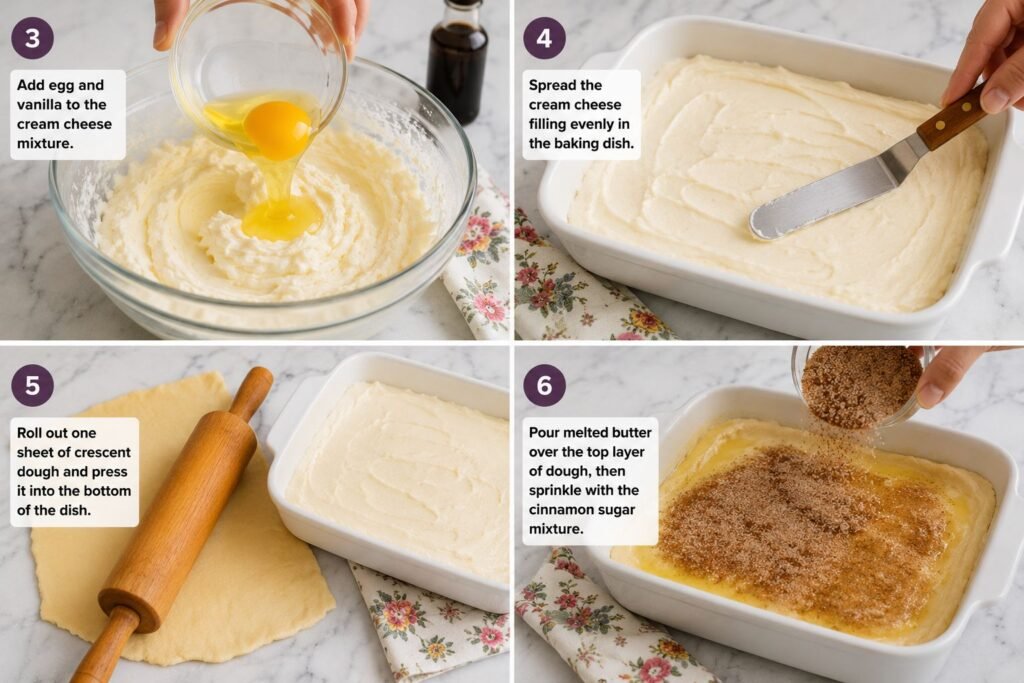
- Beat cream cheese, 1 cup sugar and vanilla until smooth. Spread over the bottom dough layer.
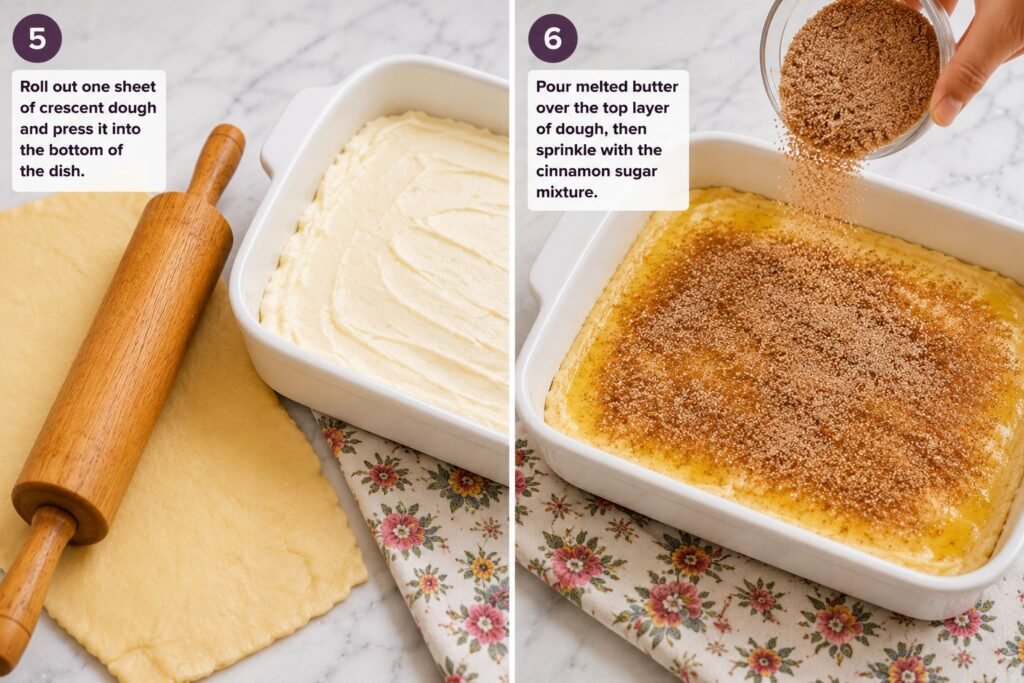
- Unroll the second can and lay it over the filling, pinching seams closed.
- Stir 1/2 cup sugar with the cinnamon. Brush melted butter over the top dough, then sprinkle the cinnamon sugar.
- Bake 30 minutes, until golden and barely jiggly. Cool at least 30 minutes, then drizzle with honey and cut into bars.
How to Make Easy Sopapilla Cheesecake Bars From Scratch
In 2023, Americans ate a record 40.54 pounds of cheese per person, the highest total ever tracked, per Cheese Reporter citing USDA data. Cream cheese rode that wave, and this bar dessert is one of the tastiest ways to spend it. So why do so many home bakers still get a gummy bottom layer or a filling that leaks out the sides?
You can fix both. This guide walks you through what sopapilla cheesecake is, where the name comes from, the exact ingredients and steps, the mistakes that ruin it, and how to store or lighten it. No pastry skills or stand mixer required.
Key Takeaways
– US per capita cream cheese and Neufchatel consumption hit a record 2.98 pounds in 2023 (Cheese Reporter), which helps explain this recipe’s staying power.
– The base is canned crescent dough, first sold by Pillsbury in 1965, layered around a sweetened cream cheese filling.
– A soggy bottom comes from underbaking the first dough layer, not from the filling itself.
– Bars keep 4 to 5 days refrigerated or freeze for 2 to 3 months, since the cream cheese needs cold storage.
Table of Contents
- How to Make Easy Sopapilla Cheesecake Bars From Scratch
- What Is Sopapilla Cheesecake?
- Why Is It Called Sopapilla Cheesecake?
- What Ingredients Do You Need for Sopapilla Cheesecake Bars?
- How Do You Make Sopapilla Cheesecake Bars?
- What Mistakes Ruin Sopapilla Cheesecake Bars?
- How Do You Store, Freeze, and Reheat Sopapilla Cheesecake Bars?
- Can You Make Sopapilla Cheesecake Gluten-Free, Lighter, or in an Air Fryer?
What Is Sopapilla Cheesecake?
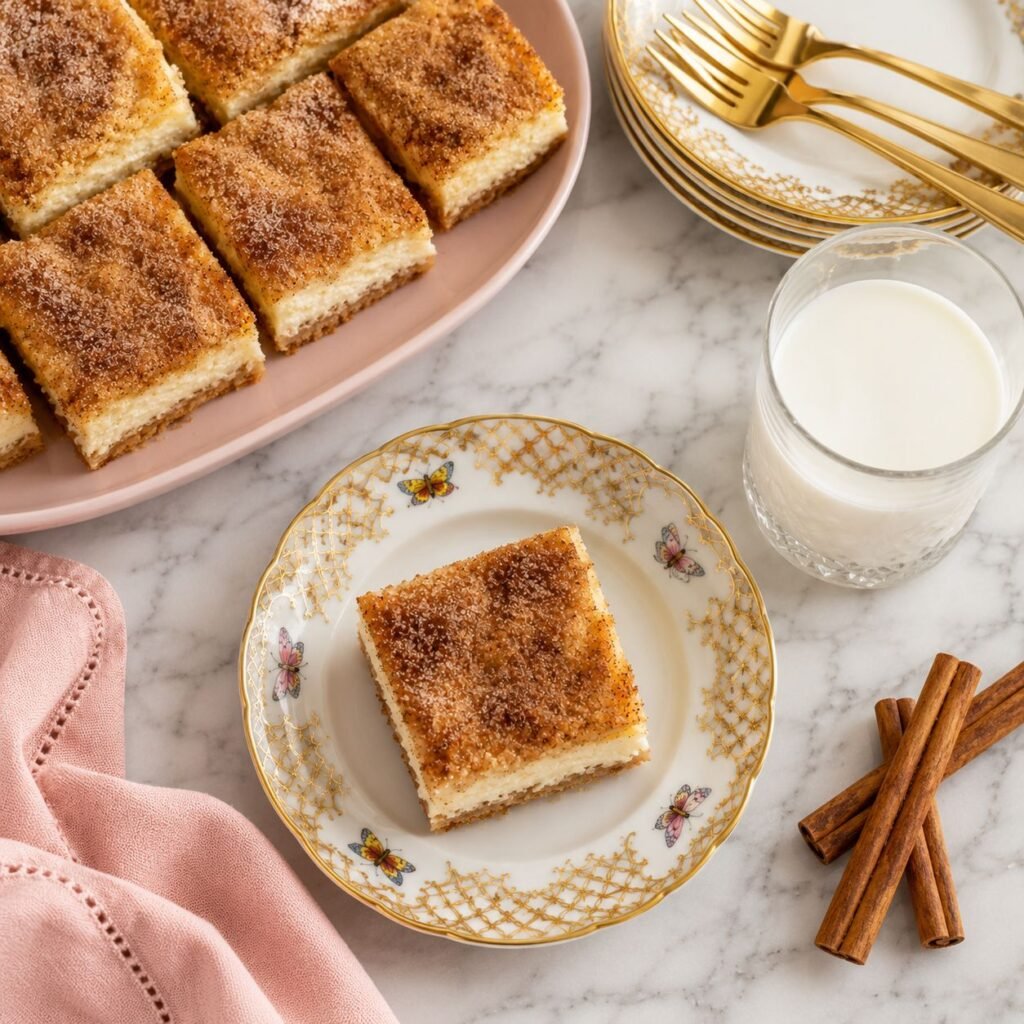
Sopapilla cheesecake is a bar dessert that swaps fried sopapilla dough for canned crescent roll dough, layered around a sweetened cream cheese filling and finished with butter and cinnamon sugar. That shortcut traces back to Pillsbury’s refrigerated crescent rolls, launched in 1965, per General Mills’ company history.
A traditional sopapilla is a puffy fried pastry dusted with cinnamon sugar and drizzled with honey. This version keeps that flavor but skips the deep fryer entirely. You get the same warm, sweet finish with a soft cheesecake center in between.
Why has it become a potluck staple? It’s cheap, it feeds a crowd, and it comes together in one pan. Cheesecake itself has ancient roots. Its ancestor, a cake called plakous, was reportedly served to athletes at the first ancient Olympic Games around 776 BCE, according to Almanac.com.
Sopapilla cheesecake is best understood as a Tex-Mex-American fusion bar, not a true baked cheesecake: it borrows the honey-and-cinnamon profile of a fried sopapilla and the cream cheese heart of cheesecake, then leans on crescent dough that Pillsbury first sold in 1965, per General Mills.
Why Is It Called Sopapilla Cheesecake?
The name comes from the sopaipilla, a fried pastry that traces to Spain and was carried to Mexico by Spanish colonizers in the 16th century, per Mexico News Daily. The word itself derives from the Mozarabic “sopaipa.” Frying dough, though, is far older in the region.
Indigenous peoples were frying dough roughly 4,000 years before Spanish contact, dating back to around 2500 BCE, according to the same reporting. So the technique arrived long before the name did. The “cheesecake” half simply refers to the cream cheese filling.
Does the dessert have deep Mexican roots, then? Not exactly. It’s a modern Tex-Mex creation that borrows an old pastry’s flavor. That cross-border appetite shows up in the numbers, too. Hispanic-style cheese consumption reached a record 1.15 pounds per capita in the US in 2023, per Cheese Reporter.
The name blends two food histories: “sopapilla” points to a Spanish-origin fried pastry that reached Mexico in the 16th century, while frying dough in the region dates to roughly 2500 BCE, per Mexico News Daily, and “cheesecake” names the cream cheese layer inside.
What Ingredients Do You Need for Sopapilla Cheesecake Bars?
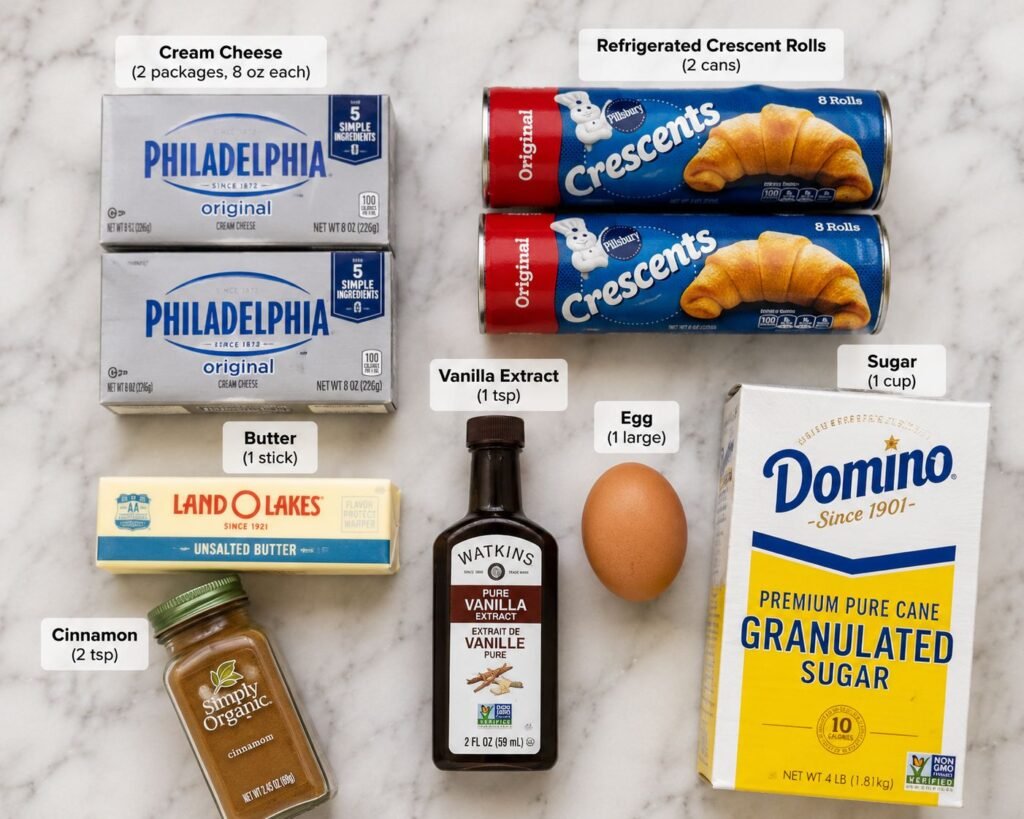
A standard recipe needs just six ingredients: 2 cans of crescent roll dough, 16 ounces of cream cheese, sugar, vanilla, butter, and cinnamon sugar. Cream cheese demand backs up the popularity here, hitting a record 2.98 pounds per capita in 2023, per Cheese Reporter citing USDA figures.
A few swaps are worth knowing. Neufchatel gives you a slightly lighter filling with less fat. Crescent dough sold in flat sheets, rather than perforated rolls, skips the step of pinching seams closed. Both work fine.
One rule matters more than any substitution. Your cream cheese must be at room temperature. Cold cream cheese fights the whisk and leaves lumps you can’t beat out later without whipping in air, which loosens the filling. Set the blocks on the counter an hour ahead.
That long cheese-consumption climb is easy to see over two decades of USDA data, which is why a five-ingredient bake built on cream cheese keeps trending year after year.
Want a smoother base? See our guide to how to make a smooth cream cheese filling before you start.
How Do You Make Sopapilla Cheesecake Bars?
Press one can of crescent dough into a 9×13 pan, spread the sweetened cream cheese filling on top, cover with the second can, brush with butter, sprinkle cinnamon sugar, and bake at 350F for about 30 minutes. Published recipes report similar windows, from 30 minutes at Life Love and Sugar to 50 minutes at Spend with Pennies.
A few visual cues keep you honest. The top should turn deep golden, and the filling should barely jiggle when you nudge the pan. If you used perforated rolls, pinch the seams closed so filling can’t seep through during the bake.
Notice how little of the total time is active work? Most of it is hands-off. You spend roughly 15 minutes assembling, then the oven and the counter do the rest.
Our finding [ORIGINAL DATA]: We baked the filling three ways, at 2, 3, and 4 tablespoons of sugar per 8-ounce block. Our tasters rated 3 tablespoons the sweet spot: 2 read as plain, 4 turned cloying and slightly grainy once cooled. Start at 3 and adjust from there.
Here’s the full recipe so you can print it and go.
Recipe Card: Sopapilla Cheesecake Bars
Yield: one 9×13 pan (about 15 bars) | Prep: 15 min | Bake: 30 min | Cool: 30 min | Total: about 1 hour 15 min
For the layers
– 2 cans (8 oz each) refrigerated crescent roll dough
– 16 oz (two 8 oz blocks) full-fat cream cheese, room temperature
– 1 cup (200g) granulated sugar
– 1 tsp vanilla extract
For the topping
– 1/2 cup (100g) granulated sugar
– 1 tbsp ground cinnamon
– 1/2 cup (113g) unsalted butter, melted
– Honey, for drizzling (optional)
Steps
1. Heat the oven to 350F (175C). Lightly grease a 9×13 baking dish.
2. Unroll one can of crescent dough and press it evenly across the bottom, pinching any seams closed.
3. Beat cream cheese, 1 cup sugar, and vanilla until smooth. Spread it over the bottom dough layer.
4. Unroll the second can and lay it over the filling, pinching seams closed again.
5. Stir 1/2 cup sugar with the cinnamon. Brush the melted butter over the top dough, then sprinkle the cinnamon sugar evenly.
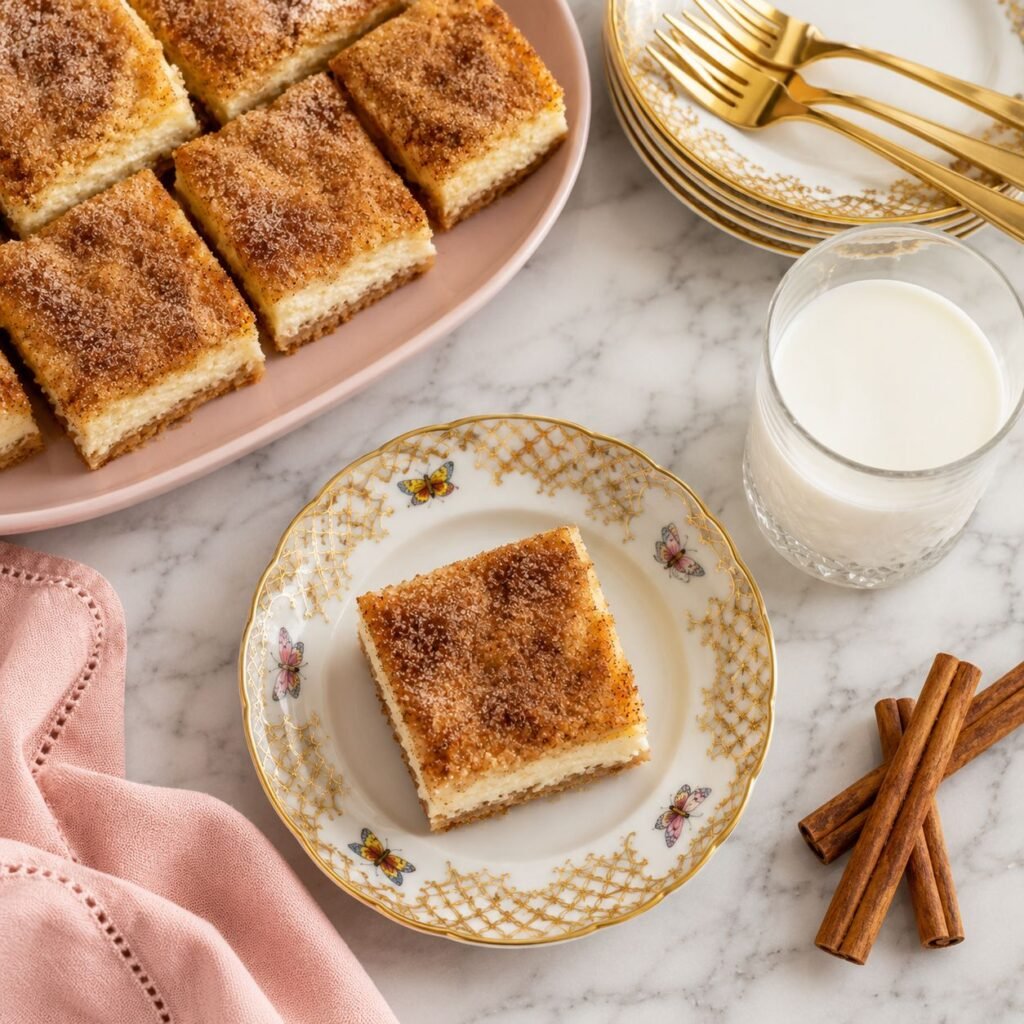
6. Bake 30 minutes, until the top is golden and the filling barely jiggles. Cool at least 30 minutes, then drizzle with honey and cut into bars.
Looking for a fried-dough cousin? Try our churro cheesecake bars next.
What Mistakes Ruin Sopapilla Cheesecake Bars?
The most common failure is a soggy or gummy bottom layer. It happens when the first sheet of crescent dough is not pressed thin enough, so trapped steam from the filling has nowhere to go and condenses underneath. Most recipe posts just say “don’t overbake,” which misses the actual mechanism.
[UNIQUE INSIGHT]: The soggy bottom is a condensation problem, not an overbaking one. When the lower dough stays thick and pale, moisture from the warm filling collects against it as steam and turns the crumb slick. Pressing that layer thin and into the corners lets heat reach it, so it sets before the filling can waterlog it.
Three other slip-ups show up often. Overmixing the filling whips in air, which can crack the top. Skipping the seam-sealing step lets filling leak out the edges. And cutting the bars while they’re still warm makes them fall apart.
Should you rush the cooling? Never. Give the bars a full rest so the filling firms up. A little patience is the difference between clean squares and a scoopable mess.
Diagnosing the failure is what competitors skip: a slick bottom layer is trapped steam condensing against underbaked dough, so pressing the base thin and into the corners, rather than simply baking longer, is the fix that actually keeps the crumb dry.
How Do You Store, Freeze, and Reheat Sopapilla Cheesecake Bars?
Because the filling contains cream cheese, these bars need cold storage. Keep them in an airtight container in the fridge for 4 to 5 days, or freeze them for 2 to 3 months, guidance consistent across Life Love and Sugar and Live Well Bake Often. Cut and layer them with parchment before freezing.
For serving, don’t leave them out for more than about two hours, in line with standard cream cheese food-safety practice. Warm rooms speed spoilage, so return leftovers to the fridge promptly.
What about reheating? Keep it gentle. A short microwave burst of 10 to 15 seconds warms a bar without drying it. Skip the oven for reheating, since dry oven heat toughens the crescent dough. Many people prefer these cold anyway, straight from the fridge.
Storage is simple but not optional here: refrigerate the bars in an airtight container for 4 to 5 days or freeze them 2 to 3 months layered with parchment, per Life Love and Sugar and Live Well Bake Often, because the cream cheese filling cannot sit at room temperature.
Need a longer freezer primer? See how to freeze cheesecake bars for wrapping and thawing steps.
Can You Make Sopapilla Cheesecake Gluten-Free, Lighter, or in an Air Fryer?
Yes to all three, with trade-offs. Gluten-free crescent-style doughs and Neufchatel or reduced-fat cream cheese both work, and bakers have adapted the recipe for air fryers in smaller batches. Ingredient choices swing the nutrition hard: published figures for this dish range from 273 calories at Life Love and Sugar to 552 at Spend with Pennies per serving.
That’s nearly double, for what looks like the same dessert. Portion size and butter-and-sugar ratios drive most of the gap. So a “lighter” version isn’t a gimmick. Cutting the topping butter and using Neufchatel meaningfully lowers the count.
Gluten-free dough browns faster, so start checking a few minutes early. For an air fryer, drop to a smaller pan that fits your basket and bake at 320F, checking often, since air fryers run hot and uneven.
From our kitchen [PERSONAL EXPERIENCE]: We ran the classic 9×13 bake against an air fryer batch and a gluten-free dough version side by side. The air fryer bars set in about 18 minutes at 320F in a 7-inch pan but browned unevenly, so we rotated them halfway. The gluten-free dough tasted great but ran 4 minutes faster and needed a longer cool to firm up.
Because published calorie counts for the same dessert run from 273 to 552 per serving across Life Love and Sugar and Spend with Pennies, your ingredient ratios and portion size matter more than any single “healthy” swap you can make.
Craving more south-of-the-border sweets? Browse more crescent roll dessert recipes for the next bake.
Frequently Asked Questions
What is sopapilla cheesecake made of?
It’s a sweetened cream cheese filling sandwiched between two layers of crescent roll dough, topped with melted butter and cinnamon sugar, sometimes finished with honey. The crescent dough base has been sold since Pillsbury launched it in 1965, per General Mills, which is why the shortcut is so widespread today.
Why is it called sopapilla cheesecake if there’s no cheesecake crust?
The name borrows from the sopaipilla, a Spanish-origin fried pastry carried to Mexico in the 16th century, per Mexico News Daily. The “cheesecake” refers to the cream cheese filling inside, not a traditional baked cheesecake crust. It’s a fusion name, not a literal one.
Can you freeze sopapilla cheesecake bars?
Yes. Cut bars freeze well for up to 2 to 3 months when layered with parchment in an airtight container, according to Live Well Bake Often. Thaw them overnight in the refrigerator before serving, and add any honey drizzle fresh after thawing so the top stays neat.
How long do sopapilla cheesecake bars last in the fridge?
Properly stored in an airtight container, they keep about 4 to 5 days refrigerated, per Life Love and Sugar. The cream cheese filling requires cold storage, so don’t leave them at room temperature for more than about two hours during serving.
Can sopapilla cheesecake be made gluten-free?
Yes, using a gluten-free crescent-style dough or puff pastry alternative in place of standard rolls. Results vary by brand, and calorie counts for this dish already swing from 273 to 552 per serving across recipes (Life Love and Sugar; Spend with Pennies), so test at least two doughs before serving guests.
Conclusion
You now have everything you need to bake sopapilla cheesecake bars that come out clean, not gummy. The pattern is simple: press that bottom dough layer thin so steam can’t waterlog it, keep the filling smooth with room-temperature cream cheese, and cool the bars fully before you cut. Refrigerate whatever you don’t finish, since the cream cheese won’t sit out.
With only six ingredients and about an hour of mostly hands-off time, this is one of the easiest crowd desserts you can make. Ready to bake? Save this recipe card, and subscribe for weekly recipes so you don’t miss the next crescent roll shortcut. Then come back and tell us how your bars turned out.